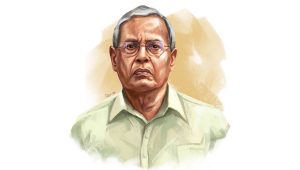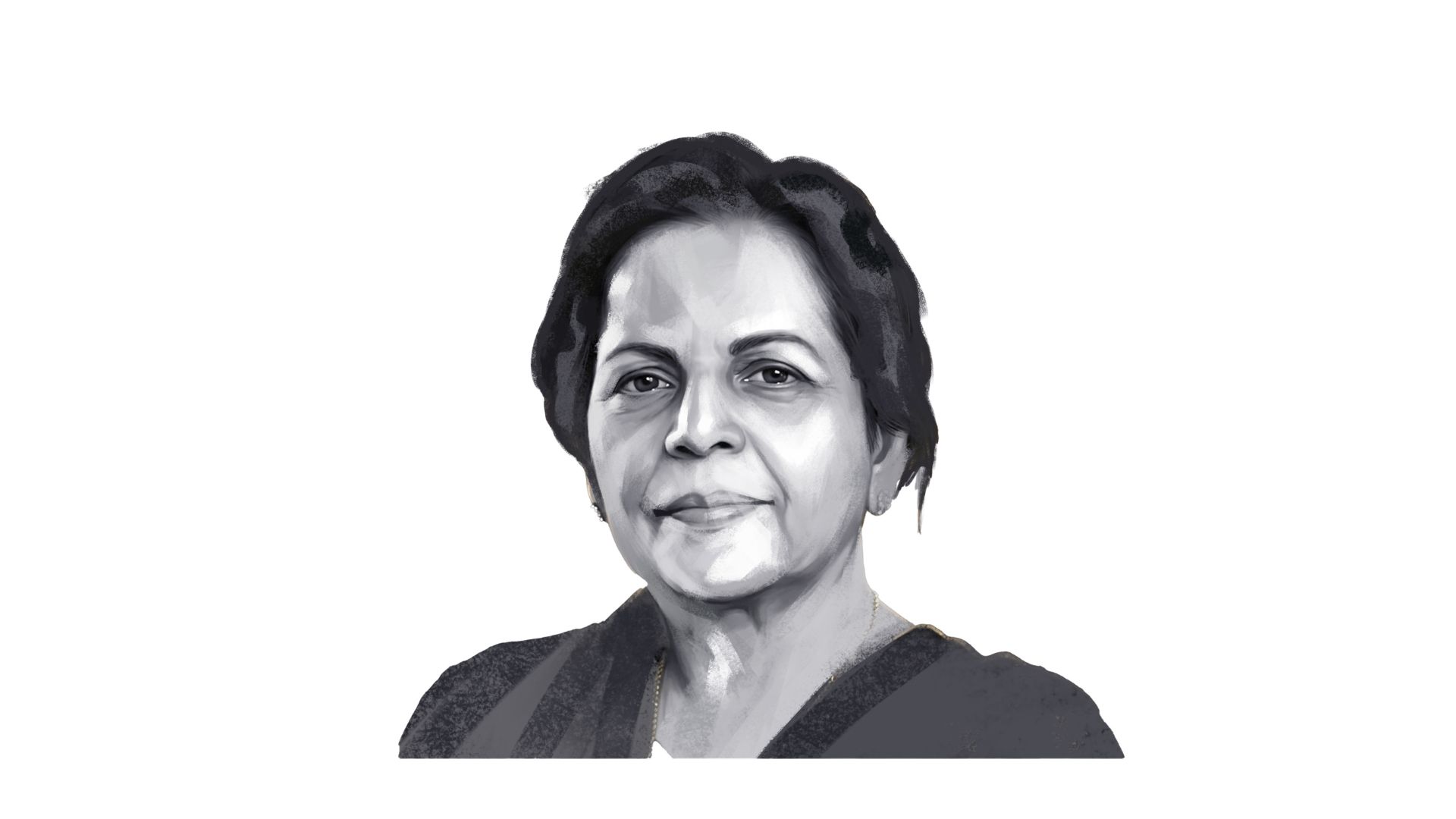

Long before she became one of independent Bangladesh’s first women ministers, Nurjahan Murshid was already breaking a barrier few had attempted. Born Noorjahan Beg in 1924 in Taranagar, Murshidabad, she studied at Victoria Institution in Calcutta (now Kolkata) and earned a master’s in history from the University of Calcutta at a time when few Muslim women pursued higher education at all.
In 1946, she joined All India Radio as a broadcaster – becoming the first Muslim woman to hold the post.
Murshid’s early career unfolded against the backdrop of Hindu-Muslim riots that convulsed Calcutta ahead of Partition. She chose to move to Dhaka, where her political life properly began.
In January 1952, she was among the women included in the 40-member All-Party State Language Movement Committee formed under Maulana Bhasani, placing her inside the organising core of the movement that would define the decade.

Two years later, running on a United Front ticket from Narayanganj, she became one of the first women directly elected to East Bengal’s provincial legislative assembly – a rare feat for a woman in 1954 politics. She went on to take part in the 1966 Six-Point Movement and the mass uprising of 1968–69, and won an Awami League seat in the pivotal 1970 election.
When the crackdown of March 1971 began, Murshid joined the Liberation War alongside her family. As an accredited representative of the Mujibnagar government-in-exile, she carried Bangladesh’s case to India, delivering a speech at a joint session of India’s Lok Sabha and Rajya Sabha to press for recognition of the new nation and support for its war effort. Pakistan’s military establishment responded by sentencing her, in absentia, to fourteen years’ rigorous imprisonment – a verdict rendered irrelevant within the year.



In independent Bangladesh, Murshid was appointed the country’s first state minister for health and social welfare in 1972, and won election to the first parliament in 1973. But the 1975 assassination of Sheikh Mujibur Rahman, followed by the jail killings of senior national leaders, pushed her away from frontline politics.
She returned instead to the written word, launching the Bangla periodical Ekal in 1985 – later Ae Desh Ae Kal – which took up women’s issues alongside the country’s broader political and social anxieties.
Its pages carried interviews with figures such as writer Nirad Chaudhuri and poet Shamsur Rahman, with cover art contributed by painter Quamrul Hassan. Financial strain and the hardship that followed the catastrophic floods of 1988 eventually closed the journal in 1991.
Murshid also helped found institutions that outlasted her own tenure in public life: She was the first president of the Bangladesh Mahila Samity, founded the Azimpur Ladies’ Club, established the Agrani Balika Bidyalay school, and was a founding member of BIRDEM.
Across her writing, she returned often to the conviction that stable governance was inseparable from a healthy society – a belief distilled, near the end of her life, into a single line she wrote: That the precondition for a sane society is sane politics.
Diagnosed with cancer in 2002, Nurjahan Murshid died in Dhaka on 1 September 2003. More than two decades on, her death anniversary is still quietly observed at her graveside in Mirpur – a modest ritual for a life that moved through broadcasting booths, legislative chambers, a liberation war and an editor’s desk, without ever settling for just one of them.