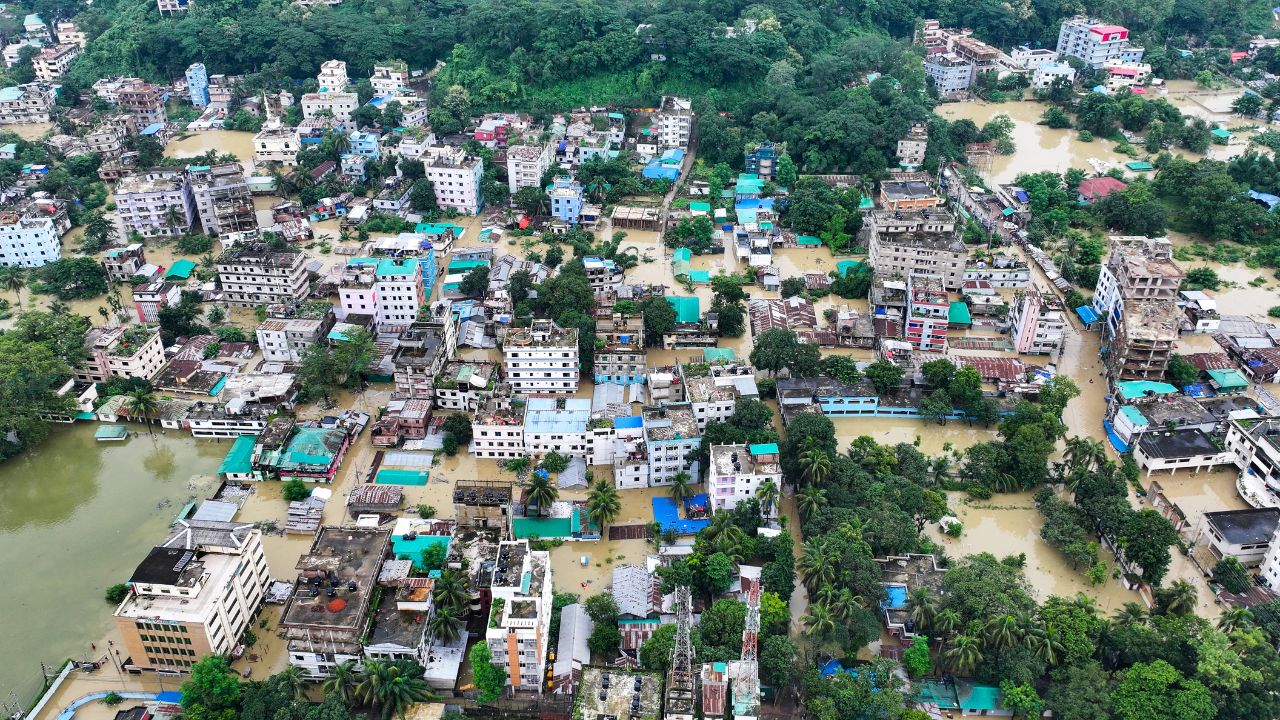

As a rain-fed deluge devastates the entire Chattogram region, the public solidarity that defined previous disasters is conspicuously absent.
Two years on from an unprecedented wave of volunteer-led relief, Dhaka University’s TSC, the traditional heart of voluntarily mobilised relief activities, stands eerily quiet, exposing a striking decline in public enthusiasm.
As vast swathes of the region remain ravaged by floodwaters, the usual hives of humanitarian activity have fallen silent. The Teacher-Student Centre no longer drawing the frantic crowds of donors seen during the 2024 disaster.
The contrast has drawn attention, with many questioning why public enthusiasm has declined.
Although first-year students started a fundraising initiative at the TSC, the response has been limited, raising just Tk1.40 lakh by Monday night.
Those involved believe the controversy surrounding the management of funds from the 2024 drive has dented public trust. Many donors are now reluctant to contribute due to concerns over transparency.
Philosophy student Hemayetul Islam Fardin, one of the organisers, told TIMES of Bangladesh that they repeatedly face questions from potential donors.
“Wherever we go, people ask what happened to the money collected in 2024. It is difficult to explain that we have no connection with that initiative,” he said, adding that negative perceptions regarding the previous campaign have led people to question their transparency now.
However, Professor Khondoker Mokaddam Hossain of Dhaka University’s Institute of Disaster Management and Vulnerability Studies noted that the severity of this year’s floods far exceeds that of 2024.
He warned that government assistance alone would not be enough to cope with a disaster of this scale, urging wealthy individuals, businesses, and people from all walks of life to step forward.

“Government relief alone cannot tackle such a disaster. Industrialists, capable individuals, and people from different professions need to come forward quickly,” he told TIMES.
What happened in 2024?
Following the mass uprising on 5 August that year, the interim government had barely taken office when the country’s south-eastern region was hit by severe flooding.
The Students Against Discrimination (SAD), which had led the uprising, called for support for flood victims in Cumilla, Noakhali, Feni, and Chattogram.
On 20 August, a mass relief drive began at Dhaka University’s TSC, triggering an extraordinary display of public generosity.
Children brought their savings, students donated their tiffin money, and even beggars contributed to the effort.
Alongside cash, vast quantities of goods arrived, including over 10,000 items of clothing from a single businessman.




However, transparency concerns soon emerged.
In response, the student movement said that Tk11.69 crore had been raised by 30 September.
Of this, Tk1.78 crore was spent, leaving Tk9.91 crore in a joint bank account.
Amid allegations of mismanagement, the movement’s coordinators transferred Tk 8 crore into the Chief Adviser’s Relief Fund on 2 October. With floods also affecting the north of the country at the time, they stated that the remaining funds would be directed there.
During the initial crisis, Chief Adviser Muhammad Yunus had met with 44 NGOs, announcing plans for a Tk1,000 crore relief fund at Sonali Bank.
Yet, no updates were ever provided on the total amount raised, the assistance delivered, or whether the ambitious target was met.
Drawing lessons from that controversy, organiser Hemayetul Islam explained that the current Dhaka University relief drive has adopted a completely different approach.
“Income and expenditure details are being updated every night via a spreadsheet. The accounts are shared publicly through the student union and our social media channels,” he said.
What is SAD-turned-NCP doing?
Leaders of the Students Against Discrimination later formed the National Citizen Party (NCP). Unlike the student body’s previous efforts, the party has not launched a large-scale public donation drive this time.
Instead, it has established an ‘Emergency Crisis Response Team’ to assist flood victims in Chattogram, though its relief distribution remains limited.
Zahid Ahsan, president of Jatiya Chhatra Shakti, the student wing affiliated with the NCP, told TIMES that party activists were gathering support locally based on their individual organisational capacity to stand by those affected.
“However, no large-scale central relief collection programme has been initiated,” he said.
On Sunday afternoon, NCP Convener Nahid Islam and Chief Organiser (Southern Region) Hasnat Abdullah distributed relief to affected families at Dobhashi Bazar in Anwara of Chattogram.
Nahid also criticised the government’s response to the crisis. “Whatever the reason may be, the government is failing to handle the situation effectively,” he argued.
He urged capable individuals, students, and ordinary citizens, irrespective of their political affiliations, to unite in addressing the crisis.
Student groups inactive at Dhaka University
Whenever major natural disasters hit the country, active student organisations at Dhaka University usually launch initiatives to collect and distribute relief. This time, however, there has been little visible activity from the major student groups.
The student wings of BNP, Jamaat-e-Islami, and left-leaning organisations have also remained largely absent from relief efforts.
When asked, Dhaka University unit Jatiyatabadi Chhatra Dal Vice-President Anisur Rahman Khandaker told TIMES that their central leadership had delivered relief aid through local organisers on the ground.
“The organisation is forming two medical teams in the flood-affected areas to conduct voluntary work. Given the heightened risk of water-borne diseases in the post-flood period, our teams will focus on providing healthcare services,” he said.
Meanwhile, Md Miftahul Hossain Al Maruf, the Publicity and Media Secretary for Islami Chhatra Shibir’s Dhaka University branch, said, “Our district-level leaders and activists are actively working in the flooded regions.”
Sami Abdullah, President of the Biplobi Chhatra Moitree’s Dhaka University branch, took a more critical stance, “The charity or relief activities of various private organisations ultimately obscure the responsibility of the state. It is the state that must be held fully responsible for managing disasters and supporting the victims.”
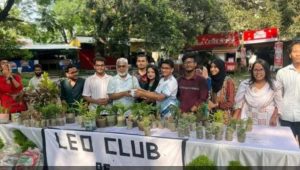
Amid this lack of large-scale campaigns, a handful of first-year students have stepped forward to collect aid.
Botany student Tonoy Ahmed explained that they began fundraising across residential halls on 12 July.
“The next day, we set up a booth at the TSC. From tomorrow (Wednesday), our remaining booths will become operational,” he said.
“Once the collection is complete, we will contact the flood-hit areas through university students whose homes are in the affected regions, including the Chittagong Hill Tracts, to distribute the assistance,” he added.
Tonoy noted that Tk70,040 was collected on Sunday from the residential halls and via bKash, with a similar amount raised the following day.