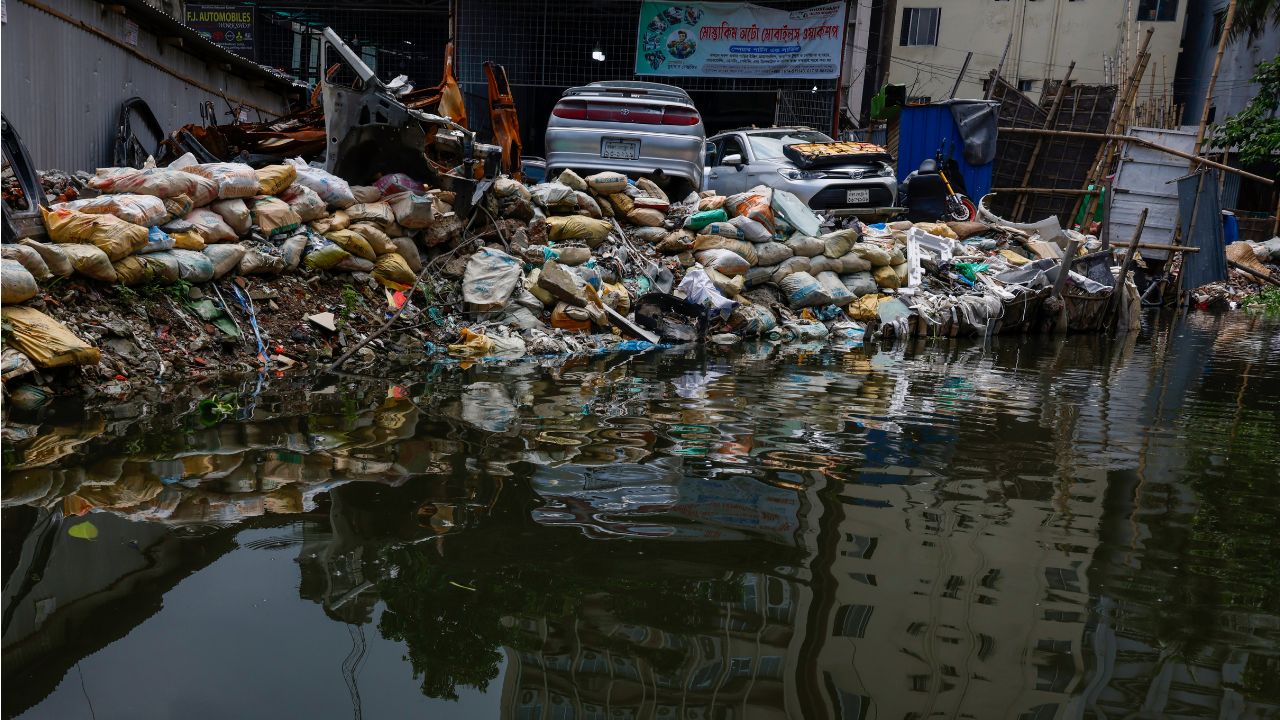

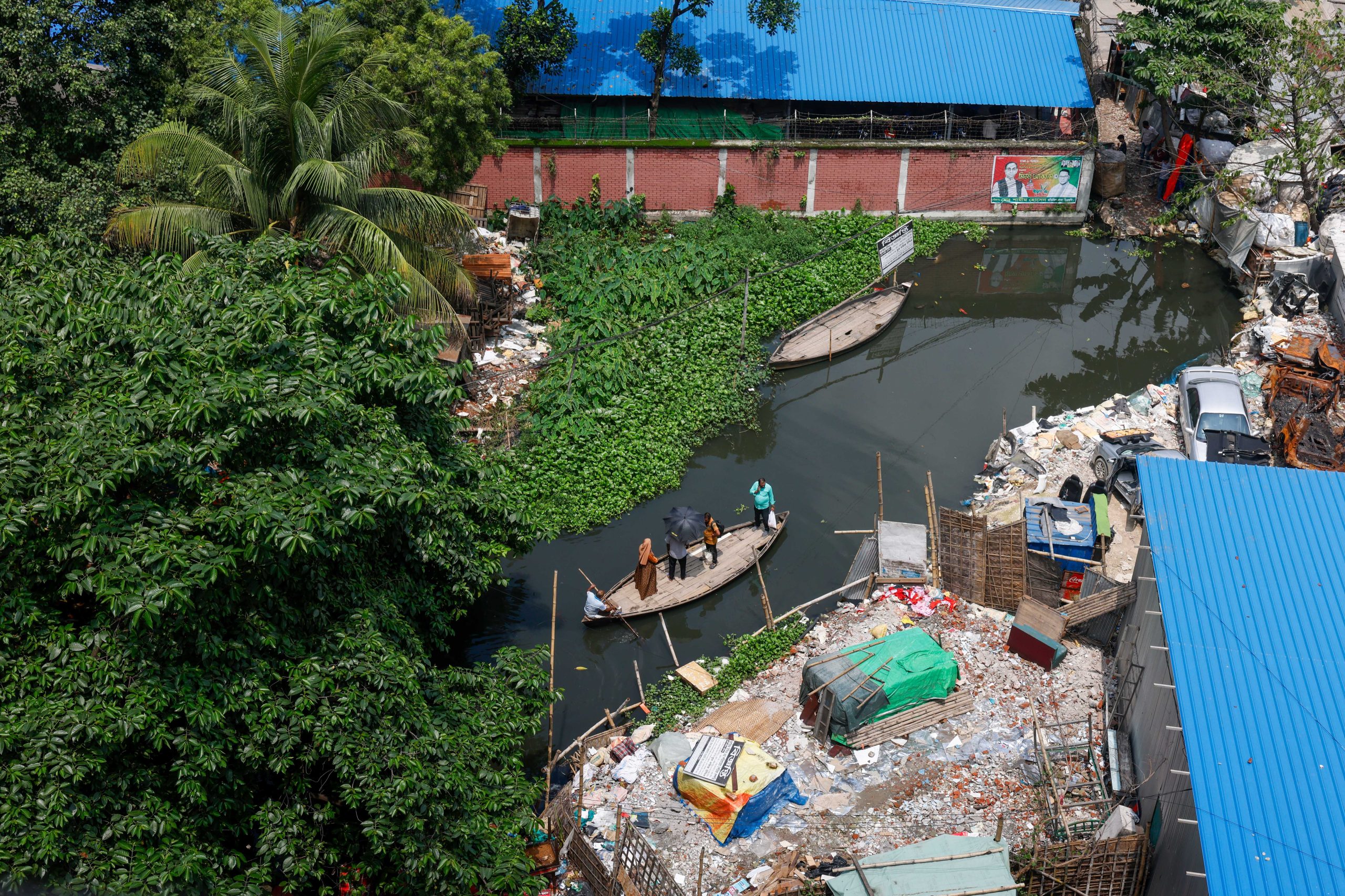
Every day, dozens of people step onto a small wooden boat to cross a narrow canal hidden among the office buildings of Motijheel, Bangladesh’s commercial centre. The crossing takes less than a minute and costs only Tk5, offering a shortcut for residents and workers who would otherwise have to walk a much longer route.
For 72-year-old Zohora Begum, this has been part of her daily life for more than four decades.
“I have been using this shortcut for around 40 years because I live nearby,” she says. “But the canal is not the same as it was before. It has become much narrower. Garages and other developments have occupied parts of the land, and the canal keeps shrinking.”
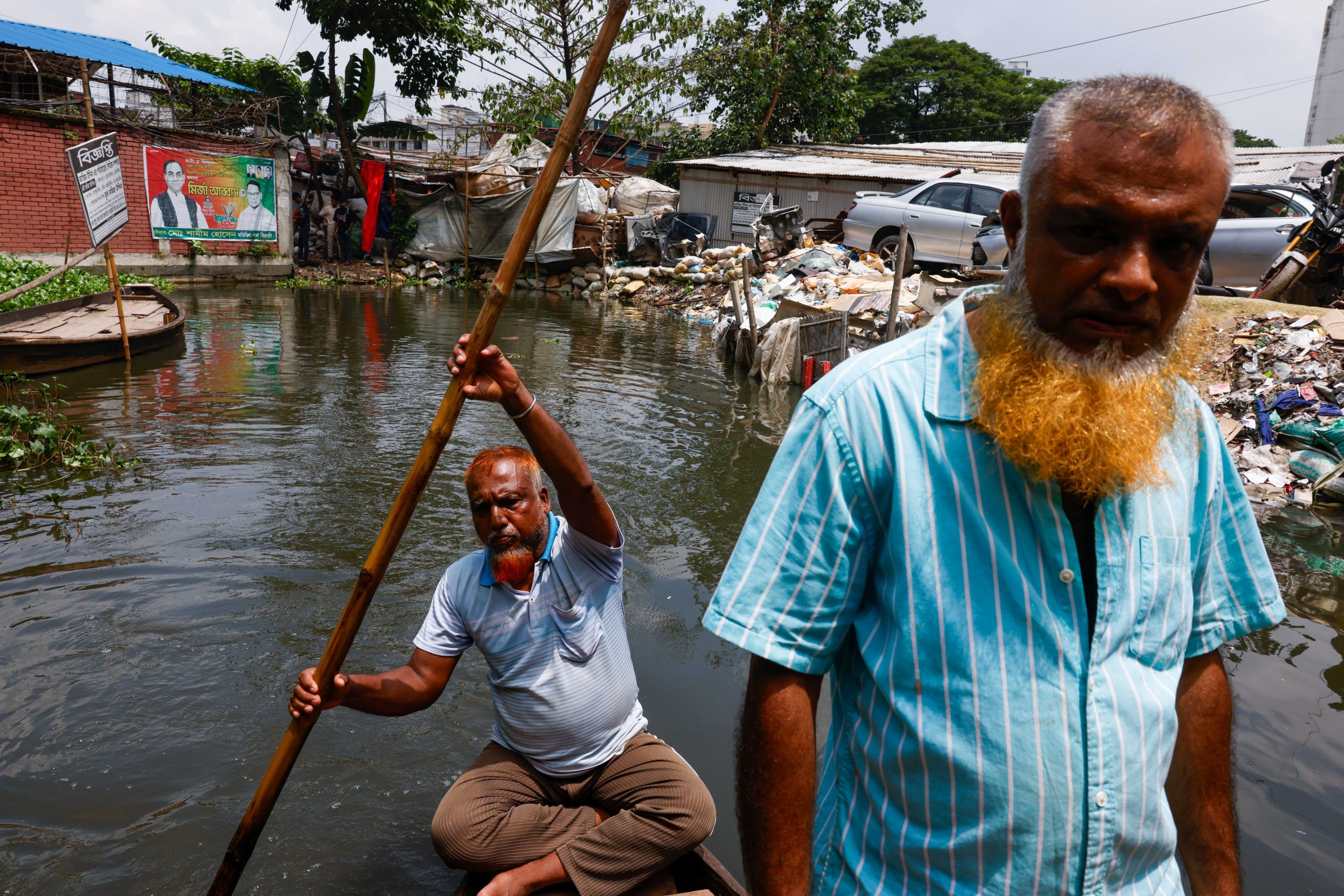
For older residents, the canal is more than a convenient crossing. It is a reminder of a landscape that has gradually disappeared beneath one of the most densely built parts of the city.

Long before Motijheel developed into Bangladesh’s financial and commercial district, the area contained canals, wetlands and low-lying water bodies that formed part of Dhaka’s natural landscape. These waterways supported local movement, collected rainwater and helped drain the surrounding neighbourhoods during the monsoon.
Today, only a narrow section of the canal remains. Among those who have witnessed its transformation is Dana Mia, 70, who has spent most of his life rowing passengers across the water. “I started boating here when I was a child,” he says. “The older generation in my family also worked on this canal.”




He remembers a time when the waterway was wide enough for larger boats to move comfortably across it. “People used to pay only 5 paisa to cross,” he recalls. “Now the fare is Tk5, but the canal has become much smaller.”
Despite decades of urban development, the small boat service continues to operate every day, carrying office workers, local residents and pedestrians between the surrounding neighbourhoods.
For many, it remains the quickest way to reach the commercial area of Motijheel. But the canal continues to narrow as the city grows around it.
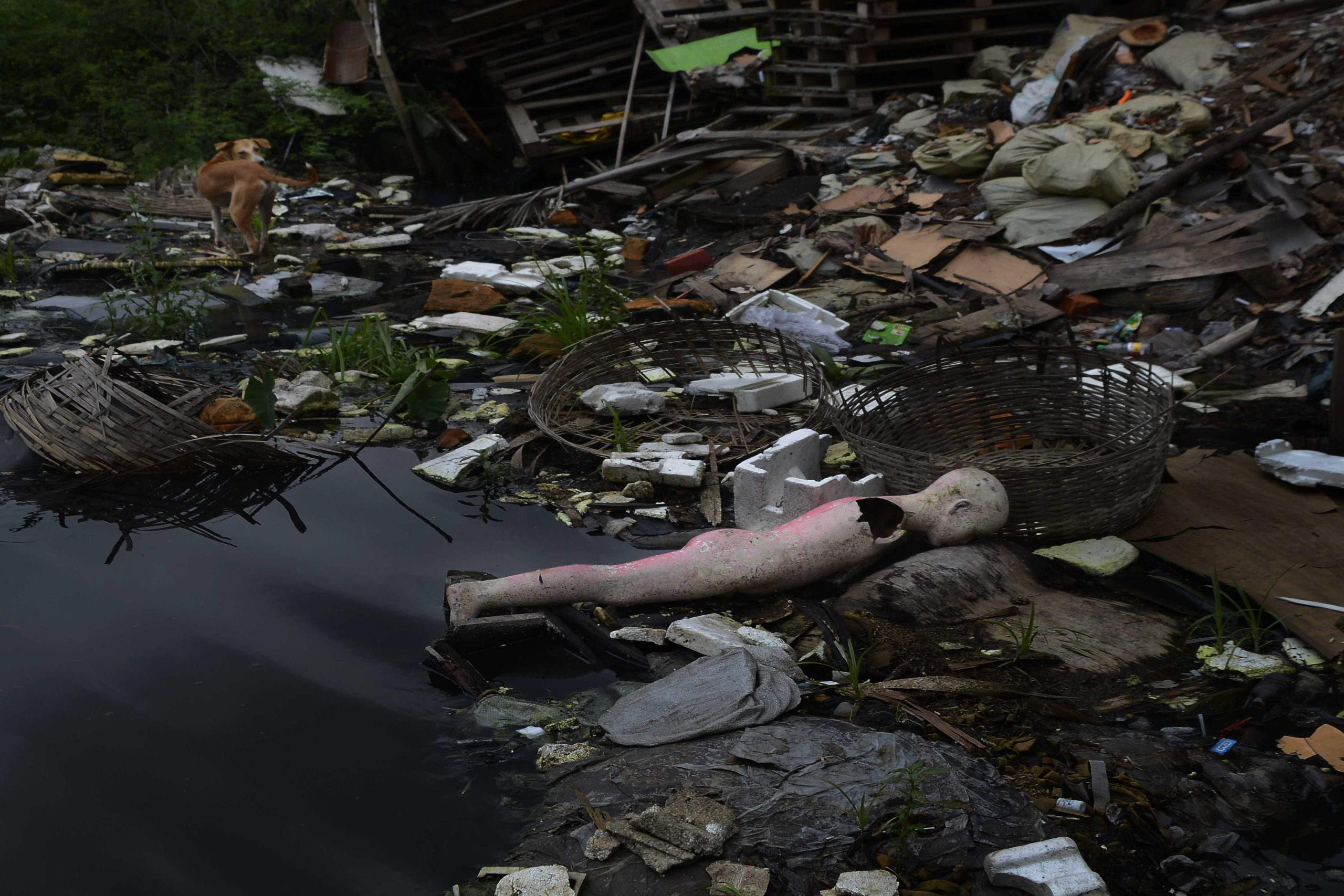
The story of this waterway reflects a much broader transformation across Dhaka. Rapid urbanisation, land filling and the disappearance of canals have reshaped the capital over the past several decades.
According to research on Dhaka’s drainage network, the city once had approximately 344 kilometres of canals. Around 124 kilometres have disappeared, significantly reducing the natural drainage system that once helped carry away monsoon rainwater.
As a result, many parts of Dhaka now experience severe waterlogging after even moderate rainfall, disrupting daily life for millions of residents.
For people like Zohora Begum and Dana Mia, however, the loss is measured not only in statistics but in memory.
The canal they remember was wider, busier and more deeply woven into everyday life. Today, it survives as a narrow strip of water surrounded by concrete, carrying passengers across a city that has steadily built over its waterways.