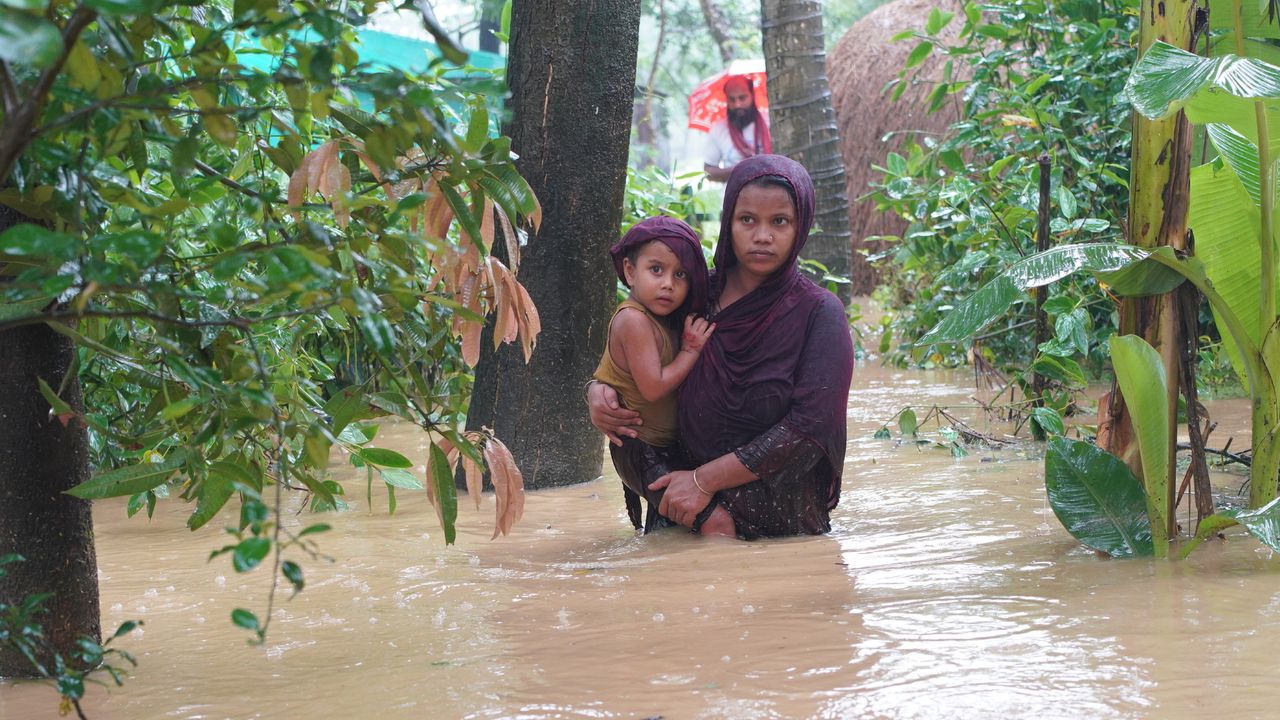

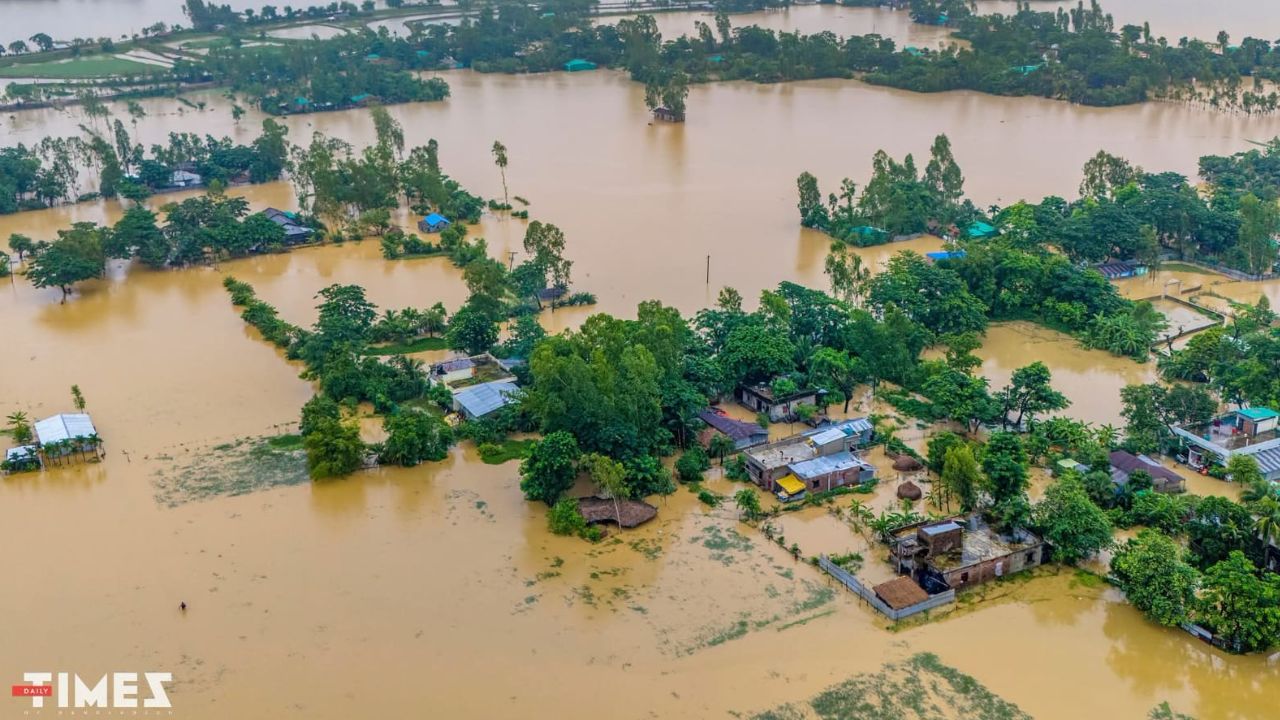
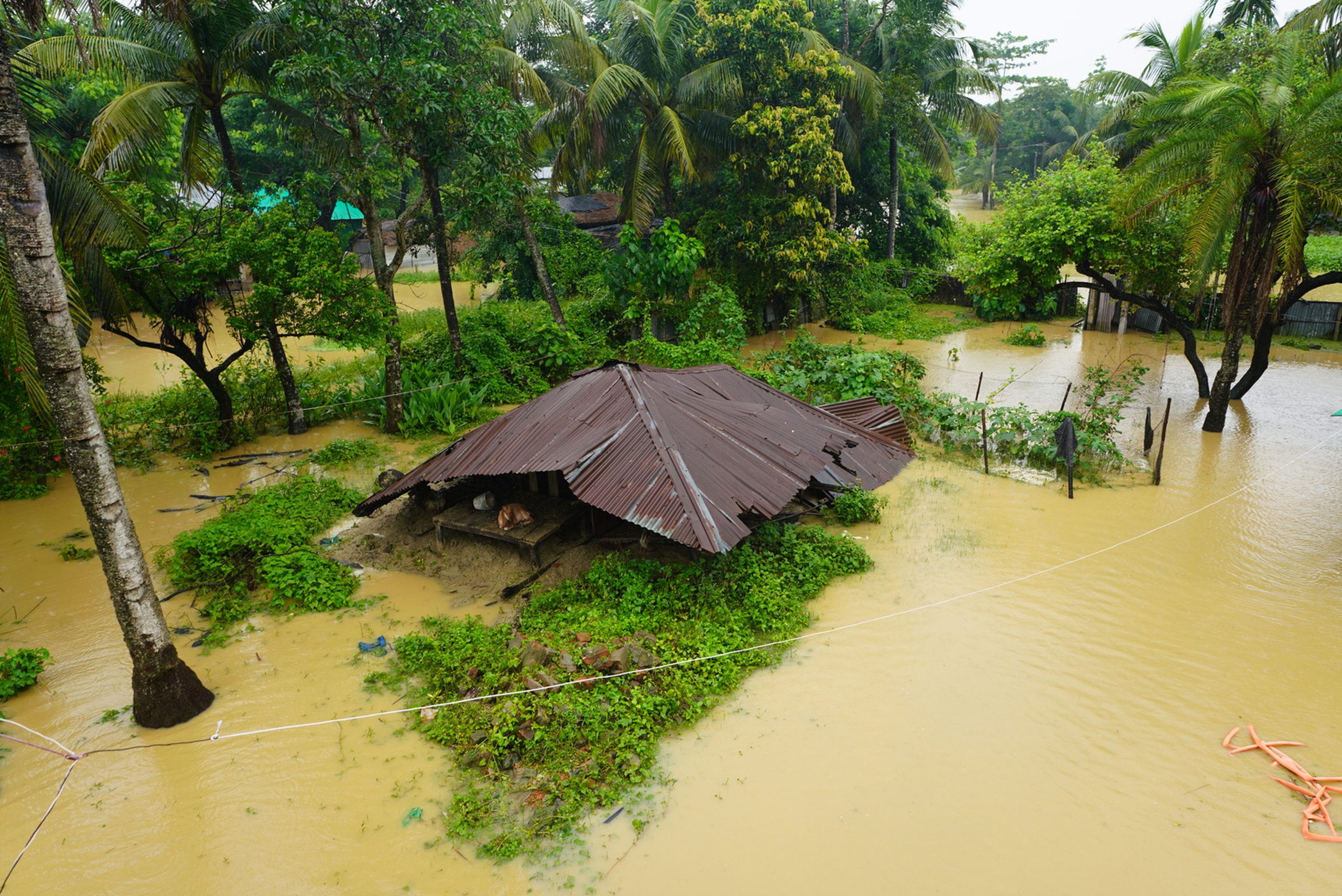
Government and non-government aid for the millions affected by floods in the Chattogram region has been widely criticised as insufficient.
Political and social organisations have shown little activity this time, and student participation, which was prominent in previous disasters, is also limited.
Even a week after the flooding, senior ministers have not visited the affected areas, a situation that has provoked further frustration.
According to official figures, Tk70.75 lakh, 1,040 tonnes of rice, and 46,100 packets of dry food have so far been allocated for flood victims in Chattogram district.
However, 6 lakh people from 1,88,000 families have been affected. This works out to a per capita cash allocation of just Tk12 and roughly 1.75 kg of rice. Only one in every four affected families could receive the dry food.
Currently, 22,000–23,000 people remain in various relief centres across the district.
Several senior and influential members of the current cabinet are from the Chattogram division. Although Finance Minister Amir Khosru Mahmud Chowdhury’s constituency was not affected by the floods, Home Minister Salahuddin Ahmed’s constituency, Chakaria in Cox’s Bazar, is among the worst-hit areas. Coordination of government relief operations in Chattogram is under State Minister for Power and Energy Anindya Islam Amit, who represents Jashore in parliament.
The state minister has been visiting the affected areas over the past week, but many victims said they have only received assurances, with sufficient aid yet to arrive.

At least six lakh people have been affected in five upazilas of Chattogram—Banshkhali, Satkania, Chandanaish, Lohagara and Fatikchari. Across greater Chattogram, flood- and landslide-related deaths total nearly 50. Locals emphasised that the true scale of the disaster cannot be understood solely by counting fatalities.
Sheikh Mohammad Mohiuddin, former general secretary of BNP’s Chattogram South district unit, admitted that relief efforts have lagged far behind the scale of damage.
He told TIMES of Bangladesh, “Rehabilitation must be given the highest priority. Both government agencies and non-government organisations must work together so that displaced and flood-affected families can rebuild their lives.”
Prof Manjurul Kibria, vice-chancellor of Bangladesh BGC Trust University, said, “Over the past two to three years, people were not as reliant on the government. At that time, it was understood that the government alone was not capable of handling major disasters, so individuals and various NGOs stepped in. This year, the situation is different. Many assume that the government will properly fulfil its responsibilities in disaster management.”
Minister faces anger during relief distribution
On Monday, State Minister Amit encountered protests while distributing aid in Keochia, Dharmapur and Dhemsha unions of Satkania. In Bajalia, a group of women attempted to block his convoy to demand more assistance.


Locals alleged that only families holding government-issued tokens received aid.
Ranu Akter, 40, said, “Some people received aid, but I did not. Only those with tokens were given food. Yet everyone here has been affected. Aid is needed for all.”
Divisional Commissioner of Chattogram, Zia Uddin, said, “All the resources currently available for disaster relief have already been used. We have requested additional support from the government to meet the remaining needs.”
Waiting for the prime minister
Jahirul Islam, MP for Banshkhali, the worst-affected area in Chattogram, told TIMES, “It is impossible to grasp the full extent of destruction without visiting the affected areas. We have raised the matter in parliament. We hope the prime minister will visit the flood-hit areas and stand by the victims.”
State Minister for Land and Chattogram Hill Tracts Affairs, Mir Mohammad Helal Uddin, distributed relief in Banshkhali and Satkania. He said, “Prime Minister Tarique Rahman is monitoring the situation continuously and has directed maximum effort in support of those affected.”
Extent of damage
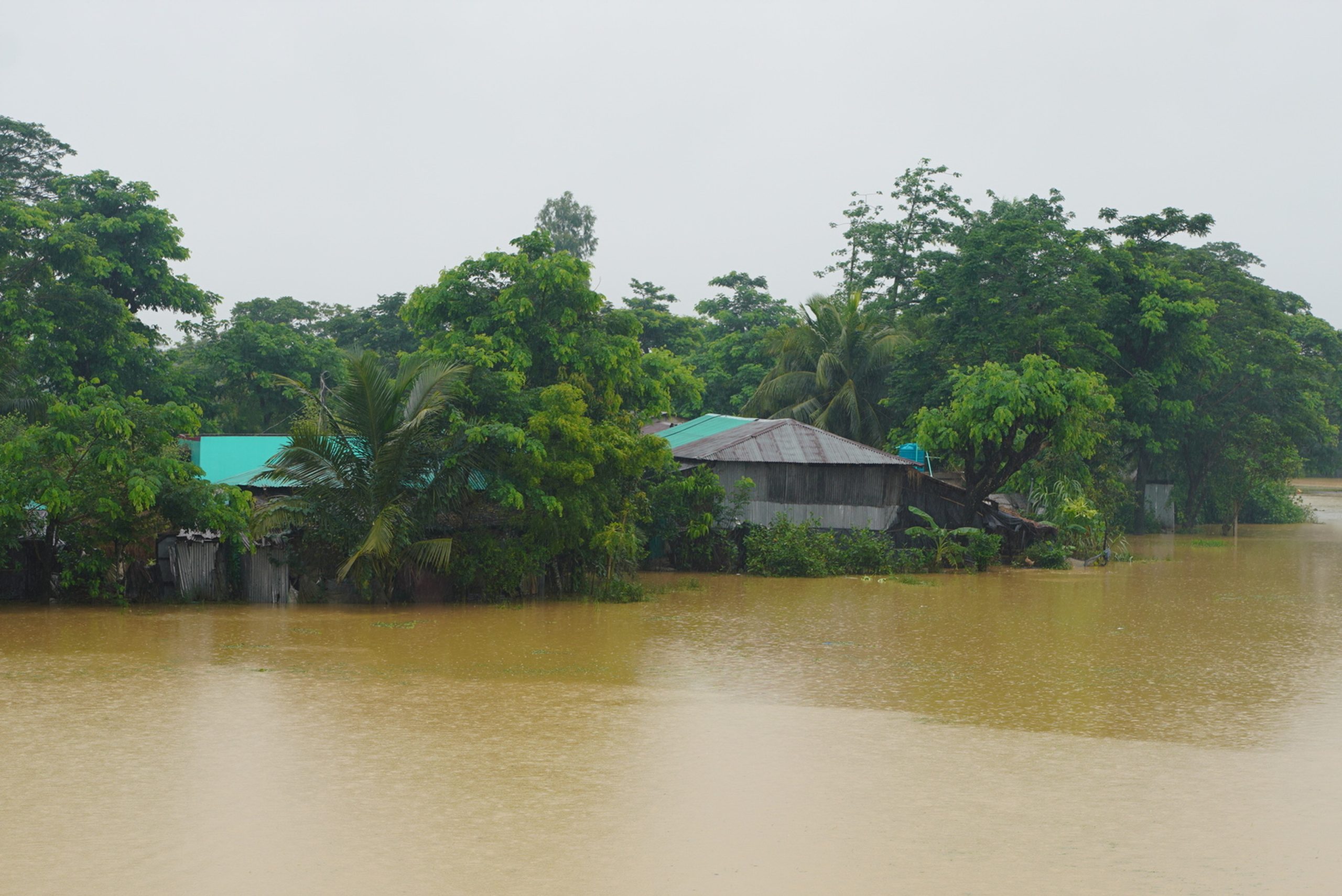
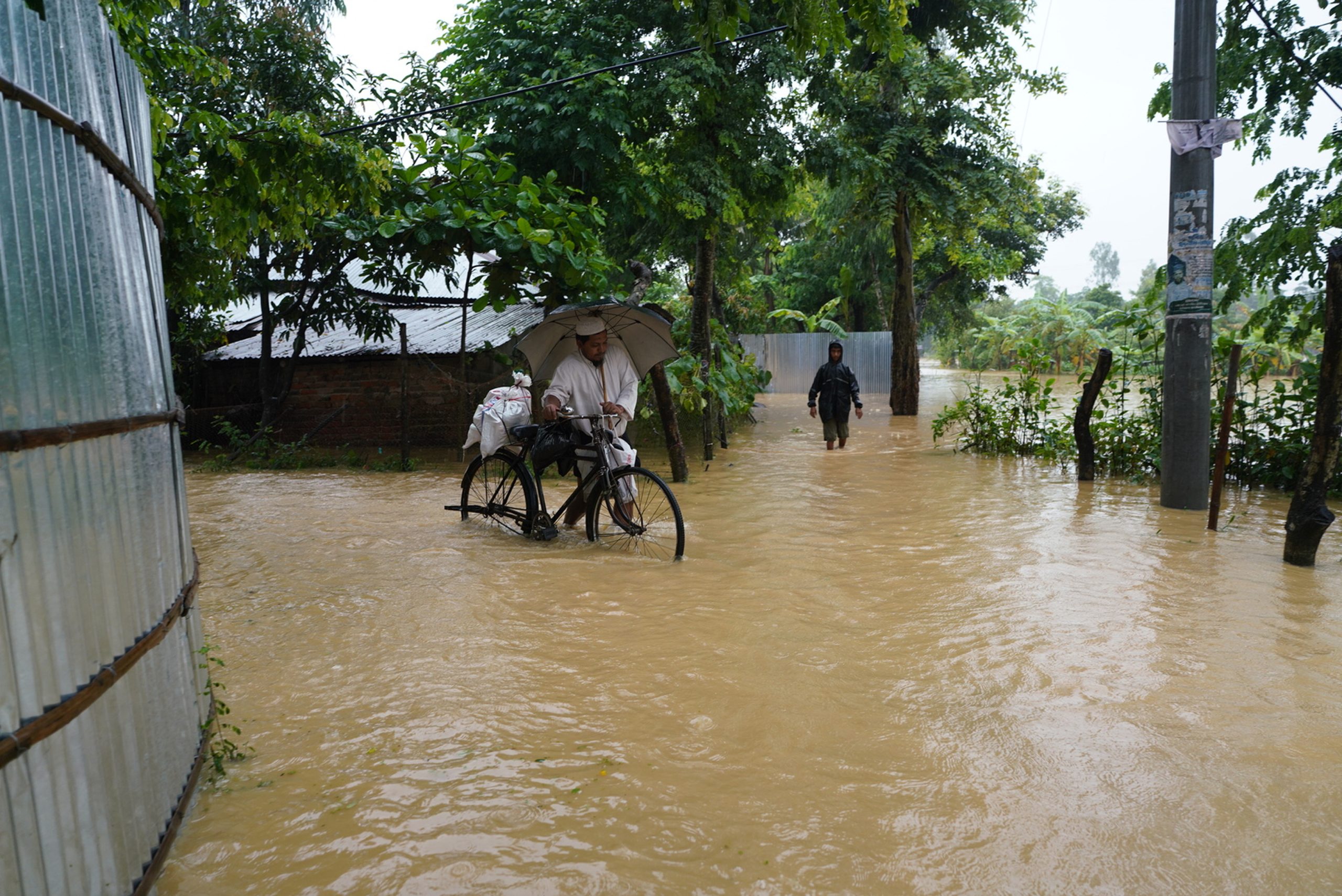
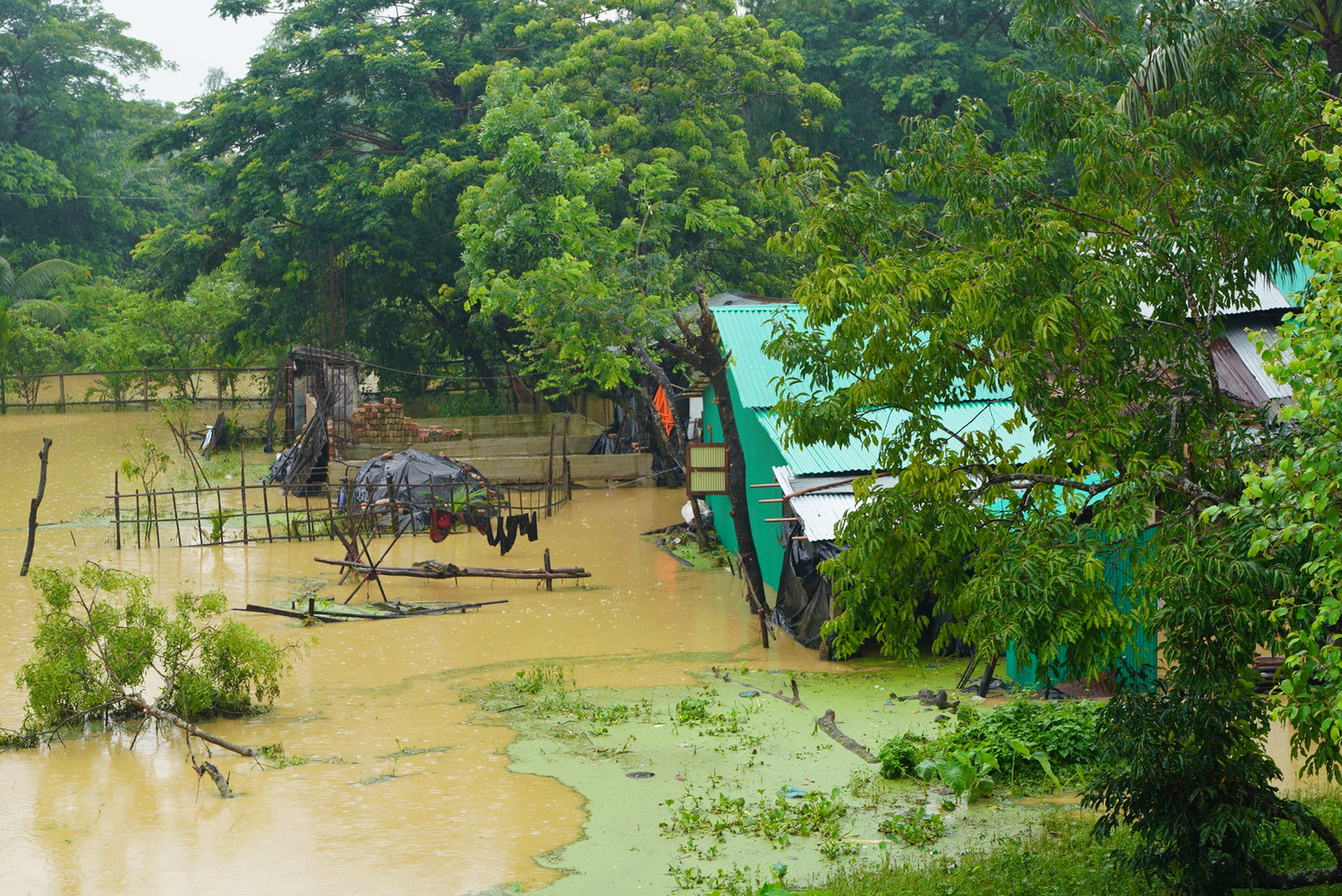
As floodwaters recede, the full scale of destruction is becoming evident. According to MP Jahirul Islam, around 5,000 mud houses in his constituency have either collapsed or been washed away.
Baki Billah, a resident of Baharchhara village, said, “This disaster has shattered our notion of safety in floods. We built our mud house on relatively higher ground, never imagining that water would come and destroy everything.”
A person returning from a shelter centre to their village said, “We are not only hungry now, we have nowhere to live.”
MP Jahirul Islam added, “The most urgent needs are materials for house construction, building supplies, and financial support to rebuild homes before the next rainy season.”
Hill areas in a more critical state
In Rangamati, relief has not reached all affected areas in the worst-hit upazilas of Baghaichhari, Barkal and Bilaichhari. In Bilaichhari’s Farua union, aid was distributed only once. Families whose homes were submerged were left out.
Nirochandra Tanchangya of Goainchhari village said, “Families living near Farua market and the main road received aid, but what was provided is insufficient for one family.”
Shimul Kanti Tanchangya, a resident of Tarachari village, said they have received no aid. He added that the one-time supply of rice, lentils and potatoes provided by the upazila administration in his area was insufficient even for a single family.
Sudatta Tanchangya, another affected resident, said, “We only hear that ministers and MPs will come, but we have yet to see them.”
Subimal Chakma, a resident of Tarenga Hat in Choto Harina union, said that while Bengali families in Bhushanchara received assistance, hill families in Tarenga Hat, Bajechari, Bame Kukichara and Guichari villages did not receive any aid.
Nilamoy Chakma, chairman of Boro Harina Union Parishad, said that 77 affected families were each given 10kg of rice.
Md Rezaul Karim, administrator of Chhoto Harina Union Parishad, said that 10,000 people have been affected. Aid has not yet been delivered, but it was scheduled to be distributed on Monday.
Mohammad Ruhul Amin, additional deputy commissioner of Rangamati, said, “Those living further away may receive aid a little later.”
The deputy commissioner of Bandarban said that among the 12,500 affected families, in addition to government arrangements, various political parties, security forces and individuals have also distributed aid.
According to the district administration, Tk20 lakh in cash from the Prime Minister’s Relief Fund and 400 tonnes of food along with Tk20 lakh in cash from the Department of Relief and Disaster Management have been allocated to address the losses.
Of this, only Tk3 lakh in cash, 8,530 packets of relief materials and 875 packets of baby food have so far been distributed.
The report includes information provided by Supriyo Chakma Shuvo, Rangamati correspondent, and Monirul Islam Monu, Bandarban correspondent.