
Control of 11 private commercial banks placed under Bangladesh Bank’s oversight is beginning to return to their shareholders, marking the central bank’s exit from an extraordinary intervention launched two years ago amid governance failures and widespread irregularities.
As the first step, Bangladesh Bank on Wednesday reconstituted the board of Al-Arafah Islami Bank PLC, handing management back to shareholder directors. The remaining 10 banks will follow in phases.
Central bank officials said the move is not simply a restoration of previous directors. Before approving new boards, Bangladesh Bank is assessing each bank’s financial condition, shareholder eligibility, ownership structure and the performance of the Bangladesh Bank-appointed boards over the past two years.

Under Bank Company Act, a board appointed by Bangladesh Bank may serve for a maximum of two years. As those terms expire, the central bank must determine the next legal course of action.
An internal Bangladesh Bank document reviewed by TIMES shows preparations began before the two-year tenure expired. The central bank decided to assess the banks’ financial performance over the past two years, collect updated Ultimate Beneficial Owner (UBO) reports for shareholders holding at least 2 per cent stakes and obtain legal opinion on the options available after the two-year period ends.




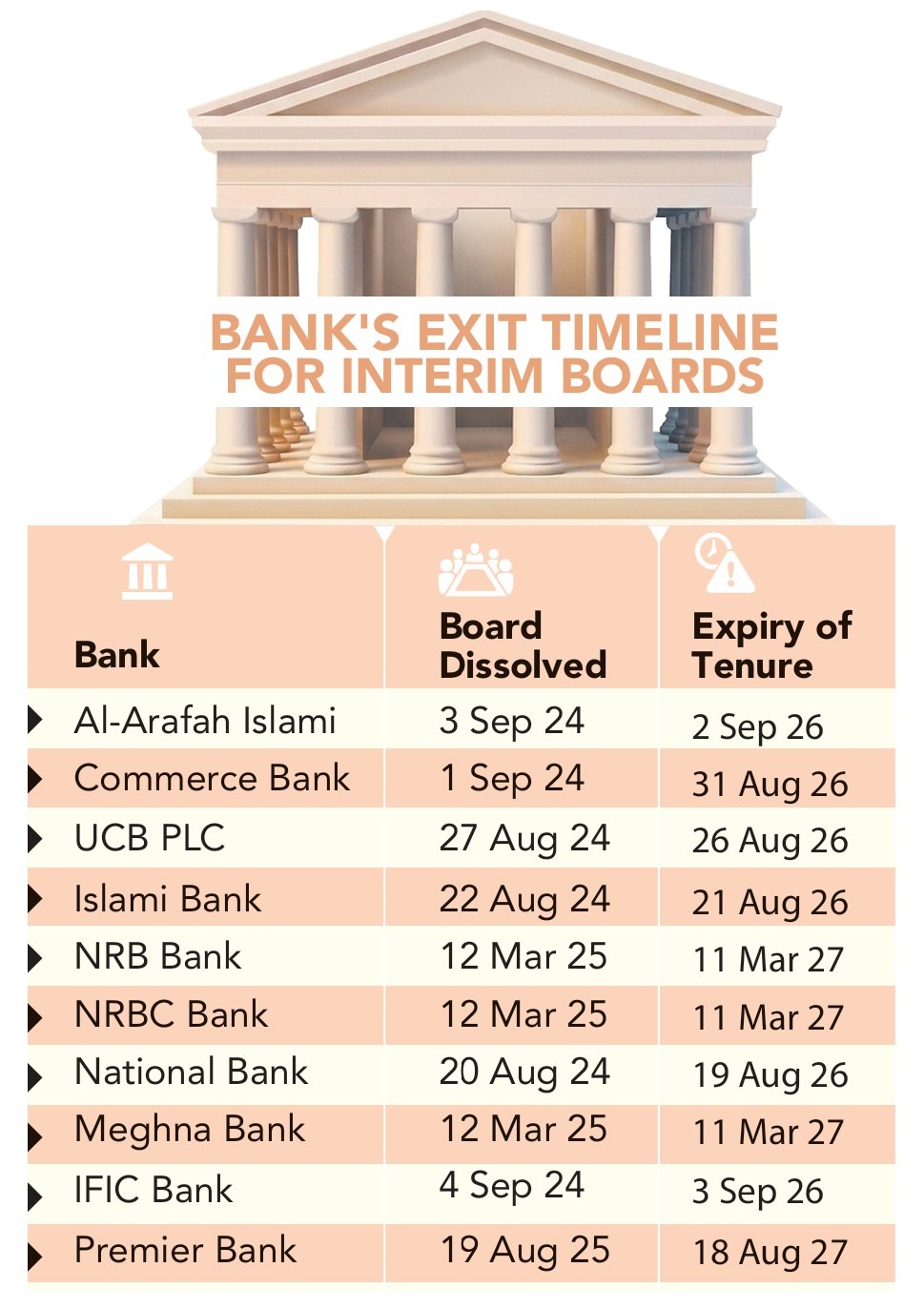
The document says Bangladesh Bank dissolved the boards of 11 banks under Section 47 of the Bank Company Act after 5 August 2024. They are Al-Arafah Islami Bank, Bangladesh Commerce Bank, United Commercial Bank (UCB), Islami Bank Bangladesh, National Bank, IFIC Bank, NRB Bank, NRBC Bank, Meghna Bank, The Premier Bank and ICB Islamic Bank. The terms of the Bangladesh Bank-appointed boards will expire at various times in 2026 and 2027.
The first transition has taken place at Al-Arafah Islami Bank. Bangladesh Bank appointed 14 sponsor and shareholder directors and three representative directors to its board. It also directed director Khalilur Rahman to resign from the boards of two insurance companies before assuming office. Previously appointed independent directors will remain, while the appointment of the board chairman must comply with existing Bangladesh Bank guidelines.
While returning board control to shareholders, Bangladesh Bank is maintaining close oversight.
The same document instructs relevant departments to urgently submit each bank’s latest Quick Review Report, CRR and SLR data, details of penalties, key performance indicators, LC dues, export overdues and any adverse observations on the banks or their boards. Those assessments will form the basis for evaluating the performance of the Bangladesh Bank-appointed boards.
Following the political transition in August 2024, Bangladesh Bank dissolved the boards of several banks over allegations of widespread irregularities, conflicts of interest and governance failures, replacing them with central bank-appointed boards.