


Asaduzzaman Kajol, an officer at Phomcom Fashion in Gazipur’s Bagher Bazar area, saw his career end abruptly when a holiday was declared on 28 June. Within 48 hours, the factory closed permanently, leaving him in a state of profound uncertainty.
His eldest child, aged six, is currently in school, while a private tutor is employed for the education of his four-year-old. “My days are full of dread and frustration. The four of us, my wife and two kids, have fallen into extreme hardship,” he told TIMES of Bangladesh.
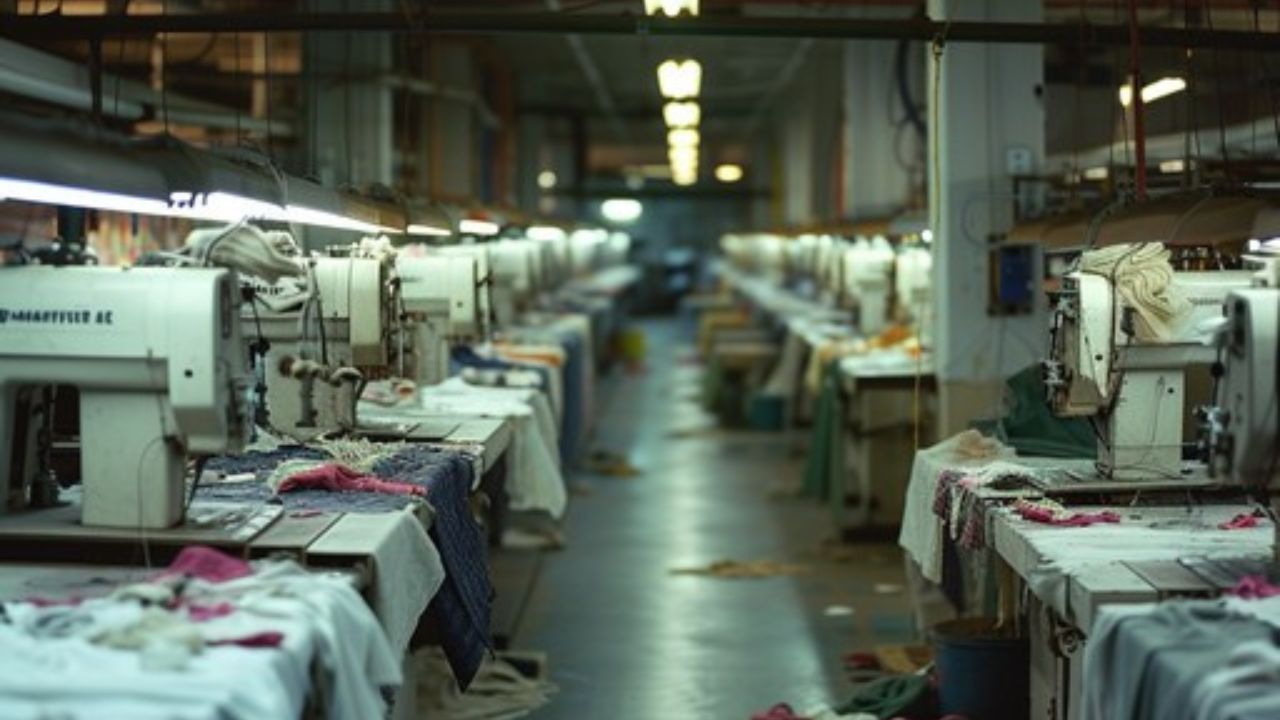
The closure of this factory is not isolated. In the same week that Phomcom shut its doors, 13 more garment factories in Gazipur were also locked. The figures become even more alarming when tracked from July 2024 onwards.
The narrative of successive triumphs in the ready-made garment (RMG) industry, which Bangladesh had been writing since the 1980s, has faced severe disruptions over the last two years.
According to Industrial Police data, 457 industrial factories closed in the two years between June 2024 and June 2026. Among these, 170 were textile and ready-made garment factories.
The list of closures includes 108 factories that are members of the RMG sector organisation Bangladesh Garment Manufacturers and Exporters Association (BGMEA), 35 from Bangladesh Knitwear Manufacturers and Exporters Association (BKMEA), and eight from Bangladesh Textile Mills Association (BTMA). The remaining 19 are affiliated with the Bangladesh Export Processing Zones Authority (Bepza).
However, the BGMEA’s own count is even higher, mentioning that 221 factories belonging to the organisation have closed in two years. The number of workers who have lost their jobs as a result reaches into the hundreds of thousands.
Relying on the surge of garment sector, Bangladesh had authored another success story in poverty alleviation. The extinguishing of the lights in that industry is therefore akin to a bolt from the blue in the middle of that story.

Bangladesh’s Readymade Garments (RMG) exports totaled $38.70 billion in FY26, marking a 1.64 per cent decrease compared to the $39.35 billion recorded in FY25.
Amidst various internal instabilities, the global situation is also unfavourable. Due to the escalating conflict in the Middle East, the prices of essential commodities are rising.
In a new analysis, the United Nations Children’s Fund (Unicef) has warned that at least another 1.2 million people in Bangladesh are now at risk of poverty.
A deep crisis with no way out
For the first time in his 17-year career, Asaduzzaman of Phomcom Fashion has found himself in such a deep crisis.
The cycle of dues, deprivation, lack of rights, and sudden dismissals frequently faced by garment sector workers had never touched him before. Consequently, he had not prepared himself for such a sudden setback.
While workers can demand their rights through collective pressure, officers lack that capacity. He said, “They [garment workers] can protest; what can we do, tell me? We are also fewer in number. I heard the garment workers’ dues might be paid on 20 or 23 July.




“I do not know what will happen to us. We have three months of salary arrears. There are other dues too. Please see if you can do something; please help us,” pleaded Asaduzzaman, with voice cracking from distress.
When asked if there is any possibility of a new job, he replied that prospects are limited.
Because garment factories are closing one after another, finding a job at this time is difficult. When asked what he would do then, he replied, “I will have to go home or sell assets. Life will not be the same as before.”
Life is even harder for the workers. For some, the money they send allows their children to grow up and provides food and clothing for elderly parents in the village. There are also dreams of slowly building their own households, yet they lack savings to navigate these difficult times.
Monir Hossain, a worker at the now closed Lithi Garments, said, “I am searching for a job everywhere desperately but cannot find one. Even survival has become difficult.”
New factories disappear every week
In Gazipur, known as one of the primary hubs of RMG industry, “Closed” notices are being hung on factory gates one after another.
Before even half of the current month has passed, more than 15 garment and textile factories have closed, leaving thousands of workers jobless. The unemployed do not know how they will pay rent, provide for their children’s education, or manage family expenses.
In the Bagher Bazar area of Gazipur Sadar, five industrial units of the Lithi Group – Apparel-21, Phomcom Fashion, Phomcom Dyeing, Phomcom Printing, and Phomcom Knitting Ltd – have been closed simultaneously.
A manager of the group told TIMES that 5,000 of their workers have become jobless.
In the Board Bazar area, Unique Designers Ltd and Unique Washing Ltd were declared permanently closed, causing about 2,000 workers to lose their jobs. Their dues were paid quickly following protests, but the workers’ question remains – where is the new job?
Faruq Hossain, a worker who lost his job at Phomcom Fashion, said, “I am trying for a job in various places, but I am not finding work anywhere.”
On the same day in the Chandra area of Kaliakoir, locks were also seen hanging at Apex Spinning and Knitting Mills, Apex Textile Printing Mills, Apex Laundry Mills, and Apex Yarn Dyeing Ltd.
Fashion Linkers in the Kadda-Naojor area of the city and Cortex Apparels in the Kashimpur area have also recently closed.
On 11 July, Koroni Fashions in the Ratanpur area of Salipur, Kaliakoir, was declared closed indefinitely. Eight thousand workers were employed there.
The closure of a factory does not just mean the job loss of workers; its impact falls on local shops, transport, house rentals, hotels and restaurants, raw markets, and small businesses.
Anisur Rahman Apu, managing director of Needle Work, told TIMES, “Due to political instability in Bangladesh, foreign buyers are moving particularly to India, Pakistan, Cambodia, and Vietnam.”
Warning of rising poverty
A Unicef report titled “The Impact of the Middle East War on Children in Monetarily Poor Households,” published on Thursday, has warned that the increased prices of essential commodities are creating intense pressure on limited-income families.
Unicef Executive Director Catherine Russell said children in countries far beyond the borders of the battlefield are now paying the price for this conflict. Due to rapidly increasing costs, it has become impossible to provide food and education for them, which could have long-term or lifelong negative impacts.
The analysis considered two possible scenarios. Even in a relatively less harmful situation, 18.3 million children worldwide could be affected. If the situation becomes more serious, 23.4 million children will face poverty.
The biggest shock will fall on the Asia and Africa regions, where approximately 80 per cent of the increase in poverty will occur. As a result, opportunities to receive the healthcare, education, and protection necessary for children’s development are becoming limited.
Unicef warned that if the world fails to take rapid action, all hard-earned development goals could be halted, putting the futures of millions of children at risk.