
Internal Trump administration assessments suggest the cost of US military conflict with Iran has reached approximately $100 billion, a figure more than triple the $30 billion price tag publicly reported by officials.
According to an NBC report citing six people familiar with the internal data, including three United States officials, the Pentagon estimates that total expenditure ranges between $80 billion and $100 billion.
These figures include operational costs and the replacement of destroyed aircraft and military hardware.
The internal findings contrast sharply with public testimony. Only two weeks ago, Russell Vought, the director of the Office of Management and Budget, informed House lawmakers that the conflict had cost “about $30 billion.”
This followed a May 12 briefing from the Pentagon’s comptroller, Jay Hurst, who cited a figure of $29 billion.

Despite the relatively static public estimates, the White House recently requested $88 billion in supplemental funding from Congress, of which roughly $72 billion was specifically related to the war effort.
Infrastructure and operational damage
The financial burden includes significant repairs to regional infrastructure. The United States Naval Forces Central Command (NAVCENT) base in Bahrain, which serves as the Navy’s Middle Eastern headquarters, requires nearly $1 billion in reconstruction following Iranian strikes.




Sources indicate that hundreds of millions of dollars are needed to repair headquarters facilities, piers, warehouses, and military housing.
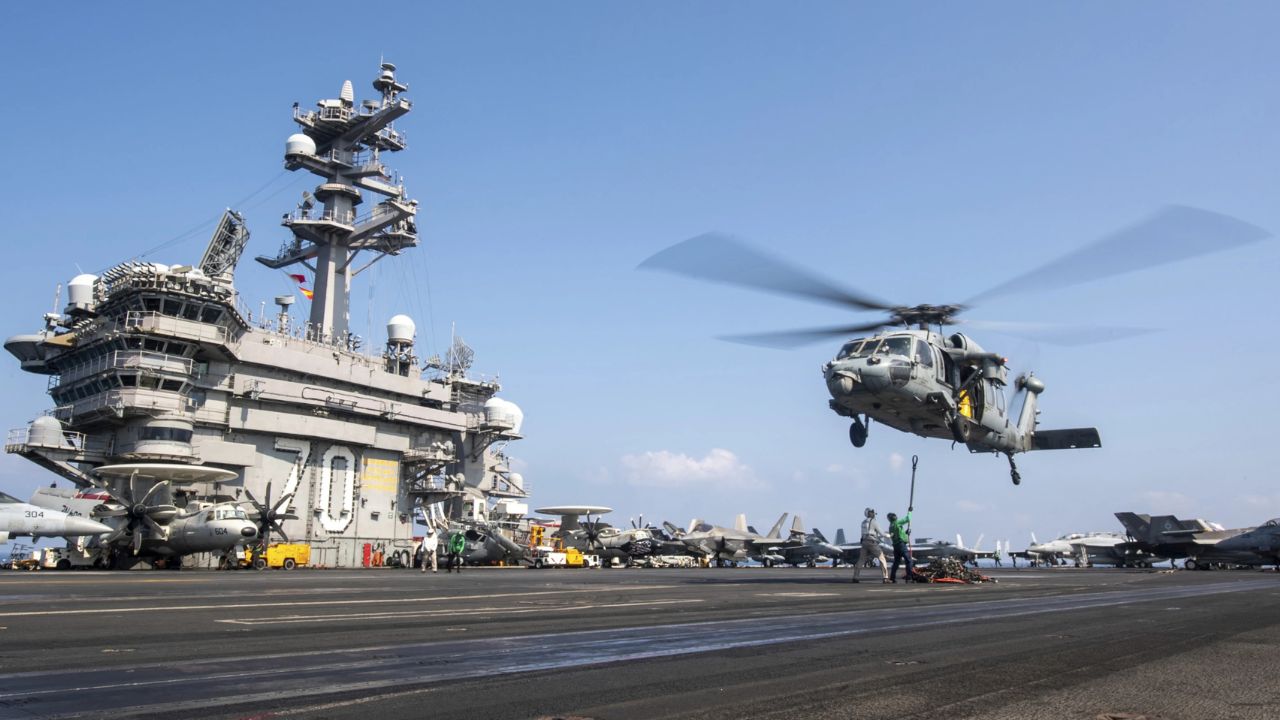
Meanwhile, the aircraft carrier USS Gerald R Ford is currently undergoing repairs at Naval Support Activity Souda Bay in Greece.
The vessel suffered significant damage and sailor injuries following a fire in a laundry room earlier this month, and has also been hampered by issues with its plumbing systems.
The cost of operations is expected to rise further after Iran resumed attacks on U.S. military sites across the Middle East. This escalation follows US President Donald Trump’s unilateral declaration that the existing ceasefire has ended.
Independent assessments and economic impact
The $100 billion internal estimate aligns with findings from independent researchers. Stephen Semler calculated the war’s cost at over $103 billion, noting that this exceeds the annual military budgets of almost every country in the world.
Semler’s breakdown includes $47 billion for weapons, $29 billion for operations, and $20 billion for the loss of assets. A further $3 billion has been attributed to subsidies for Israeli munitions and interceptors, with $5 billion spent by other US agencies.
Semler accused the administration of being “brazen” in its public accounting, describing the $30 billion official figure as “parody-level.”
Beyond direct military spending, the conflict has had a significant impact on the domestic economy. American consumers have faced an additional $69 billion in fuel costs due to rising petrol and diesel prices caused by the closure of the Strait of Hormuz.
Administration officials have been accused of downplaying or omitting operational costs in public estimates, while the obfuscation of damage to US assets has made external fact-checking difficult.
Last Tuesday, Trump retracted a suggestion to impose fees on the Strait of Hormuz, saying, “I don’t think anybody should be able to charge a fee for the strait.”