
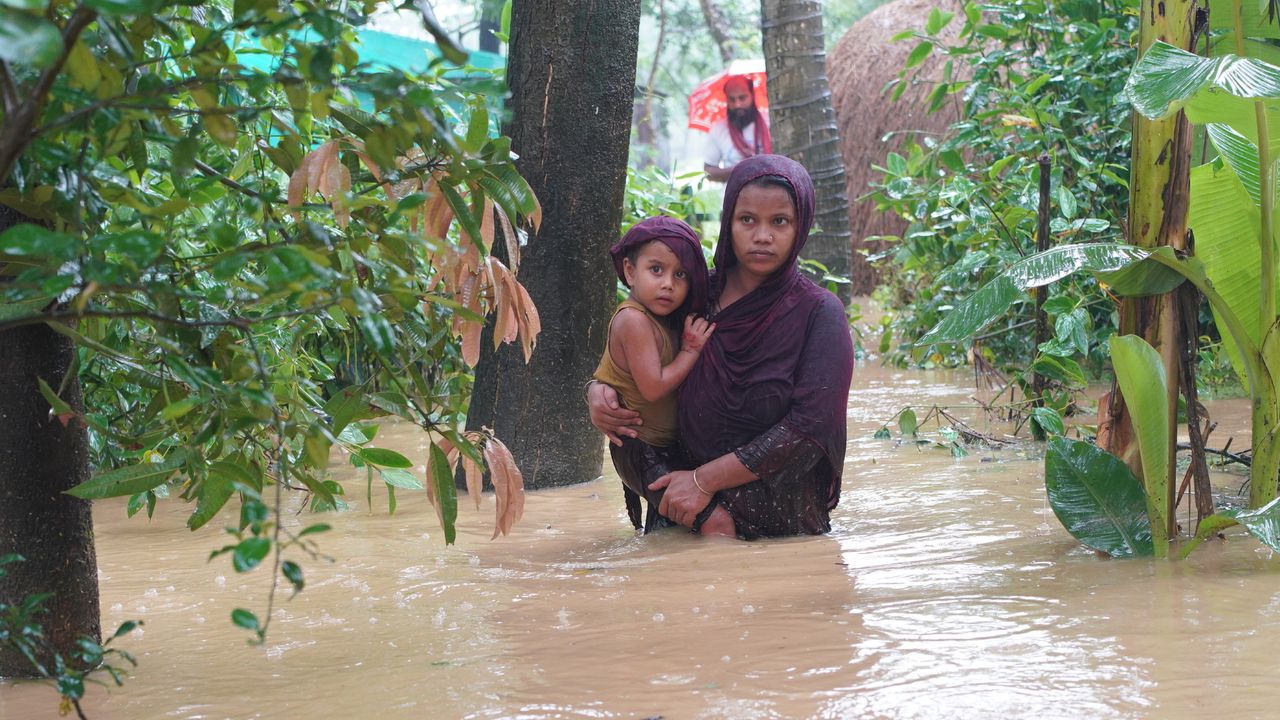

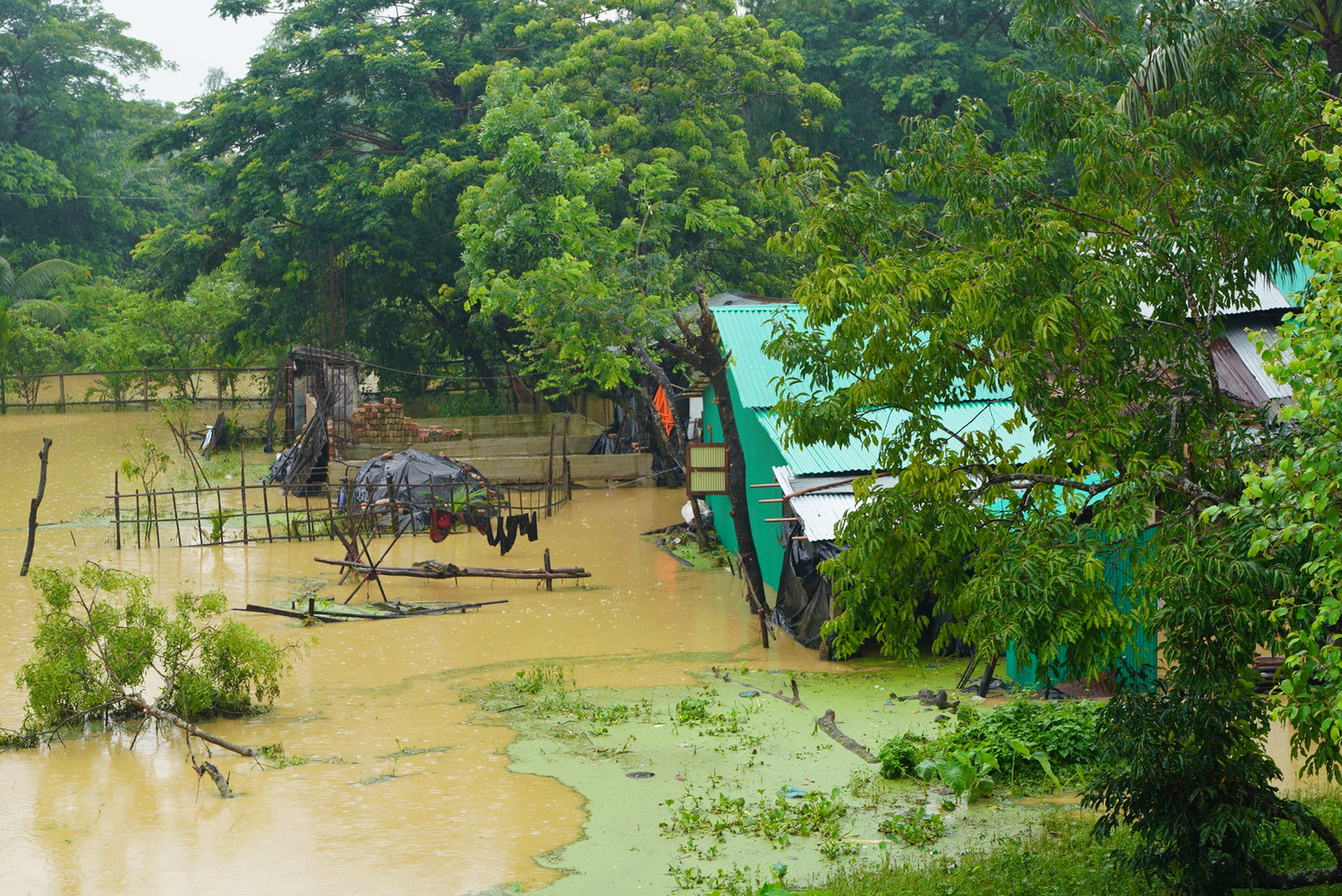
Wading through chest-deep water in Bashkhali area of Chattogram, Asif Hosein was making his way to a market one kilometre away, he must fetch drinkable water.
The college student, and his parents, left their home for shelter after the devastating flood submerged their residence three days ago. Accompanying Asif was Mokim, barely in his teens, out with the same mission.
For two days straight, they survived on nothing but dry food – the only relief that had reached them.
Hundreds of thousands of people across seven flood-hit districts are facing the same grim reality. On top of a severe drinking water shortage, comes the double whammy of diseases and desperate scramble for relief.
Alongside this flooding in the country’s southeast and northeast, heavy rain has thrown daily life into chaos in the capital, Dhaka, as well. Continuous rainfall from Friday night through Saturday afternoon left various parts of the capital submerged.
Vehicles broke down in waterlogged areas, leaving office-goers and students in severe distress.
Since July 4, continuous rain and hill torrents have flooded at least 58 upazilas in Khagrachhari, Rangamati, Bandarban, Cox’s Bazar, Chattogram, Moulvibazar, and Habiganj. According to the Disaster Management Ministry’s count as of July 12, the floods have killed 51 people, injured 39, and affected 1,022,963 others.
A total of 44,457 people are currently staying in 1,131 shelters. Over the past week, the Chattogram region has recorded 1,169 millimetres of rainfall. On Sunday, the flood forecasting centre reported that water in the Sangu, Kushiyara, and Someshwari rivers is flowing above danger level at several points.
Rising health risks, medical response
Conditions in the Chattogram region may improve somewhat over the next 24 to 48 hours, but there is a fresh risk of short-term flooding in the Teesta basin and northern districts.
According to the Water Development Board, water levels rose to 66 of the country’s 127 river-monitoring stations as of 9am Sunday, while they fell to 60. As floodwater recedes, the risk of waterborne disease rises.

Even though water levels in Moulvibazar’s Manu and Dhalai rivers have dropped, diarrhoea, fever, and allergic reactions are appearing.
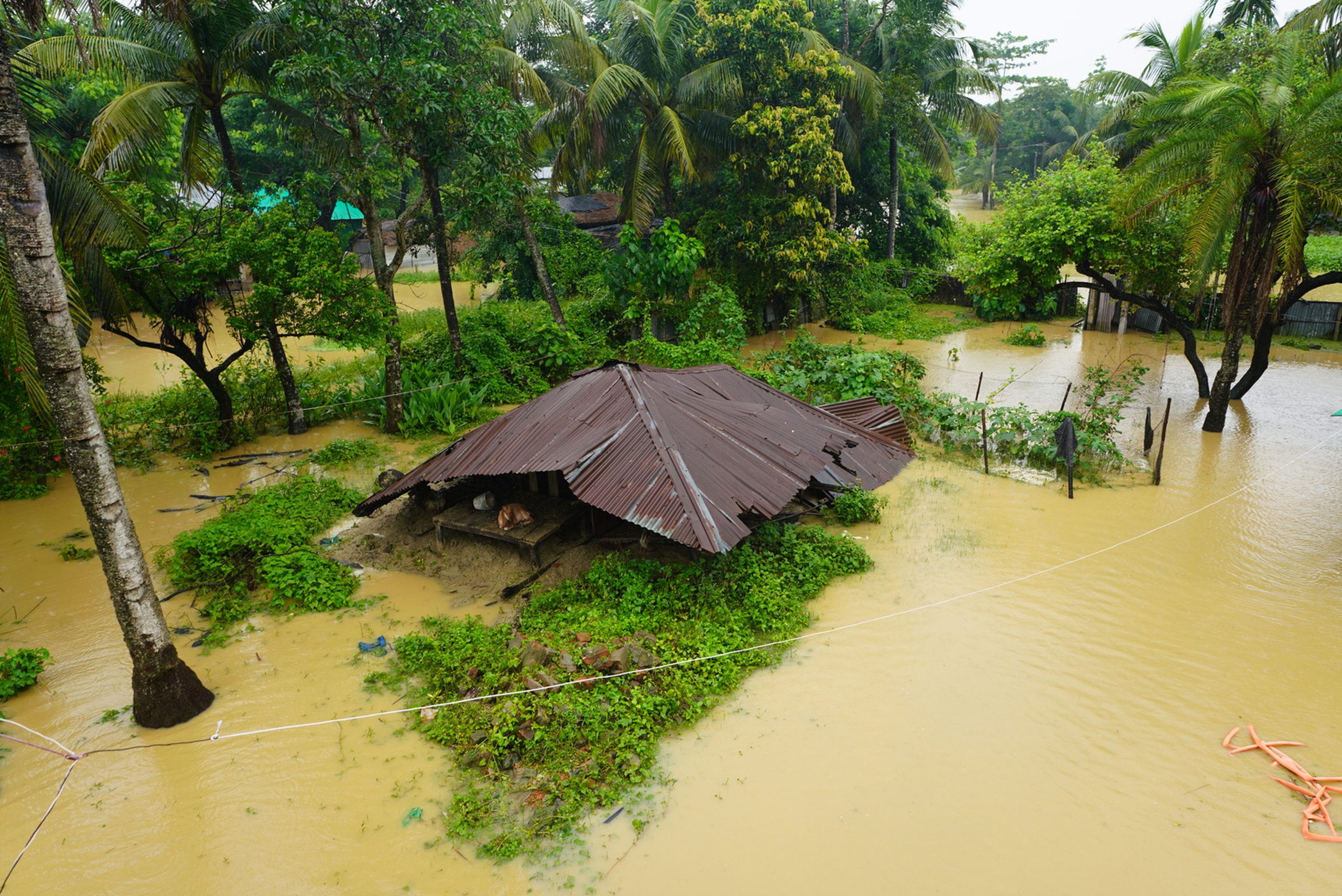
Residents of Kamarchak union in Rajnagar are suffering from fever and diarrhoea. District Civil Surgeon Dr Md Mamunur Rahman said medical teams are on standby with adequate medicine to treat waterborne illnesses.
In Chattogram, 75 snakebite cases and 25 cases of waterborne disease have been identified, according to Civil Surgeon Dr Jahangir Alam. In Cox’s Bazar’s Chakaria and Matamuhuri areas, 54 medical and rapid response teams are working, said upazila health officer Dr Md Zainal Abedin.
Meanwhile, the Directorate General of Health Services has issued a seven-point directive and cancelled leave for doctors and nurses.
Desperate scramble for food, clean water
State Minister for Disaster Management and Relief M Iqbal Hossain has said adequate medicine stocks and advance preparations are in place – but on the ground, the shortage of clean water and food remains severe.
Hunger and thirst grip flood victims. Twelve families at the Purba Ilsha shelter in Bashkhali upazila, Chattogram, still have not received any food assistance. Local resident Monowar Zaman said their stored rice and potatoes have run out, and they are now surviving on puffed rice.




However, Bashkhali’s Upazila Executive Officer Md Ruhul Amin said 44 tonnes of rice and dry food had been distributed as of Thursday. Nearly eight lakh people in Satkania and Bashkhali are marooned by floodwater, without electricity, and cut off from communication.
Md Jamil, a resident of Kakara, said their stove has not been lit in four days. Nuruddin, a resident of Chakaria, complained that children are going without food.
In Bashkhali, people trapped by floodwater are suffering the most from the shortage of clean drinking water. Some are travelling nearly five kilometres to fetch it.
Across Cox’s Bazar district, including 25 unions and two municipalities, around four and a half lakh people are in extreme hardship. With tube-wells submerged, most have no way to cook.
To tackle the crisis, Deputy Commissioner Md Abdul Mannan has allocated 120 tonnes of rice along with cash assistance and personally distributed relief.
Infrastructure collapse, relief disparities
Relief struggles to reach hill communities. Bandarban remains completely cut off from the rest of the country.
Executive Engineer of the Roads and Highways Department, Sakhawat Hossain, said all vehicle movement in the district has stopped. With the road submerged at Bajalia, even long-distance buses cannot run.
A bridge collapse at Padua in Rangunia has severed the Rangamati-Bandarban road link. And with the Lichubagan ferry service suspended, there is no alternative route either.
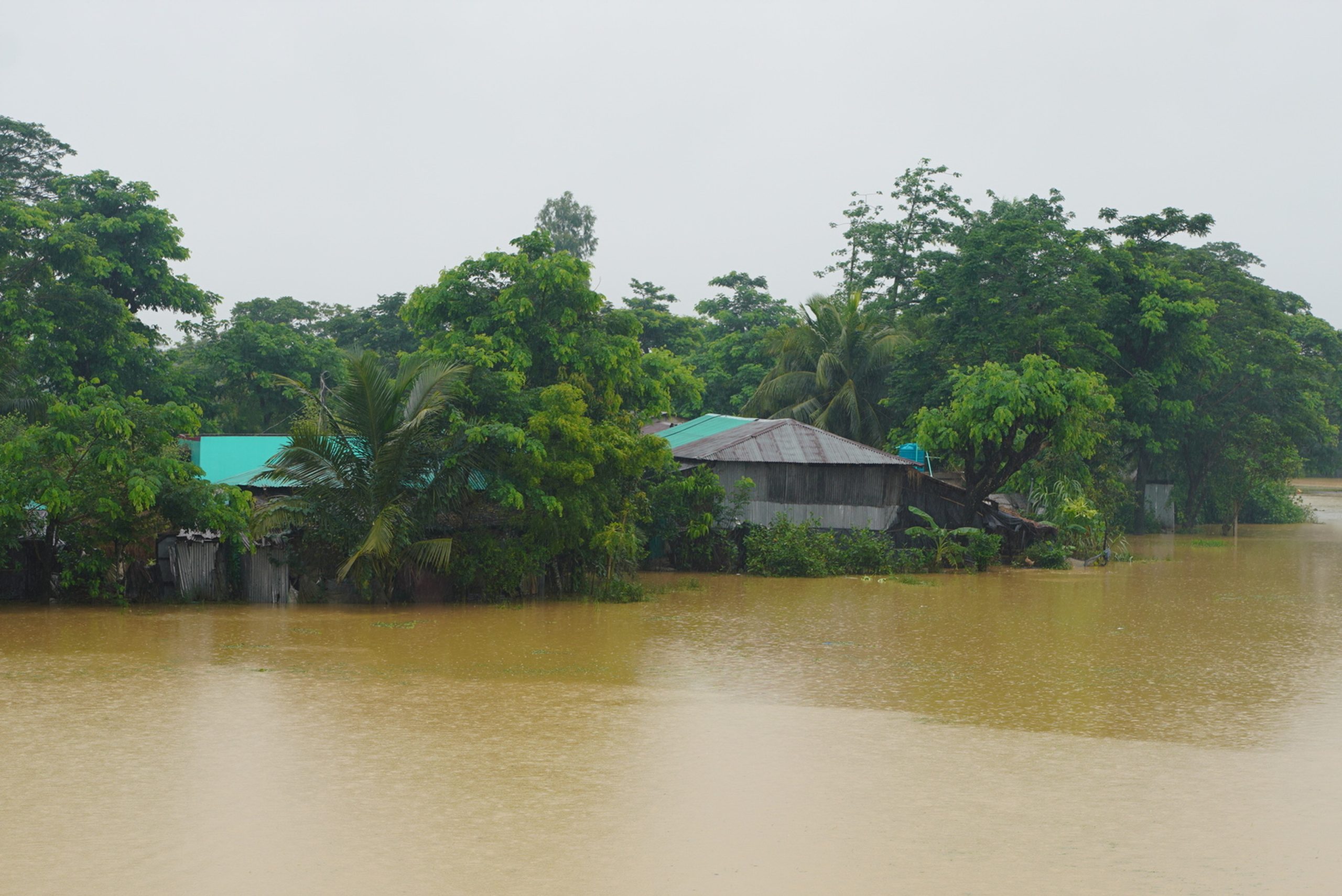
Md Zakir Hossain, upazila executive officer of Rangamati’s Bilaichhari, said the powerful current of the Rikhyang river and a road collapse at Udoychar have made it impossible to send relief to the 25,000 flood-marooned people of Faruya union.
Local efforts are underway to gather relief for them regardless. People in the district’s Puichari, Shekherkhil, Chhanua, Sarol, Gandamara, Borogona, Paschim Chambal, and Tiputiguna areas have received no relief at all so far.
In Khagrachhari’s Dighinala, even though the water has receded, people are living miserably amid mud and waterlogging, conditions that are raising the risk of disease. Recovery remains slow. River water levels in Sylhet division have fallen somewhat.
Although flood conditions have improved in Habiganj and Moulvibazar, 70,000 people in low-lying areas remain trapped by water. Moulvibazar Relief Officer Mohammad Sadu Mia said the number of flood-marooned people has dropped to 26,544, with 2,172 currently in shelters.
In Habiganj, around 28,140 people are marooned due to a breach in the Khowai river embankment and riverbank erosion.
District Relief Officer Alamgir Hossain said rice, dry food, and cash have been allocated for flood victims, but as the water recedes, the shortage of clean drinking water is creating fresh suffering for the affected.
Relief distribution faces questions. The Relief Ministry has allocated 1 crore 45 lakh taka (14.5 million taka) and 2,650 tonnes of rice for the seven districts, but the picture on the ground tells a different story.
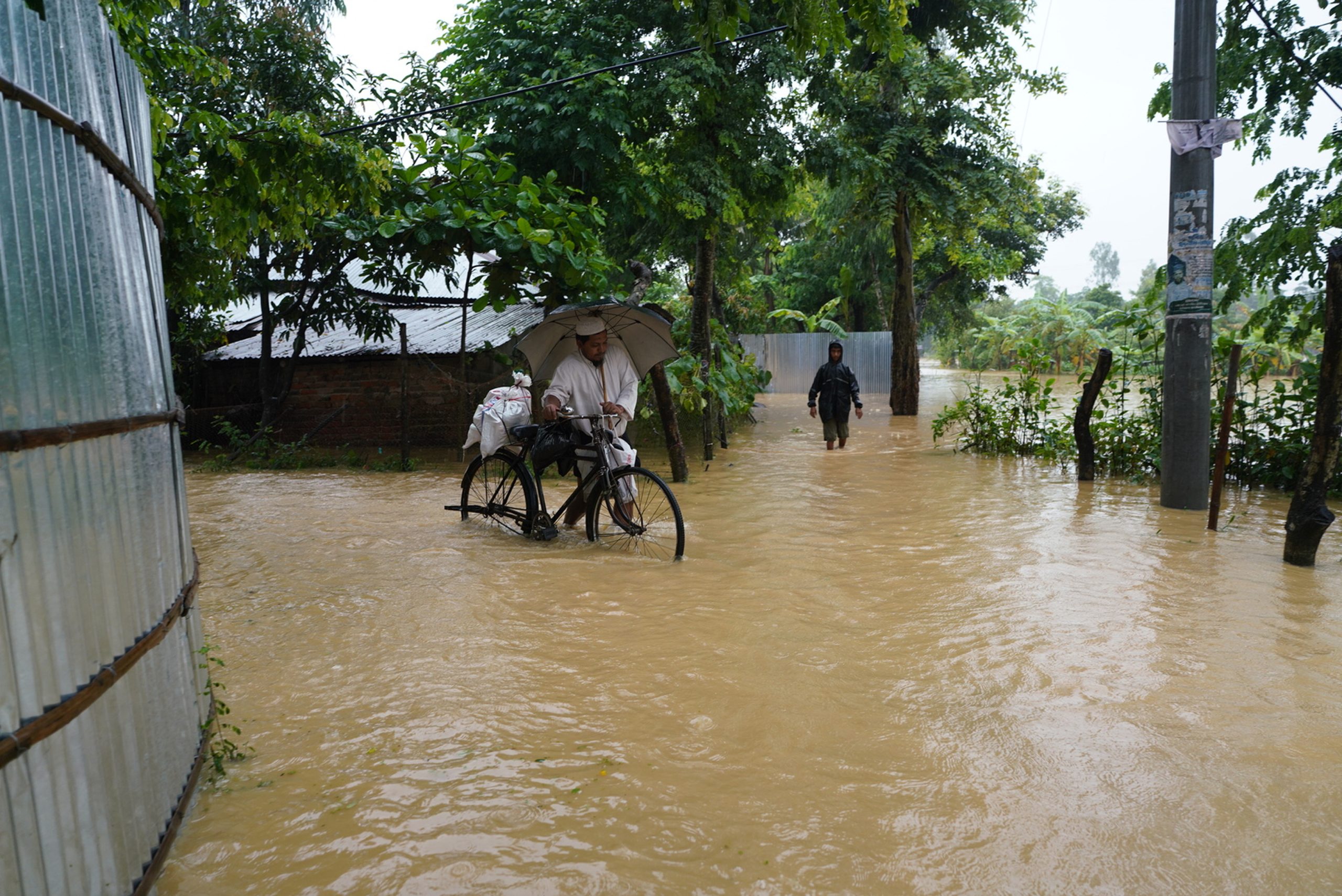
Mohammad Idris of Bashkhali alleges that while relief has reached northern Bashkhali, very little has gone to the south. He claims a syndicate is depriving genuine victims of relief. Residents of Lokkharchar say they have not received relief in a week.
According to the Chattogram divisional administration, 12,000 people are staying in 1,057 shelters. Nearly four lakh (400,000) people in Satkania, Lohagara, and Chandanaish remain trapped by floodwater.
State Minister for Power and Energy Anindya Islam Amit said the severe waterlogging has been caused by encroachment on canals and obstruction of water flow.
Man-made barriers, future flood risks
Illegal barriers are accused of worsening flooding. Those familiar with the situation say it is not rainfall alone but man-made obstructions that are the real reason behind the prolonged suffering.
Tanjir Saif Ahmed, Executive Engineer of the Chattogram Water Development Board, said influential local figures are building illegal embankments to protect their fish and salt enclosures.
At the same time, they are keeping sluice gates shut, preventing the water from draining away. Journalist Alauddin Alo, General Secretary of the Bangladesh Paribesh Andolon (BAPA), found evidence of sluice gates in Chakaria being blocked shut with wooden planks.
Upazila Executive Officer of Pekua, Rafiqul Islam, said the illegal closure of gates has caused prolonged waterlogging, and that the administration is now working to cut these away and restore the natural flow of water.
More trouble may lie ahead. Sarder Uday Rayhan, Executive Engineer of the Water Development Board, said as of Saturday, water levels in the Manu, Kushiyara, Sangu, Matamuhuri, and Someshwari rivers were above danger level.
Assistant Engineer Mostafa Kamal Jihan, giving a forecast, said fresh short-term flooding could hit low-lying areas of several districts including Feni, Sylhet, and the Teesta basin within the next 48 hours.
Heavy rain is forecast for Sylhet, Rangpur, Mymensingh, and upstream regions. So even where the water is receding, the relief is only temporary; the fear that the old suffering could return at any moment has not gone away.
TIMES of Bangladesh correspondents in districts also contributed to this report.