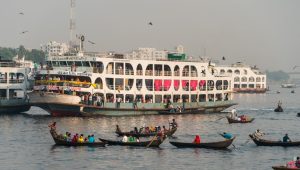

Bangladesh’s travel and hospitality sector continues to trail far behind other South Asian countries, with business shrinking last year as political unrest and security lapses deepened.
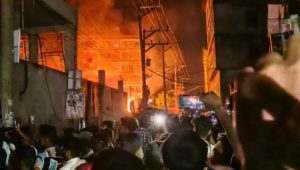
Observers fear the situation may worsen, as cultural landmarks and traditional festivals are repeatedly hit by violent attacks, many orchestrated by extremist groups who often remain beyond accountability.
Tourism’s share of the national economy remains small about 3 percent, far below that of neighbouring countries.
“Bangladesh is not considered a safe tourist destination by many nations,” said Kamrul Hassan, who teaches tourism and hospitality at Dhaka University.
“You could say the level of security tourists expect is largely absent. Bangladesh’s portrayal in foreign media also discourages a lot of international travelers,” he added.

Specialists in the sector often describe the country as unfriendly to visitors. The long-running disputes in the Chittagong Hill Tracts remain unresolved, while the Rohingya presence in Cox’s Bazar, Bangladesh’s primary tourist hub has created further unease among visitors.
According to the World Economic Forum’s Travel and Tourism Development Index 2024, Bangladesh slipped to 109th position, down nine spots from 100th place in 2021. This setback came after years of steady improvement since 2017, when the country ranked 125th.
By contrast, countries like Sri Lanka, the Maldives, and Thailand have managed to revive their tourism industries after both the pandemic and domestic turmoil.
“It did not happen randomly. The countries took strong steps to revitalise their tourism business,” noted Kamrul.




While tourism contributes roughly 10 percent to the world’s GDP, Bangladesh earns only about 3 percent, according to Bangladesh Parjatan Corporation.
Regional comparisons highlight the gap. India earned about USD 37 billion from tourism in 2024, Nepal saw its tourism income jump to NPR 82.33 billion, and even Pakistan ranked ahead of Bangladesh at 101st place, with tourism contributing over 5 percent to its GDP. Bangladesh, in comparison, generated less than USD 3 billion.
The Maldives remains the region’s most tourism-reliant economy, with the sector accounting for nearly 70 percent of GDP. Sri Lanka also reported higher arrivals and revenue despite ongoing economic difficulties. India’s receipts rose to USD 35.02 billion, while Sri Lanka earned USD 3.17 billion in 2024. Bangladesh, meanwhile, saw its income fall from USD 453 million in 2023 to USD 440 million in 2024, according to the Asian Development Bank.
Industry insiders argue that lack of diversity is another critical barrier. Repeat visits remain rare, with most destinations unchanged for decades.
“Bangladesh has no plan to attract tourists. The sector looks as it did decades ago,” said Shoeb-Ur-Rahman, associate professor at Dhaka University’s Tourism and Hospitality Management Department.
He emphasized the need for accurate statistics on arrivals, visitor preferences, and repeat visits.
“We must learn why Bali or Pattaya attract repeat visitors while Cox’s Bazar does not,” he explained.
Travelers often complain of being overcharged at every stage of their journey.
“In Cox’s Bazar, hotel rates and food are excessively high, with almost every trader exploiting tourists,” said Humayun Rashid, who recently traveled there with his family.
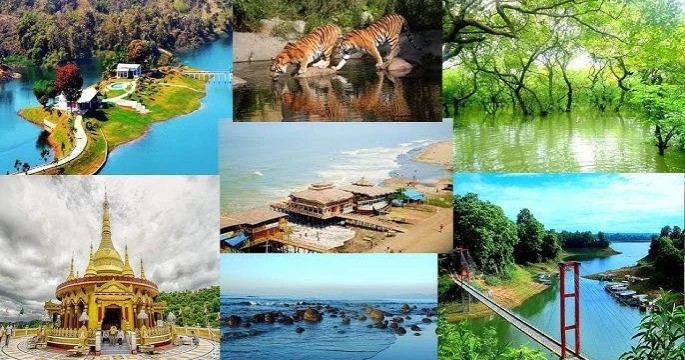
Labiba Habib, founder of the tour group Let’s Explore World, observed that while other countries showcase varied attractions, Bangladesh relies almost solely on beaches and hills.
“In many destinations, tourists enjoy freedom in both urban and natural sites, while here people feel judged for what they do,” she said.
Experts also point out that Bangladesh has failed to develop urban tourism. Unlike Dhaka, cities such as Delhi, Bangkok, Jakarta, and Tokyo attract millions each year.
“Dhaka’s haphazard urban landscape with its infamous traffic tailbacks scares away tourists,” said Adil Muhammed Khan, president of the Bangladesh Institute of Planners.
According to Md Rafeuzzaman, president of the Tour Operators Association of Bangladesh (TOAB), lasting political calm is essential if the industry is to grow.
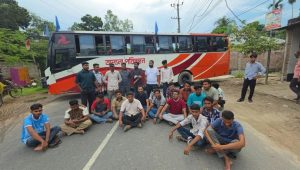
National polls are scheduled for February, and tensions are rising as opposition parties and law enforcement clash regularly in the streets. Protest blockades often paralyze city life without warning.
Security experts caution that the turbulence could persist long after the election, raising fears that the tourism sector’s decline will continue.