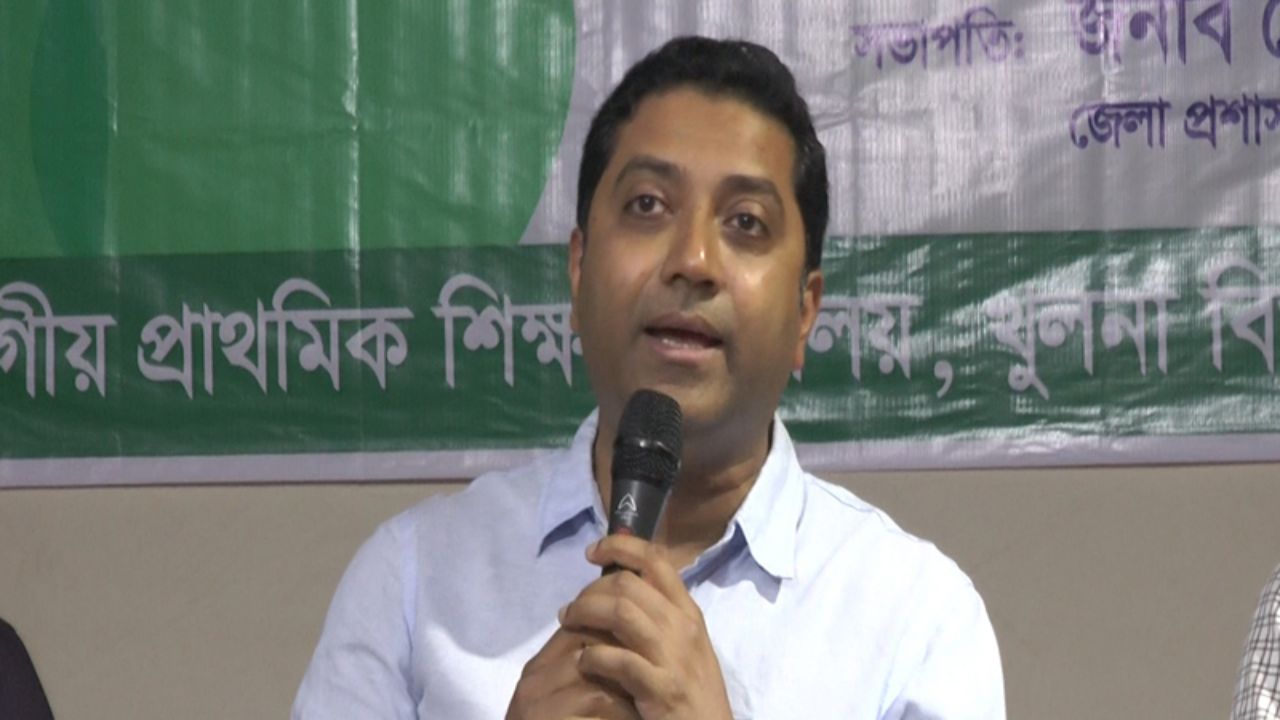
BNP Standing Committee Member Salahuddin Ahmed has said that those who had advocated for delaying the upcoming election “belong to the camp opposed to democracy,” asserting that timely elections are essential for restoring democratic accountability in Bangladesh.
He made the remarks on Friday at the Krishibid Institution auditorium in Farmgate, Dhaka, while addressing the sixth day of BNP’s week-long national programme titled “Plan to rebuild the country.”
The event was attended by leaders of the Jatiyatabadi Chhatra Dal (JCD) from across the country.
In his keynote speech, Salahuddin said that once the electoral process progresses, the public will recognise that BNP embodies the country’s democratic aspirations. “People will understand that the true party of the people is BNP. They will understand that BNP is synonymous with democracy,” he said.
He emphasised that BNP has always pursued inclusive politics: “We have never created, nor will we ever create, divisions in politics in the name of religion. We reject segregation on the basis of religion, race, language or culture. The constitutional identity of every individual is simple, they are citizens of Bangladesh.”

He called on party workers to take BNP’s programmes directly to the grassroots, stating that political communication must be clear and people-oriented.
Commenting on the announcement of the election schedule, Salahuddin described it as “a successful milestone in Bangladesh’s democratic transition.” While some groups felt disheartened, he said the announcement ultimately had to be welcomed.
“We welcomed it with satisfaction because one of the primary goals of the mass uprising was ensuring the people’s voting rights,” he said. “Those who wanted to delay the election stand against democracy.”



He accused a particular political party of trying to gain Awami League votes by avoiding criticism of the ruling party, adding that the group’s “true political agenda” has now been exposed to the public.
Citing the ‘White Papers on the State of the Bangladesh Economy’ prepared by economist Debapriya Bhattacharya, Salahuddin said the findings must be communicated to the public in simple terms.
He noted that from 2009 to 2023, various forms of mismanagement, tax exemptions and irregularities in public finance had caused financial losses significant enough to “fund two education budgets or three health budgets.”
He said the extent of alleged corruption in the banking and non-banking financial sectors was so large that “24 Padma Bridges and 14 metro rail systems could have been built with the money lost.”
He further claimed that more than Tk29 lakh 25 thousand crore had been siphoned abroad during this period. “Awami League has economically crippled the country and constitutionally buried democracy,” he alleged.
Addressing historical narratives, Salahuddin said it was essential to inform the public about those whom he claimed “stood against Bangladesh’s interests from 1947 to 1971.” He argued that such discussions were necessary for political clarity and accountability.
Salahuddin urged Chhatra Dal activists to communicate BNP’s reform agenda to the public focusing on state restructuring, democratic renewal and economic recovery. “We will not contest the election with emotion-driven slogans or religious narratives. We will go with concrete, well-planned programmes,” he said.
Describing Students’ Uprising ’24 as the culmination of a long democratic movement, not just a 36-day student agitation, he said, “From 2009 to 2024, a long staircase of sacrifices has been built of blood, of countless lives. That path led to the morning of 5 August 2024.”
He called on student leaders to present eight core issues, including the family card, farmer card, health card, education reforms and unemployment solutions, to the public in accessible language.
The event was presided over by BNP Senior Joint Secretary General Ruhul Kabir Rizvi, conducted by Joint Secretary General Habib-un-Nabi Khan Sohel, and addressed by Chhatra Dal President Rakibul Islam Rakib and General Secretary Nasir Uddin Nasir.