


Rahul, a third-year student at Dhaka University, was walking along the path beside the university’s central library. He wore dark glasses and carried a white cane.
His semester final examinations were approaching, but a worry greater than preparing for his studies weighed on his mind: who would write his answers in the examination hall? In whose hands would the results of his hard work rest?
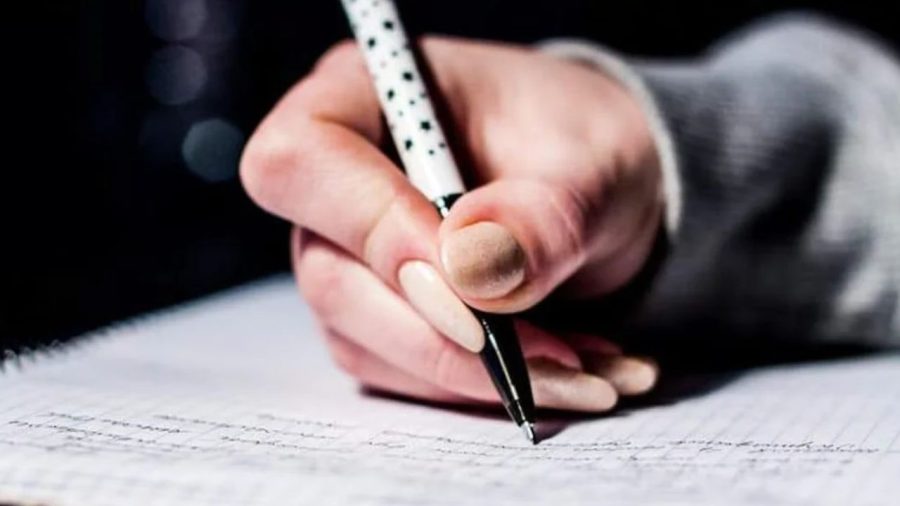
For students with physical disabilities, visual impairments or other special needs studying in different departments and institutes of Dhaka University, every examination presents more than a test of knowledge. It also brings the difficult task of finding a scribe to write their answers.
Most of these students have to arrange scribes on their own or seek help from friends.
A visually impaired student told TIMES, “We have to find our own scribes, and the university administration simply approves them. Several voluntary organisations have been established, and we occasionally receive assistance from them. But the university has made no arrangements for us.”
Describing the difficulties caused by visual impairment, the student said they could not read the reference books or textbooks recommended by their departments.
When PDF versions of the books are available online, they convert them into audiobooks. Alternatively, they buy textbooks and hand them over to voluntary organisations that can produce audio versions.

Students also have to rely on others to photograph textbook pages using CamScanner, convert them into PDF files and listen to the content through software.
However, these processes are extremely time-consuming, making it difficult for visually impaired students to keep pace with the university’s regular academic schedule.
Dhaka University Pro-Vice-Chancellor (Academic) Abdus Salam said students could take examinations with the assistance of a scribe from a lower academic year.
For example, a second-year university student could appoint a first-year student as a scribe, while a first-year student could seek assistance from someone studying at the higher secondary level.



To obtain permission, students must submit the scribe’s photograph along with all the necessary information about the examinee for approval in advance.
“We do not treat any student differently, nor should we. Doing so would make them feel discriminated against,” he said.
Voluntary organisations such as the Physically-challenged Development Foundation (PDF) have stepped forward to help address these difficulties.
The organisation said it maintained a volunteer panel to assist students with disabilities. Students can provide details of their examinations in advance, allowing volunteers to respond to requests for assistance.
However, the foundation representative said the system also faced several challenges.
When examinations are held simultaneously across several departments, there is often a shortage of volunteers.
Moreover, if a scribe who has already been confirmed fails to turn up at the last minute, finding a replacement and securing the university’s approval within such a short period becomes almost impossible.
Local Education and Economic Development Organisation Founder and Executive Director Farhad Hossain told TIMES that universities lacked adequate facilities for students with disabilities.
“The physical infrastructure available at universities for disadvantaged students or students with physical disabilities is not properly equipped. There is also a shortage of educational materials. For these students, travelling from different parts of Bangladesh to pursue education at various institutions presents a major obstacle,” he said.
According to Hossain, resolving these problems would be difficult without state support and initiatives to formulate and implement policies at the national level.
“As a state, we are still not prepared to include people with such special needs in universities and society, ensure equality for them and recognise them as citizens of the state,” he said.
Hossain suggested establishing small resource corners at educational institutions where students with disabilities could obtain the learning materials they needed.
However, he stressed that university classrooms and buildings must first be made accessible to them.
Recently, at a programme marking World White Cane Safety Day, Dhaka University Vice-Chancellor ABM Obaidul Islam pledged to improve academic facilities for students with disabilities.
He said accessible reading rooms, improved reading technologies and necessary educational materials would be provided at the university’s central library and in different departments.
He also announced initiatives to make campus pavements and walkways more accessible to people with disabilities and raise awareness among teachers and students.