


Rising prices for date palm jaggery are boosting farmers’ incomes in Jashore, where the traditional industry supports a seasonal market estimated at Tk150 crore and provides an important source of earnings for rural households.
With winter approaching, date palm tappers across the district have begun preparing trees for sap collection and jaggery production.
According to the Department of Agricultural Extension (DAE), production of date palm sap and jaggery has increased by 10 per cent over the past five years.
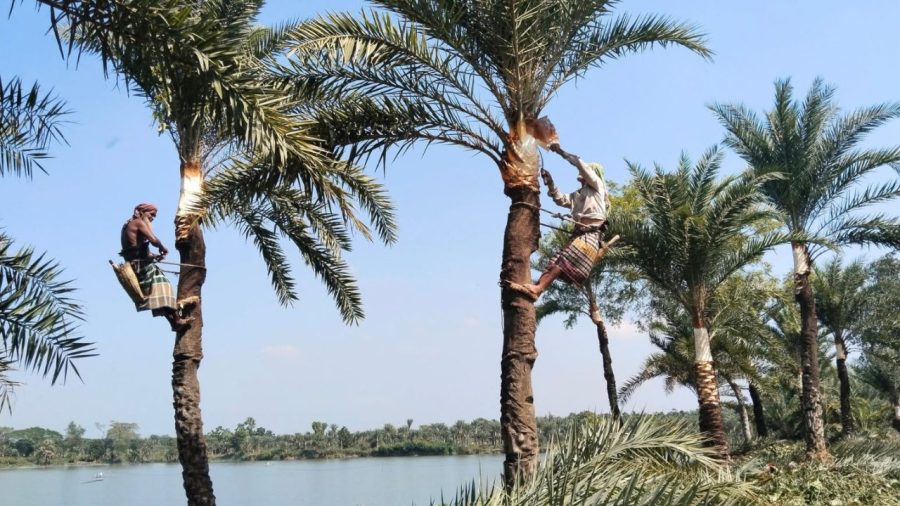
In villages across Jashore, tappers are busy trimming branches, cleaning trunks and preparing date palms for sap extraction.
As winter sets in, they will begin collecting the sweet sap, which is boiled to produce traditional jaggery and patali, a solid variety of date palm jaggery.
For Mohammad Shafi, a tapper from Ramkrishnapur village in Dhuliani union of Chaugachha upazila, winter marks the beginning of his busiest working season.

Shafi has been tapping date palms, collecting sap and producing jaggery for nearly 35 years.
He spends four to five months each year maintaining trees, collecting sap, boiling it into jaggery and selling the finished product.
He believes date palm tapping offers considerably better returns than growing paddy, particularly when rising production costs are taken into account.


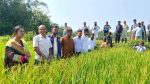

“One bigha of land produces 25 to 30 maunds of paddy, which sells for Tk30,000 to Tk36,000. But irrigation, fertiliser, transplanting, labour, harvesting and threshing cost more than Tk25,000,” Shafi said.
“Growing that paddy takes four months. In comparison, I can make a profit of Tk60,000 to Tk80,000 from collecting date palm sap and selling jaggery over four winter months,” he added.
For farmers with limited agricultural land, date palm tapping offers an additional income stream amid rising cultivation costs and fluctuations in crop prices.
The earnings generated during the winter months help many rural families meet household expenses throughout the year.
Shafi said better prices over the past five years had significantly improved earnings for traditional producers.
“Previously, jaggery prices were low, and we did not receive a fair return for our labour. Prices have improved over the past five years, and I sold Tk80,000 worth of jaggery last season,” he said.
Like Shafi, numerous tappers across Jashore are preparing for the approaching winter, when sap collection and jaggery production will begin in full swing.
According to the DAE, Jashore has 23,30,695 date palm trees, of which 3,07,130 are suitable for sap collection.
The district’s seasonal sap and jaggery market is estimated to be worth approximately Tk150 crore.
Md Mosharraf Hossain, the then deputy director of the DAE in Jashore, said the district’s date palm jaggery enjoyed strong demand because of its distinctive taste.
“Jashore’s date palm jaggery is very delicious, which is why demand remains high. Sap and jaggery worth Tk150 crore are sold every season, making a significant contribution to the agricultural economy,” he said.
He said the department was encouraging farmers to adopt safe sap collection and jaggery production practices through training, advisory services and courtyard meetings.
“Production of date palm sap and jaggery has increased by 10 per cent over the past five years,” he added.