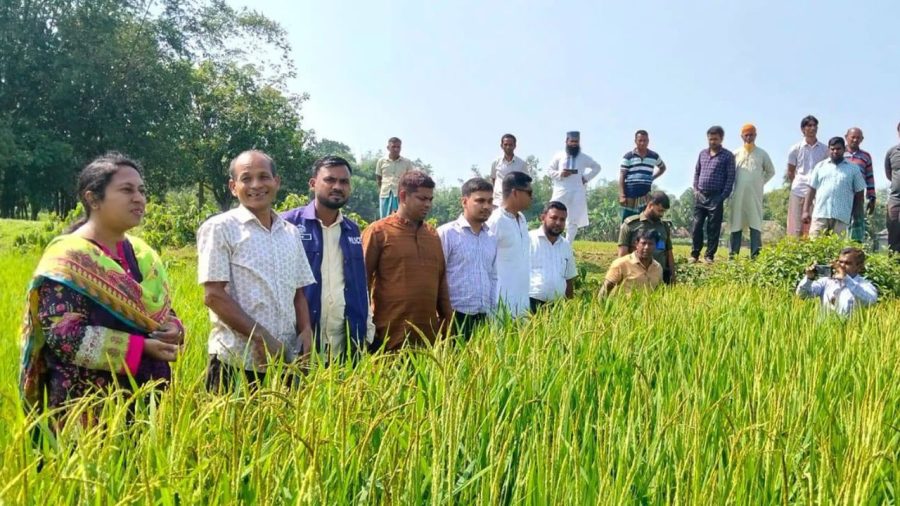



Sherpur Deputy Commissioner (DC) Farida Yasmin visited the home of self-taught rice innovator Sentu Kumar Hajong on Friday after a TIMES report highlighted his 21 years of research into developing new rice varieties.
The DC travelled to Chatkia village in Nayabil union of Nalitabari upazila, where she met the farmer and learnt about his research, experiences and contributions to agriculture.
TIMES published the report, titled “Farmer’s 21-year research on rice”, on its front page and online edition on 10 October. The report drew the attention of the district administration, prompting the visit.
Nalitabari Upazila Nirbahi Officer Md Abdul Malek, other officials and residents were present.

During the visit, Farida Yasmin said the district administration was committed to encouraging local talent and innovation and bringing such initiatives to wider attention to support Sherpur’s agricultural and socioeconomic development.
“We hope innovators like Sentu Kumar Hajong will help strengthen agriculture in Sherpur and unlock the country’s wider agricultural potential,” she said.




The DC said Sentu’s success showed that people could achieve great things even without much formal education or training.
“Talent, hard work, perseverance and continuous effort can enable an individual to achieve remarkable success,” she said.
She described grassroots innovators as valuable assets whose creativity and dedication deserved support.
According to the earlier TIMES report, Sentu, 55, has spent more than two decades developing rice varieties without a laboratory, modern equipment or support from a major research institution.
Working from a dilapidated house in a remote village, he has turned his 12 kathas of farmland into an experimental research site.
Over 21 years, he has developed 25 rice varieties and is working on more than 200 others at various stages of development, according to the report.
Hundreds of local farmers are cultivating rice varieties developed by Sentu, while demand for the varieties has also been growing in local markets.
Despite his long-running research and the local agriculture department’s awareness of his work, Sentu has yet to receive national recognition.