


Ahsan H. Tutul
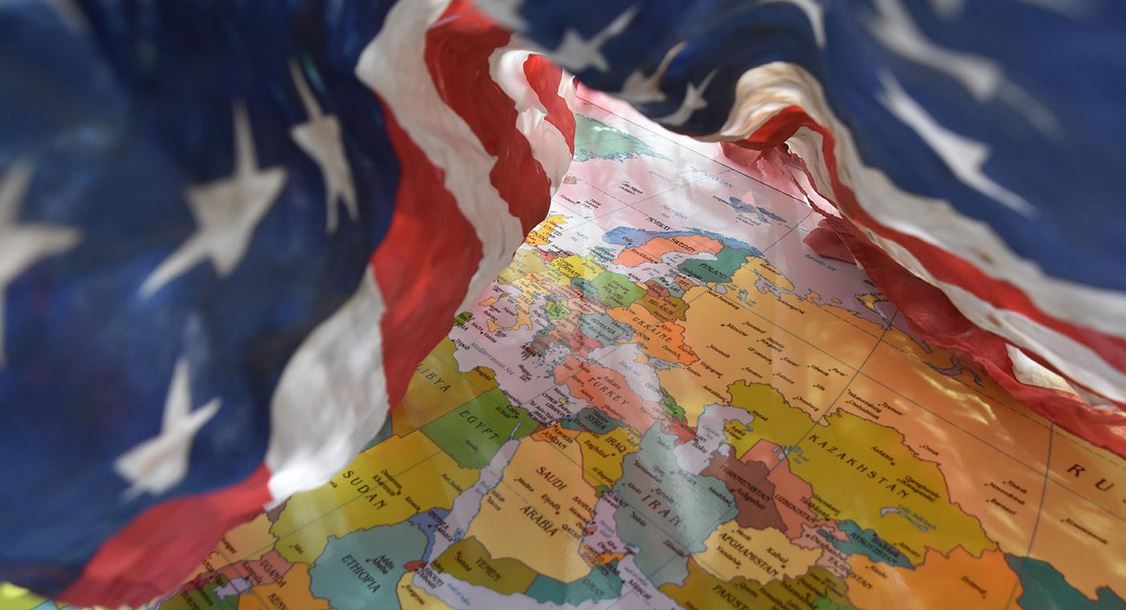
Every now and then, U.S. actions involve labeling countries as an “axis of evil” or targeting terrorist leaders or a “narcoterrorist,” then taking steps to neutralise them, change regimes, or create lasting enemies. This raises a question about why the U.S. carries out these missions. The honest answer is to assert U.S. hegemony, project power to extract resources that benefit large American companies, and patronise the military-industrial complex to sell or replenish sorties. With this backdrop, the U.S. is now gearing for another regime change military operation in Venezuela. This analysis, referencing two recent cases (Afghanistan and Iraq) demonstrates why regime change, as a method of replacing leadership, often results in significant unintended consequences that are costly and turn into a “forever war.” Finally, the article thoroughly examines the pitfalls of entering Venezuela to oust President Nicolás Maduro.
Since the Pearl Harbor attacks in 1941, the U.S. was not targeted until 9/11, 2001. Outraged, the U.S. moved to dismantle Osama bin Laden’s Al-Qaeda terrorist network in Afghanistan, invading in October 2001. Despite destroying suspected sites, bin Laden remained at large and was eventually found and killed in Pakistan. The U.S. mission’s focus shifted to establishing democracy, freeing women from oppression, and rebuilding Afghanistan to prevent a Taliban resurgence. The mission lasted twenty years, ending in 2021 with a sudden U.S. withdrawal, the Taliban regime reclaiming control, and women suffering under its rule. After spending billions of dollars and deploying thousands of soldiers, Afghanistan was not truly rebuilt, and democracy was never fully established, which many saw as a waste of resources and a sign of the limits of military power.

The then U.S. Secretary of State Colin Powell and CIA Director George Tenet publicly presented claims at the UN Security Council that Saddam Hussein’s regime possessed Weapons of Mass Destruction (WMD) and was involved in 9/11. An image of a mushroom cloud from such a weapon was used to persuade the members. They were not convinced. Nevertheless, the U.S. invaded Iraq without UN approval, deposing Saddam and the Iraqi army. The unintended consequences of this folly included sectarian violence, chaos, and the rise of ISIS, leading to regional instability. No WMDs were ever found, despite being the main reason for the invasion, resulting in hundreds of thousands of Iraqi and American deaths.
President Trump pledged to be the “President of Peace” and has delivered tangible results. For example, he brokered peace agreements between Thailand and Cambodia, the Democratic Republic of the Congo (DRC) and Rwanda, and Armenia and Azerbaijan. He also stopped the recent conflict between India and Pakistan and helped facilitate a ceasefire in Gaza. However, Trump is falling into the trap of trying to achieve regime change in Venezuela. His goal of removing the Maduro regime is because he considers him a “narcoterrorist,” as his government is involved in sending illegal drugs and colluding with the Cartel de los Solis to smuggle drugs into the U.S. As a result, the U.S. issued a $50 million bounty for his capture, highlighting the importance of the effort.




The question is, why is Trump planning to act against the Maduro regime now? Apart from the usual pretenses, to extract resources for the benefit of U.S. oil companies and support the military-industrial complex, Trump can leverage his political capital early in his presidency. His support among his base remains strong, so he will have their backing even if things go wrong. Besides, he won’t be running for office again.
Additionally, there is a long-term strategic plan regarding Venezuela. If Maduro is ousted, oil supply from Venezuela to Cuba will be cut off and the public could rebel, potentially leading to regime change in Cuba, something the U.S. has aimed for over fifty years. A regime change in Venezuela would please the Cuban-American communities, especially in Florida, who overwhelmingly vote Republican. Support from this influential group could be valuable if Rubio decides to run for president at the end of Trump’s term.
However, intentions don’t always lead to the expected results, as records show. Many risks are involved in the regime-change mission in Venezuela. The unintended consequences include a high chance that the U.S. will deploy ground troops there. This could be disastrous because, unlike air or naval operations, ground operations are more difficult to withdraw from. When images of fallen soldiers appear on CNN or Fox News, public opinion could turn against the Republican Party, impacting the upcoming midterm congressional election results next year.
Furthermore, when Maduro is removed, and the U.S. establishes a government aligned with its interests, that government will likely face internal resistance. Maduro supporters might launch insurgencies to destabilise the country, possibly extending the U.S. military presence. More importantly, who will lead the country after Maduro? On one side, María Corina Machado, the 2025 Nobel Peace Prize winner, is a strong Trump supporter; on the other, Edmundo González, who the U.S. once recognised as “president-elect,” is the legitimate winner of the last election. Choosing one over the other could cause disagreements and split their party’s support. Venezuela could become even more chaotic and unstable than it is now, creating serious challenges for U.S. oil companies and investors alike.
If the U.S. truly wants to reduce drug flow into the country, it should prioritise Mexico and Colombia, since most drugs come from those nations. Otherwise, negotiating a deal with Venezuela has merit and deserves consideration. For instance, oil giant Chevron already operates there, and Maduro has shown interest in allowing more U.S. access to Venezuelan oil resources. The U.S. could pressure Venezuela to cut oil supplies to Cuba, reduce Chinese economic influence, and halt Russian arms shipments. These options are within reach. The U.S. is a powerful player and can set the terms of negotiations. Its dominance in the Western Hemisphere is well-established, and other major powers and competitors would not dare ignore it.
The writer is a Doctoral Researcher, International Relations, Universiti Sains Malaysia