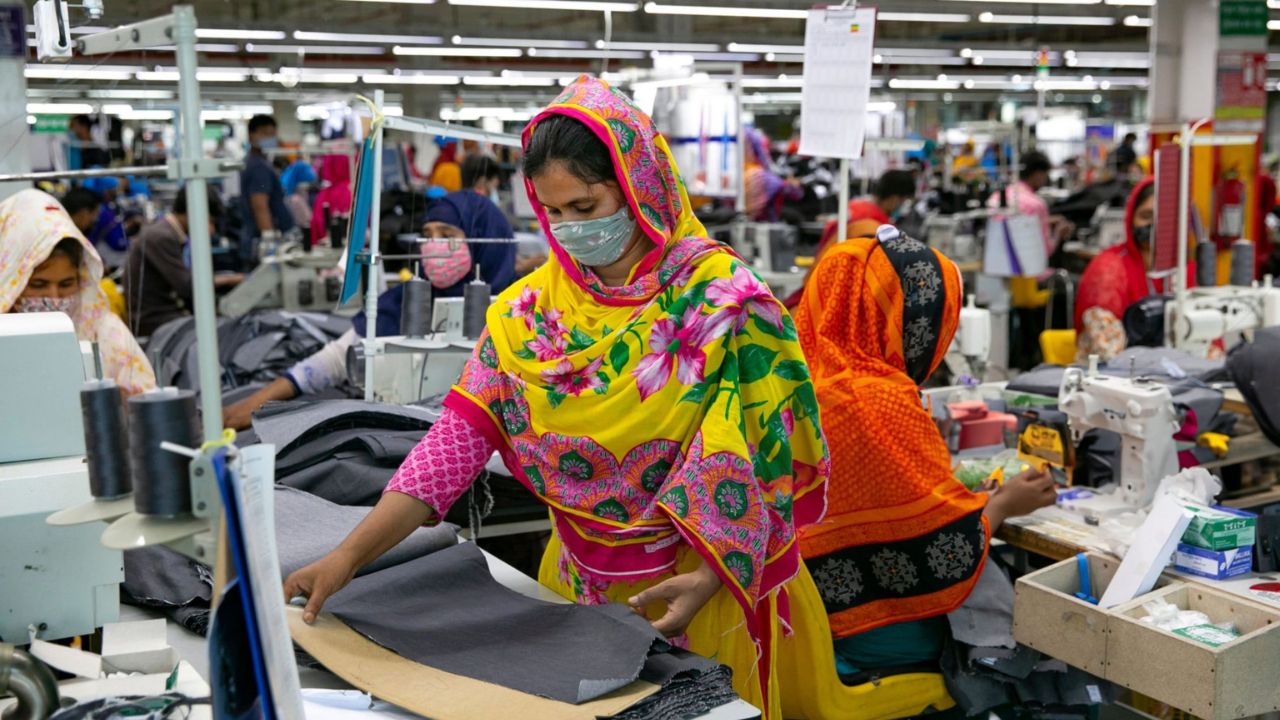



August 14 and 15 are both extremely important dates in the history of the Indian subcontinent. Pakistan celebrates its Independence Day on August 14, and India on August 15. These two days in 1947 marked the end of nearly two centuries of British colonial rule and, at the same time, the partition of the subcontinent and the birth of two states.
The Pakistan Movement had significant support among the Muslims of Bengal. In the 1946 election, the Muslim League won 110 of the 117 seats reserved for Muslims in Bengal.
In other words, the political support of Bengali Muslims behind the Pakistan Movement was no small matter. The Muslims of Bengal did not merely observe the Pakistan Movement from a distance; they were one of its principal political forces.
There was an extraordinary turn in that history. The Bengali Muslims who played such a major role in the movement to establish Pakistan in 1947 largely turned away from Pakistani nationalism within only twenty-four years. Another powerful political identity developed among them: Bengali nationalism.
That transformation was so profound that on March 23, 1971, Pakistan Day, the flag of Bangladesh flew in place of the Pakistani flag almost everywhere in East Bengal. Except at the President’s residence and military offices, the Pakistani flag was virtually nowhere to be seen.
The scene on August 14, 1971, was equally significant. The Pakistani state was still arranging Independence Day celebrations in East Bengal. The military administration was issuing instructions for flag hoisting, processions, parades by Razakars and police, meetings, and even illumination of government and private buildings.
By then, there were only a handful of people willing to spontaneously raise the Pakistani flag or chant ‘Pakistan Zindabad.’ In other words, the state of Pakistan still existed, the Pakistani army was still there, and the administration was still functioning, but in the political imagination of Bengalis, Pakistan was almost over.
After Bangladesh became independent, there has almost always been a problem in the way we have discussed history. Whoever is in power tries, in one way or another, to establish authority over history. This is not unique to Bangladesh. Power everywhere seeks to influence history. History is not merely the story of what happened in the past. It also plays a major role in the politics of the present.

Whom we turn into heroes, whom we make villains, which events we remember more, and which ones we push into the background, all of these are connected to power. But there is something about history: it can never be completely controlled.
After the fall of the Awami League government in the 2024 mass movement, a new kind of openness emerged in the public sphere. I see the creation of this space positively. There should be no such thing as forbidden history. We should be able to talk about Jinnah, Gandhi, Nehru, and Bangabandhu. There should be discussions about Sher-e-Bangla, Suhrawardy, Bhashani, Ziaur Rahman, and everyone else. The problem is that within this new space, I also began to see an attempt to construct another kind of history.
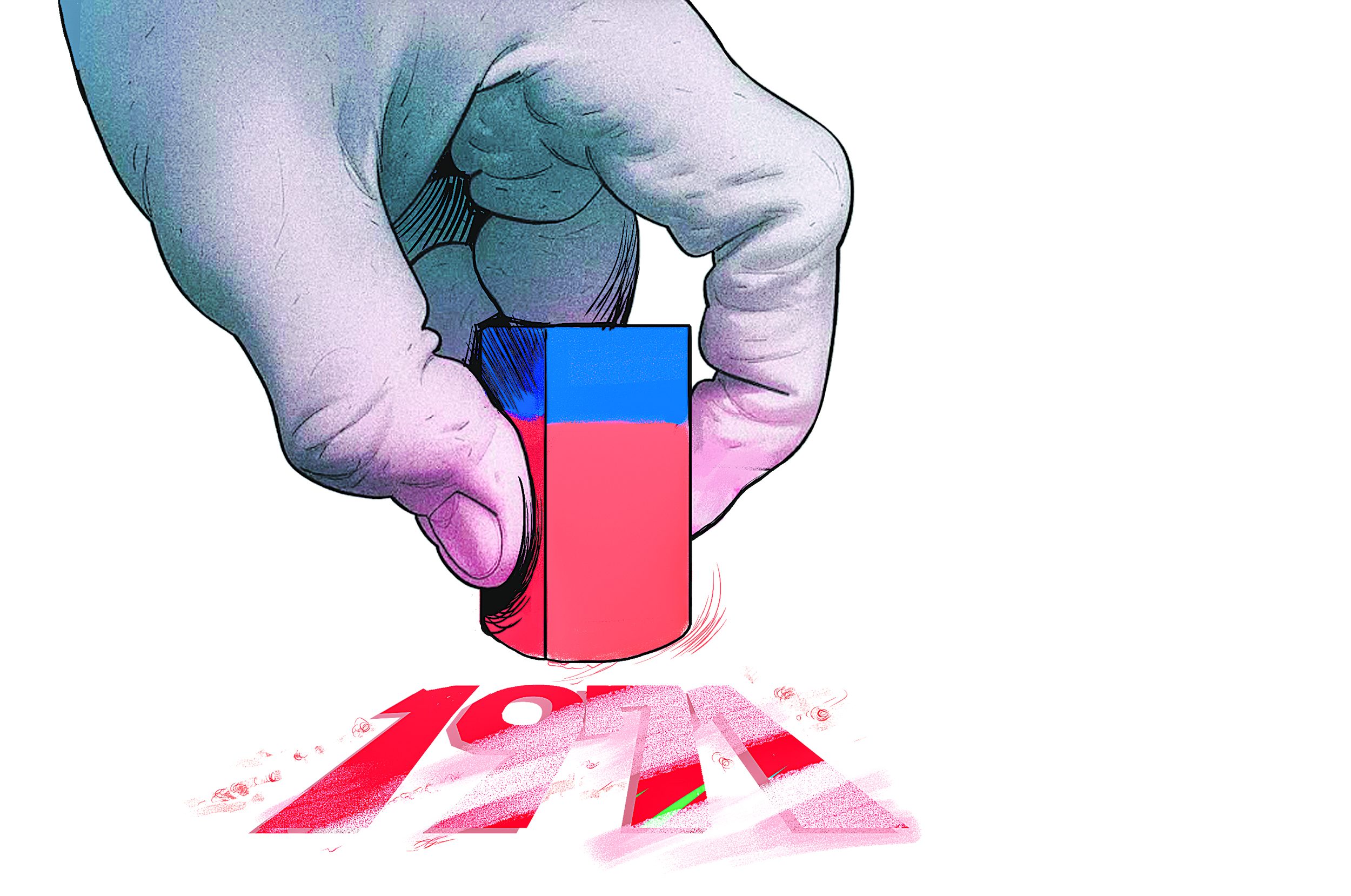
A narrative emerged that our ‘first independence’ was in 1947 and our ‘second independence’ was in 2024. In between, 1971 seems to be gradually disappearing. Some have gone further and tried to explain 1971 as an Indian conspiracy. Some argue that Bangladesh did not become independent in 1971, but instead came under Indian domination. After 2024, some events have taken place in Dhaka where 1947 was not simply discussed as part of history, but Pakistan was politically celebrated.
In September 2024, an event was held at the National Press Club to mark the death anniversary of Muhammad Ali Jinnah. Some speakers there said that without Jinnah there would have been no Pakistan, and without Pakistan there would have been no Bangladesh. One speaker even said that Jinnah should be recognised as the ‘Father of the Nation’ of Bangladesh. These are no longer neutral academic discussions about Jinnah’s life and political philosophy. They are clear political statements.
An even more explicit example came on August 14, 2025. At the University of Dhaka, an event was held under the banner of ‘First Independence Day,’ along with a discussion titled ‘Looking Back at Azadi.’ Another organisation arranged a day-long programme. There, the establishment of Pakistan in 1947 was openly celebrated as the ‘first independence’ of Bengali Muslims. There was also an attempt to present Jinnah as a central figure in right-wing politics.


There is an irony in this history. The same Jinnah whom Jamaat-aligned and some right-wing groups in Bangladesh are now trying to turn into an icon of Pakistani nationalism and right-wing politics, positioning him against 1971, had an intense political and ideological conflict with Maududi, the founder of Jamaat-e-Islami.
Maududi called the Muslim League ‘Jamaat-e-Jahiliyat.’ He questioned Jinnah’s knowledge of the fundamentals of Islam. He also attacked the Pakistan envisioned by the Muslim League as something that could become a ‘kafir government’ run by Muslims.
Mazhar Ali Azhar, a leader of the Islamist organisation Majlis-e-Ahrar, directly mocked Jinnah as ‘Kafir-e-Azam.’ Yet it was this same Jinnah who, standing before Pakistan’s Constituent Assembly on August 11, 1947, said that citizens were free to go to their temples, free to go to their mosques, free to go to any place of worship, and that a citizen’s religion, caste, or creed was not the business of the state.
In other words, history is rather uncomfortable for those who today use Jinnah to paint a romantic picture of a religious-nationalist Pakistan.
The reason is that this important declaration in the political thought of the man they now seek to make their political icon spoke of religious freedom and equal citizenship. The ideological predecessors of right-wing politics were once among those who attacked Jinnah and his Muslim League in the harshest religious language. If history is to be accepted seriously, then we must accept not only the convenient parts of Jinnah, but this entire contradiction as well.
We also need to look at the kind of state Jinnah spoke of before Pakistan’s Constituent Assembly on August 11, 1947. There he spoke of citizens’ religious freedom, equal citizenship regardless of religion or caste, and equal status before the state. Then we have to ask what happened to that promise in reality. As early as 1948, conflict emerged between the state and the people of East Bengal over the language question.
In 1952, people had to give their lives for the demand for their language. In the 1954 election, the people of East Bengal almost completely rejected the Muslim League. Then, in the 1960s, the question of economic disparity came to the forefront, followed by the Six-Point Movement and the mass uprising of 1969. In the 1970 election, the Awami League won an absolute majority in Pakistan’s National Assembly, but power was not transferred to it.
Finally, on March 25, the Pakistani military launched an operation against the citizens of its own country. Without looking at this entire sequence together, it is difficult to understand the journey from Pakistan to Bangladesh.
Now let’s come to the question of Jamaat-e-Islami. In my political reading, the largest organised political beneficiary of this attempt to remove 1971 from the centre of Bangladesh’s political history is Jamaat-e-Islami and its student organisations, Islami Chhatra Shibir and Chhatri Sangstha.
This is because 1971 remains one of the most difficult political and moral questions in Jamaat’s history. The war crimes trials also created major political conflict in Bangladesh, largely because several of Jamaat’s top leaders were at the centre of those trials.
Therefore, a version of history in which 1947 becomes the first independence, 2024 becomes the second independence, and 1971 in between is reduced to an Indian project is politically extremely convenient for Jamaat. In that sense, I see it as consistent with Jamaat’s broader narrative project.
However, not everyone associated with this narrative is a member of Jamaat or is acting under Jamaat’s instructions; there are some independent right-wing actors, and some former leftist groups are also involved and are now closely working with Jamaat for their political interests. Hence, the matter is not that simple.
I am not in favour of preventing anyone from talking about Pakistan. Quite the opposite. There should be more discussion. There should be more research. People should write in favour of Jinnah and against Jinnah. There should be new research on the Pakistan Movement.
Even Bangladesh’s conventional nationalist history should be challenged. If history is left beyond questioning, it turns into scripture. But creating another Pakistani nationalist myth in the name of questioning history is not historical inquiry either. Bangladesh’s actual history is much more complex, and we have to accept that complexity.
We cannot leave out 1947, because the history of Bengal’s Muslims is deeply connected with the Pakistan Movement. In the same way, there can be no question of leaving out 1971. And 2024 is now also part of our political history. The problem begins when one event is magnified by trying to remove another from history. In fact, understanding 1947 makes 1971 clearer. It allows us to see that the history of Bangladesh’s independence did not suddenly begin one morning.
The Bengali Muslim who, under British colonial rule, saw Pakistan as a solution to the search for political emancipation later found that the new state was not fulfilling aspirations for language, political representation, and equal citizenship.
Through that experience, a new political identity developed, and eventually the demand for an independent Bangladesh emerged. There is no need to erase the Pakistan Movement from this history. There is no need to erase Jinnah either. But, in the same way, 1971 cannot be erased.
History must be questioned. We have to engage with it critically. We must question even the people we admire, and judge the roles of people we dislike based on evidence. History should not be turned into the property of any political party, any government, or any particular political group.
If we objected to state control over history during the Awami League period, then there is no point in escaping that control only to hand history over to another form of right-wing nationalist politics.
History does not become free that way; only the side claiming authority over it changes. And the attempt to place 1947 and 2024 side by side while removing 1971 from the middle cannot be treated as a dispassionate reading of history either. It is a political narrative, and disagreeing with that narrative is itself part of democracy.
The author is a Doctoral Fellow at Georgia State University, USA.