(continued from yesterday)
The battle of Teliapara and a documentary
In 2003, a team of officers of 2 East Bengal at Sylhet Cantonment presented “The Battle of Teliapara” as part of a brigade study period. At that time, the commanding officer of the battalion was the highly dynamic Lt. Colonel Mohammad Yusuf (Later Brig General).
To make the Army tradition and the subject more vivid, a short video/documentary on the Battle of Teliapara was shown before the study period. Part of it included a reenactment of the historic Teliapara Conference by officers and soldiers of 2 East Bengal. Several officers and soldiers appeared in khaki uniforms and acted in the roles of the famous Army commanders who had attended the conference. Technically and artistically, the video was modest in quality, but it was full of deep regimental pride and emotion. Retired Havildar Abdur Rahman, Bir Bikram, who had participated in the Battle of Teliapara, attended the event and shared his wartime experiences.
On preserving the historic bungalow
Efforts have been made at different times to preserve the historic manager’s bungalow. However, in 2025, Colonel Mohammad Abdus Salam, Bir Protik (Retd), President of the “Shaheed Muktijoddha Smriti and Research Foundation”, took a special initiative to preserve it. On April 7, 2025, this distinguished son of Sylhet, who also had the honour of participating in the Liberation War at Teliapara, wrote to the then Adviser for Liberation War Affairs, Faruk-e-Azam, requesting the preservation of the tea garden bungalow.

The letter noted that the late Sector Commander Major General K. M. Shafiullah had made repeated attempts to preserve and maintain the bungalow but had failed. At present, the bungalow is under the NTC, most of whose ownership belongs to the government. It was proposed that the bungalow be maintained as the first Army headquarters of the armed forces and established as a site for visitors with appropriate historical displays.
Later, Secretary of the Ministry of Liberation War Affairs Israt Chowdhury said in an interview on September 9, 2025, that there were plans to construct a museum at this historically important site of the Liberation War so that visitors could learn the history of the war. In that case, the NTC would be provided with a new structure at an alternative location.
Taking the matter into consideration, the Ministry of Liberation War Affairs wrote to the Habiganj district administration to take necessary action to cancel the lease of the bungalow and the adjacent land given to the National Tea Company Limited (NTC). The district administration later informed the ministry that the NTC would not object if the government built a museum at the site, provided that an alternative facility was constructed for the NTC. As far as is known, progress has been made on the museum project at Teliapara.
Some initiatives by RAOWA

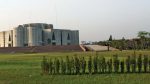


Recently, the issue of Teliapara has been discussed with importance at national day programs, seminars, memorial meetings, and discussion sessions organised by the Retired Armed Forces Welfare Association (RAOWA). In particular, current RAOWA Chairman, writer, and security analyst retired Colonel Mohammad Abdul Haq has eloquently highlighted the significance of Teliapara in his writings, talk shows, and speeches.
RAOWA has also established a think tank, the RAOWA Research and Study Forum (RRSF). This body is conducting research on national security, defense issues, and important Army history topics such as this.
A few words about preserving the manager’s bungalow
The documentary made on “Teliapara in the Liberation War” began with a traditional song of the tea garden workers, reflecting their hard lives and their joys and sorrows.
While preserving the bungalow, it must be kept in mind that no structure should be built there that harms the environment of the tea garden, especially the lives and livelihoods of its poor workers. It should be remembered that during the Teliapara Conference and throughout the Liberation War, these impoverished tea workers gave remarkable assistance to the army and the freedom fighters. On the night of March 28/29, at the request of Major Khaled Mosharraf, hundreds of tea workers worked all night to build a road through the hills from Teliapara Tea Garden to the BSF camp at the Tripura border. Many tea workers were killed and tortured by the Pakistani forces because of their support for the Liberation War. It is hoped that the future Teliapara museum in the manager’s bungalow will present the history of the Liberation War objectively and impartially. Everyone who contributed to the war deserves recognition.
Teliapara: A place I return to again and again
I have many memories connected with Teliapara. I have visited it many times on official duties and on personal trips. In April 2008, I joined the then BDR, now BGB, as commanding officer of the 1 Rifles Battalion in Sarail, Brahmanbaria. At that time, Teliapara BOP was within the area of responsibility of our battalion, though my tenure there was brief.
My last visit to Teliapara was on December 29, 2024. Beside the manager’s bungalow stands the Liberation War memorial. Behind it lies an extraordinary lake filled with Shapla (Water Lilies). In the strange beauty of that tea garden landscape, hundreds of red lilies were blooming. Standing beside the lake on a winter afternoon, it seemed to me that the martyrs of 1971 had bloomed there as Shapla (Red Lilies). I was also reminded of the young martyrs of the 2024 mass uprising. I found myself wondering whether we would be able to build the Bangladesh of the dreams and aspirations of the martyrs of 1971 and 2024—or whether those dreams would fly away like migratory birds over the Shapla covered lake.
The need for an objective assessment of the Teliapara meeting
The Teliapara Conference will remain forever memorable as a milestone in laying the formal foundation of both the Liberation War and the independent Government of Bangladesh. Even before the war was formally organized by the government, Army officers felt the need for an organization and a government to conduct the war in a coordinated manner. This was a critically important development in the Liberation War. Their thinking and initiative played a unique role in conducting the war in an organized and controlled way. Teliapara Tea Garden, as a witness to the fire of the Liberation War and as a turning point, will remain forever bright in history.
It is hoped that the manager’s bungalow at Teliapara will soon be transformed into an attractive museum. Archive-based research and the study of Army history should also be developed there. Teliapara deserves national attention. At the same time, it should neither be overvalued nor undervalued. Teliapara should never become an issue of partisan politics. What is needed is an objective and impartial assessment. It is hoped that the new BNP government, brought to power with a broad public mandate, will show the way in presenting the history of the Liberation War, including Teliapara, in an objective manner.
Salute to Teliapara
The independence of Bangladesh is the result of the unimaginable sacrifices and struggles of its people. It is a special blessing from Almighty Allah. Preserving independence is not easy. Today, Ukraine and Iran are fighting bravely to protect their independence. Their national unity is notable.
Days like Teliapara Day remind us of the spirit of the Liberation War, the importance of defending independence, and the value of organization, national unity, and coordination. On this day, I salute all the heroic freedom fighters who participated in the Teliapara Conference. Teliapara will remain a source of love for Bangladesh, courage, and unity. Salute to Teliapara. Salute to Bangladesh. Let the message of Teliapara be the building of a united Bangladesh.
(concluded)
The writer is a Retired Brigadier General, Researcher and Analyst, Former Commanding Officer of 2 East Bengal