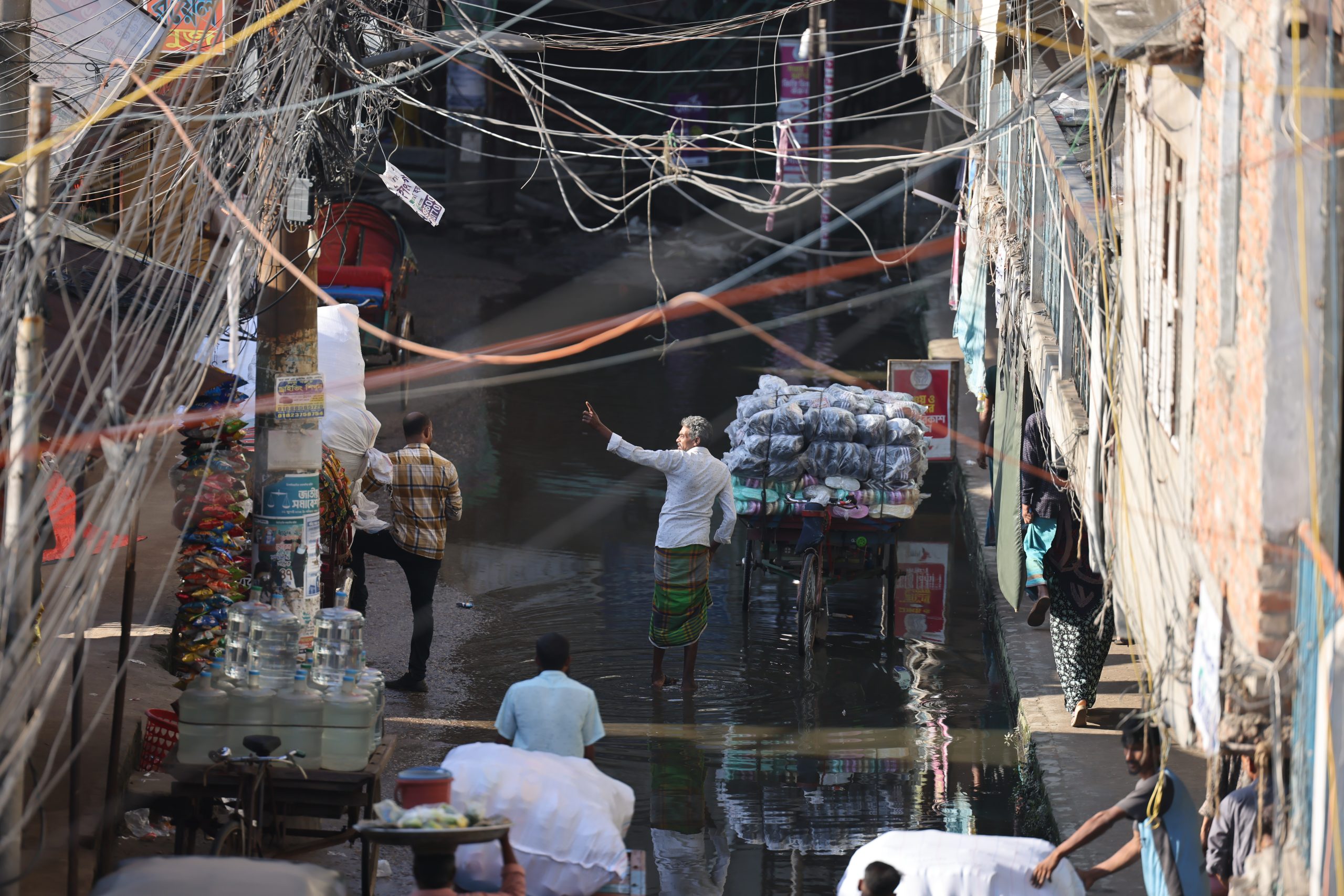

In Postogola, near the bridge that carries its name, life halts every time the skies open. Just a brief shower is enough to turn the alleyways into shallow canals where dirty water lingers for days. For nearly four years now, residents have been living with this persistent problem.
Locals say it all started after the Postogola Bridge was built. The new structure seems to have left the surrounding land lower than before, trapping rainwater and creating a permanent puddle in the streets. The water refuses to drain away.
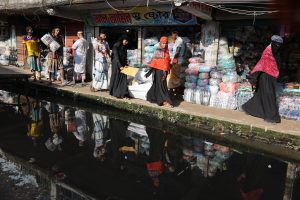
The city corporation has tried to clear the water, but its efforts hardly make a dent. Only the sun, residents say with a mix of irony and resignation, has the power to dry their streets.
In the meantime, daily life is a struggle. Rickshaw pullers push through the murky water, wheels splashing filth as they go. Pedestrians are forced to roll up their pants, clutch their bags high, and wade through the mess. The line between road and footpath has long blurred. One wrong step, and you’re knee-deep in the foul-smelling black water.
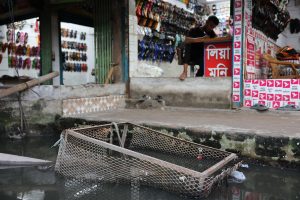
For shopkeepers and families, this is more than a nuisance. It’s a threat to health and livelihood. Stagnant water breeds mosquitoes, spreads disease, and carries a stench that never quite goes away.
Postogola’s ordeal is a reminder of the hidden costs of development in Dhaka’s low-lying areas. For now, though, there is no lasting solution in sight. Until one arrives, the people here know they can rely only on the sun to reclaim their streets.