


The government suspects the Awami League, whose activities have been banned, of orchestrating the ongoing unrest in the ready-made garment sector.
It has compiled a list of 20-22 labour leaders suspected of playing key roles in the protests across the country’s industrial areas.
Intelligence reports pointing to the suspected involvement of AL-linked and left-leaning labour leaders have prompted the government to take a tougher stance.
Business communities have supported the information of suspected political involvement in the unrest.
Prime Minister Tarique Rahman issued urgent instructions following reports of alleged AL plans to exploit wage protests, disrupt garment production and exports, and intensify political activities ahead of December.
He issued the instructions during an emergency meeting with several ministers and advisers on Sunday night.
Following the meeting, Home Minister Salahuddin Ahmed alleged that innocent workers were being exploited to disrupt the country’s export trade and production, with instigation also coming from across the border.
The meeting began at 6pm in the Cabinet Division conference room at the Secretariat, with the prime minister in the chair.
Those attending included Home Minister Salahuddin Ahmed, Labour and Employment Minister Ariful Haque Choudhury, State Minister for Local Government Mir Shahe Alam, Prime Minister’s Adviser Mahdi Amin and Jatiyatabadi Sramik Dal Chief Coordinator Shamsur Rahman Shimul Biswas.

Speaking after the meeting, Salahuddin said the government had received information about attempts to undermine exports and production by exploiting ordinary garment workers.
He claimed that masked individuals had infiltrated the demonstrations and that information suggesting instigation from across the border was being analysed.
Those involved in violence and disorder would face strict legal action, he warned, maintaining that genuine workers were not responsible for the violence.
The home minister said a new wage board had been formed to determine garment workers’ minimum wages and that the prime minister had issued instructions to improve their living standards.
He urged factory owners to maintain production and resolve workers’ grievances through discussions.
Labour Minister Ariful said the government would respond politically to any attempts to create instability in the garment sector ahead of December.


He said the prime minister had instructed law enforcement agencies to prevent disruptions to factory production and protect people’s lives and property.
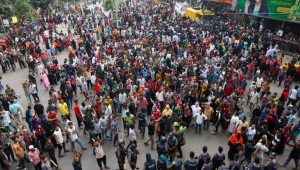
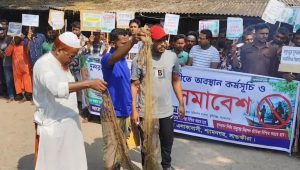
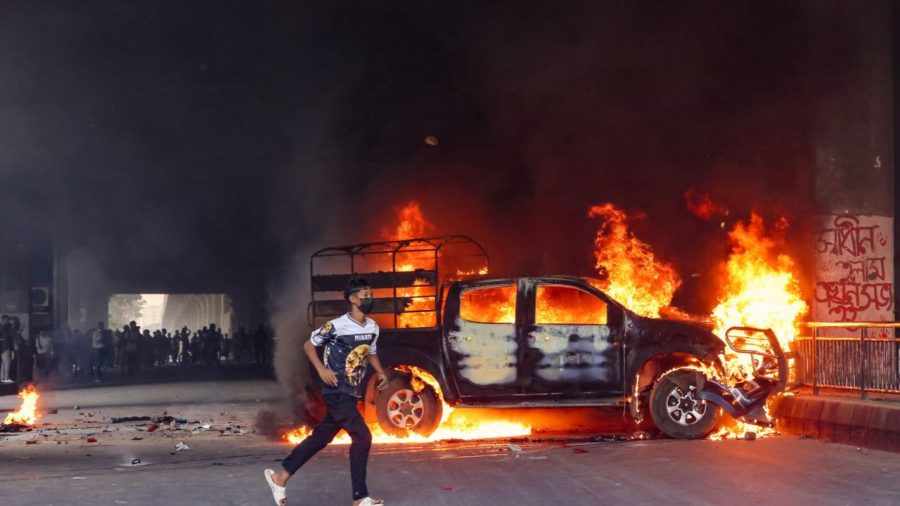
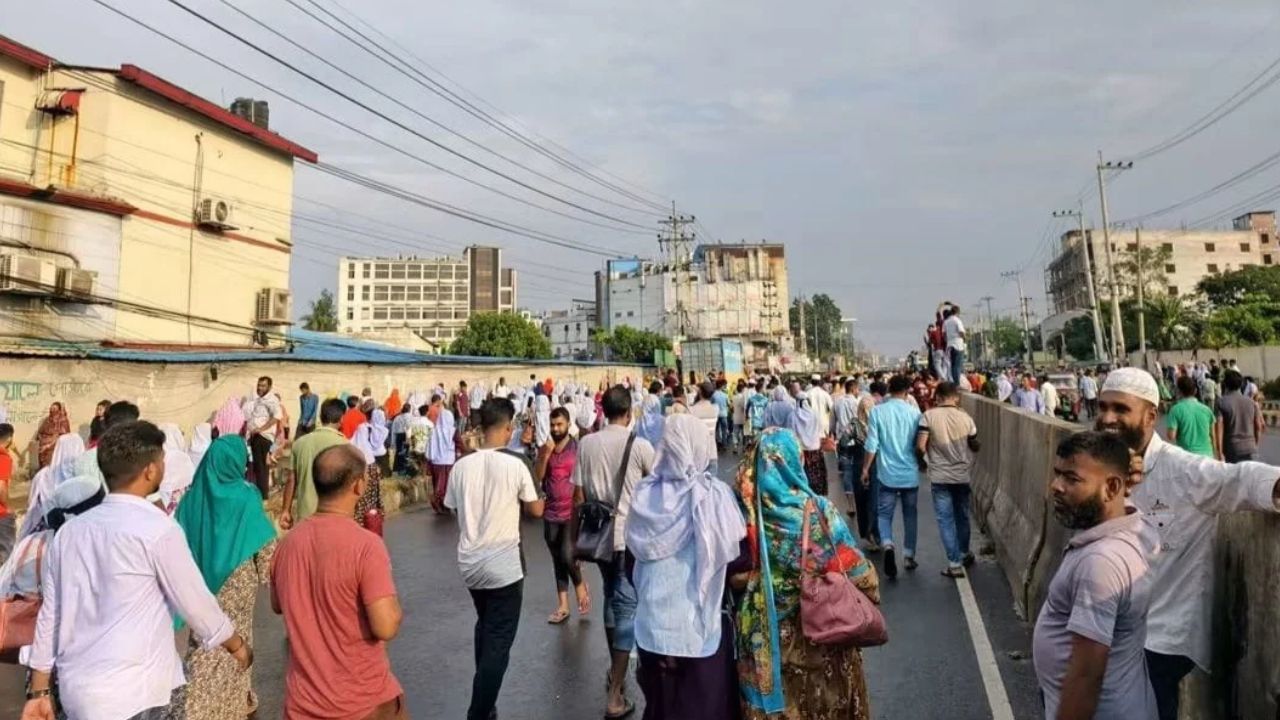
The developments came after a day of violent demonstrations, road blockades and clashes between workers and police in Dhaka and surrounding industrial areas.
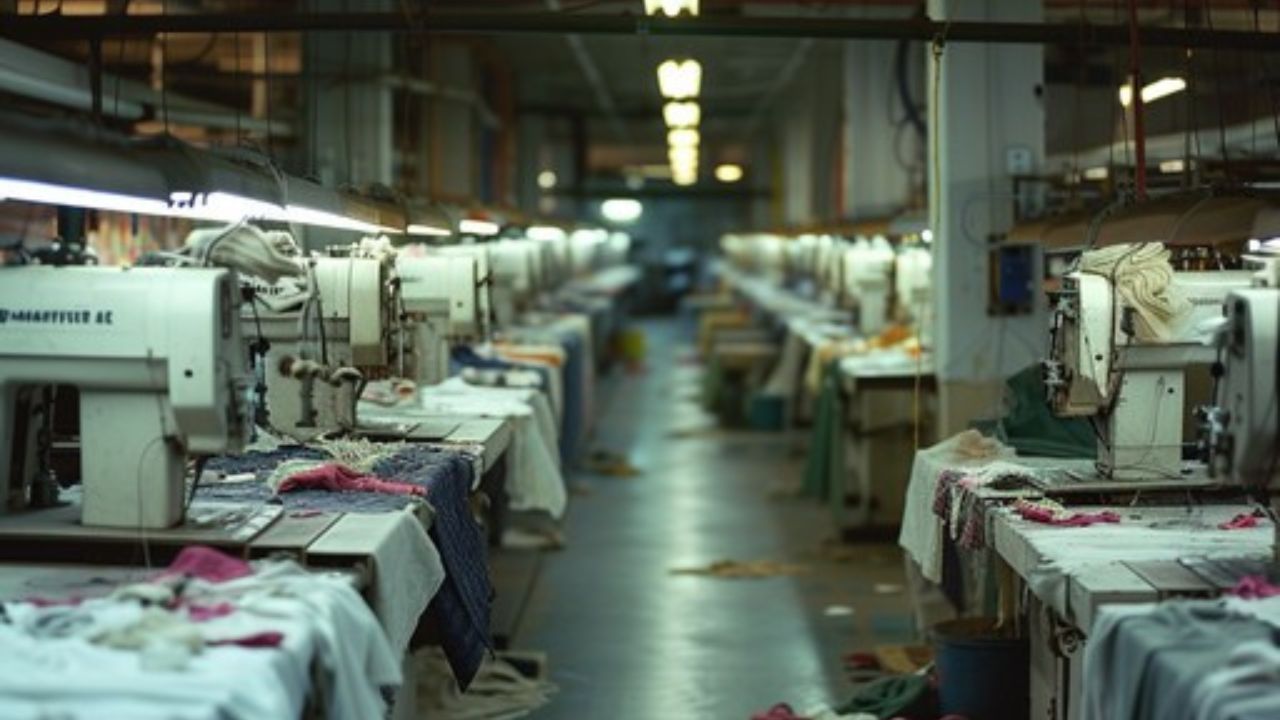
More than 300 garment factories closed on Sunday amid protests demanding a minimum monthly wage of Tk30,000.
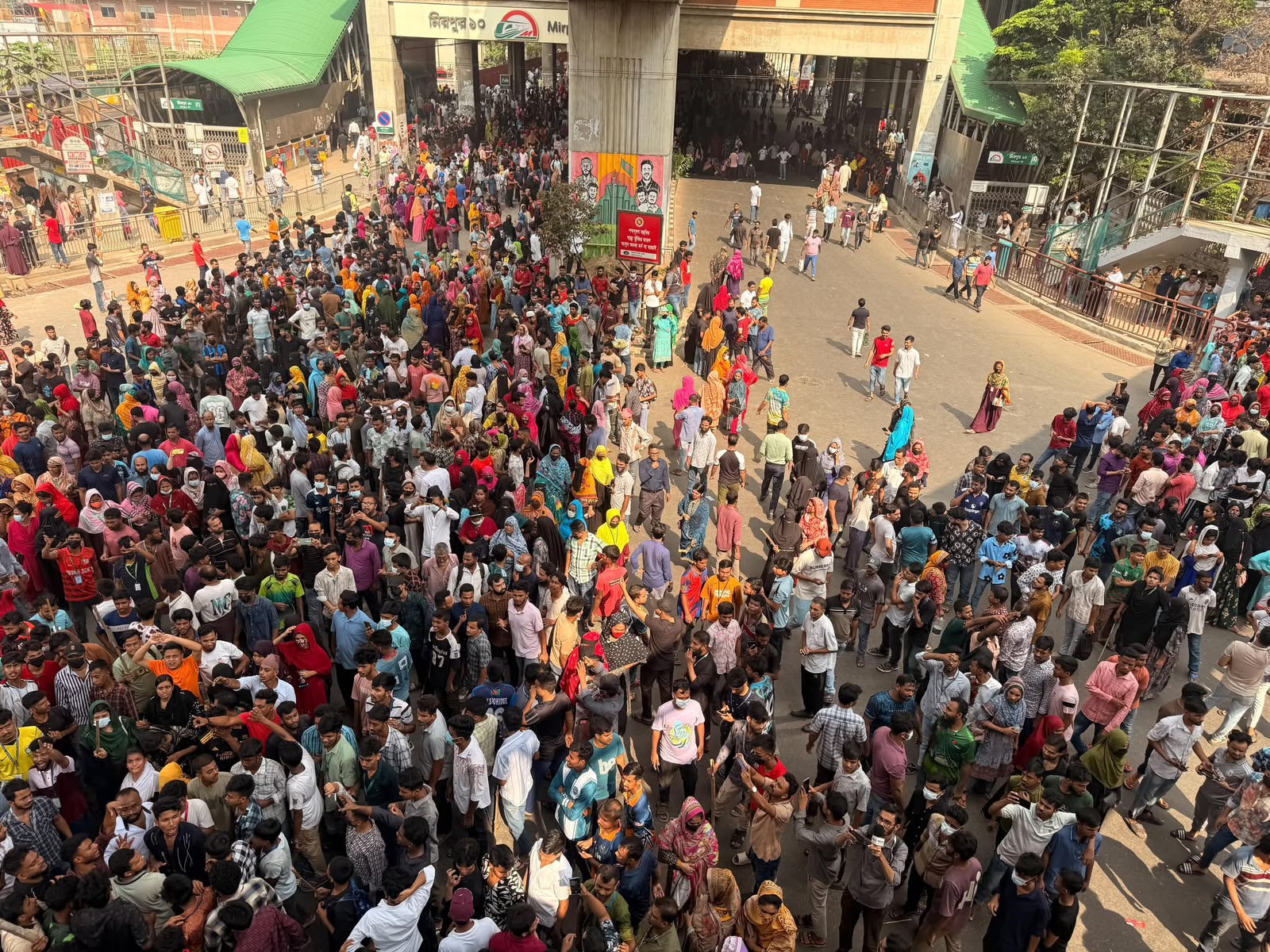
Police said they had detained 28 people following clashes in the capital and surrounding areas, identifying them as leaders and activists of the Awami League and its affiliated and associate organisations.
Dhaka Metropolitan Police (DMP) Joint Commissioner Mahidul Islam said police had tried to explain to demonstrators that a wage board had been formed, but the protesters refused to leave the roads.
He said police suspected that anti-government or anti-state elements had infiltrated the movement in an attempt to worsen the law-and-order situation.
DMP Detective Branch Deputy Commissioner for Mirpur Division Mohammad Rakib Khan alleged that the workers’ movement was being exploited to carry out sabotage.
According to police, those detained had travelled to Dhaka from other districts with the intention of creating violence. They included residents of Cox’s Bazar, Munshiganj, Patuakhali, and Noakhali.
Garment industry leaders also expressed concerns about possible political involvement in the unrest.
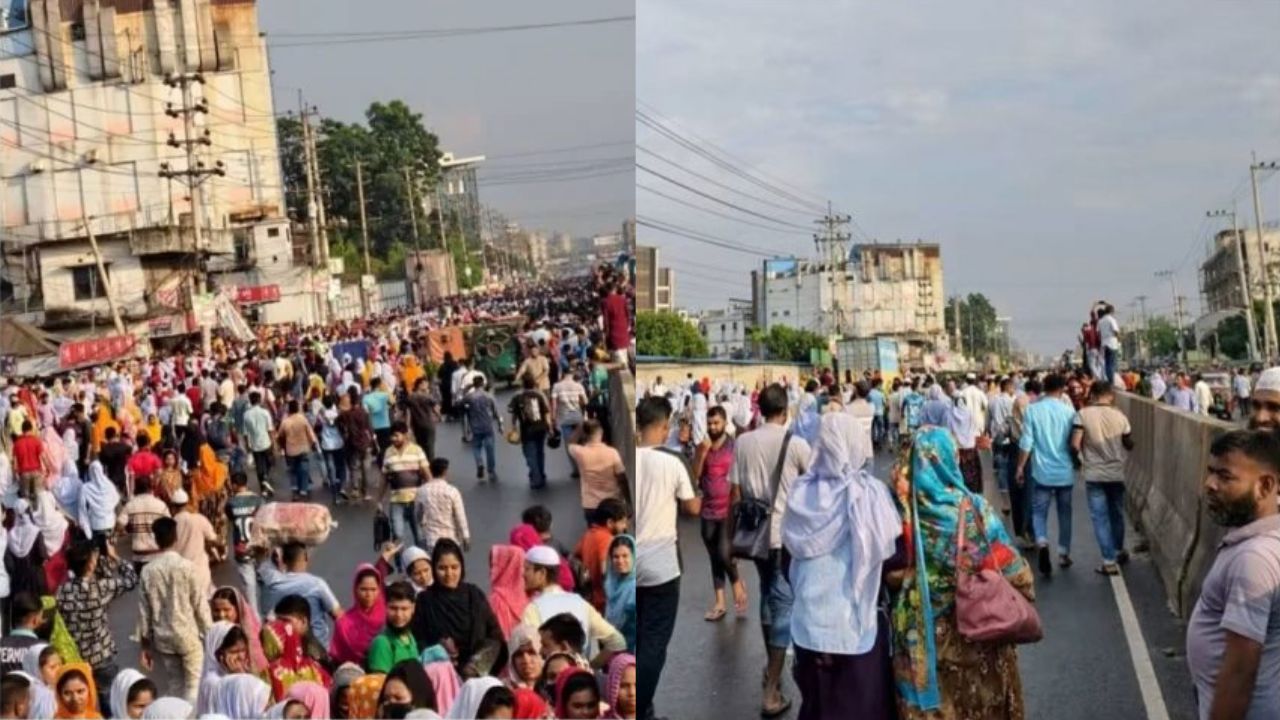
Bangladesh Knitwear Manufacturers and Exporters Association (BKMEA) Executive President and Bangladesh Employers’ Federation President Fazlee Shamim Ehsan told TIMES that groups seeking to put the government under pressure might be encouraging the disturbances.
He called for a thorough investigation by law enforcement agencies.

Ehsan said genuine workers understood the financial constraints factory owners faced and how much they could realistically afford to increase wages in the current challenging business environment.
Bangladesh Garment Manufacturers and Exporters Association (BGMEA) President Mahmud Hasan Khan Babu warned that owners might be unwilling to keep factories operating if vandalism and disorder continued.
Speaking at his office on Sunday evening, he said factory owners wanted to maintain daily production but could not do so without a safe working environment.
Workers had already been informed about the government’s decision to form a wage board, yet vandalism and disorder had continued in several areas, he said.
The incidents had alarmed factory owners, he added, urging the authorities to take legal action against those responsible for violence.
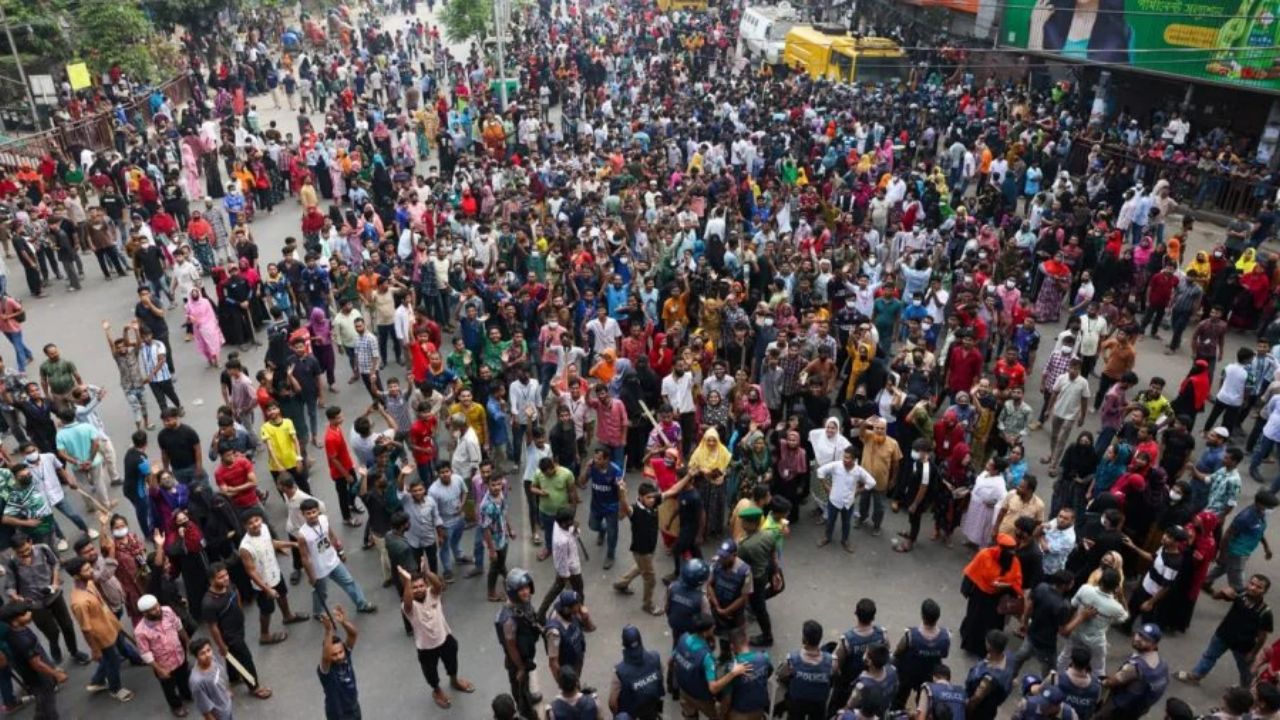
BKMEA President Mohammad Hatem welcomed the government’s decision to form the wage board.
He said employers recognised the financial pressure workers were facing because of rising living costs but were also struggling with the global economic downturn, energy shortages, increasing production expenses and declining export orders.
Hatem stressed the need to ensure fair wages while preserving factories’ ability to operate.
He expressed hope that the wage board, comprising representatives of the government, employers and workers, would agree on a realistic and acceptable wage structure through negotiations.
Earlier on Sunday morning, Labour and Employment Minister Ariful Haque Choudhury announced the formation of the new wage board at a press conference at the Secretariat.
He said the decision followed discussions with representatives of workers and factory owners and urged protesting workers to return to their workplaces.
Following the prime minister’s emergency meeting, security arrangements are expected to be strengthened in the capital and major garment industrial areas, with police adopting a tougher approach to containing violence and disorder.