


Imagine a child pausing beside a pond to watch a fish break the surface of the water. Another follows a butterfly across a park. A third kneels in the grass to examine an insect moving through the blades of grass. None of these moments will appear on an exam paper. Yet they may teach lessons that last far longer than those that do.
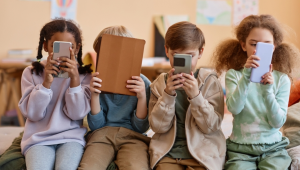
Nowadays, kids grow up immersed in digital devices, mobile games, stress, and noise. In principle, technology has a huge educational capacity. However, stimulation can’t bring a healthy child’s development. Therefore, we are confronted with an urgent question: which learning methods really support the development of children into healthy, quiet humans? While modern childhood is being increasingly shaped by digital technology and many kids spend their time playing fast-moving games that emphasise speed and conflicts, more and more people worry that children are missing an essential human capacity to observe, reflect and connect with the world around them.
The debate about children’s screen time often focuses on quantity rather than quality. How many hours are too many? Which games are educational? Which platforms are harmful? These questions matter. However, this often distracts us from a more important question: What experiences are being replaced? The answer may be simpler than we think: Children need words. They need stories, creativity, time in nature, kindness and understanding. They also need opportunities to develop their imagination through art, learning and exploration. Word games, drawing, sports and problem-solving activities may appear simple, but they help children build the skills required not only for academic success but also for meaningful participation in society. Just as importantly, children need nature.

Kids should learn from more than just books, a screen or the four walls of a classroom. The natural world and open fields can all teach our kids a little something about what it means to be alive. Watching a butterfly float across the air or seeing a fish hatch and take its first wiggling steps into the world introduces a child to ideas like growth, responsibility and the interconnectedness of living creatures. It’s one reason why the idea of ‘respect’ matters so much.




A child who understands that all living things live together in the same world will have a good shot of growing up into an adult who shows mercy rather than brutality. Respect begins with an understanding of the innate worth of each being. When children learn respect from an early age, they become more open to creativity and learning. They begin to explore art, language, mathematics, and ideas more freely.
Therefore, parents and teachers have a special role in nurturing this understanding. Adults should be careful about bullying, harsh behaviour, or emotional cruelty toward children. More broadly, families and society should not fill childhood with fear, negativity, or unnecessary restrictions, but instead provide children with the guidance, peace and opportunities they need to grow naturally. Education, too, should not be limited to preparing children for employment. It should also help them become thoughtful human beings. Academic achievement matters, but so do empathy, curiosity and kindness.
Ultimately, the future of humanity depends not only on what children learn, but also on what we encourage them to notice. If children grow up with kindness, curiosity, creativity, and respect for nature and people, then the world can become more peaceful and humane. After all, the Earth remembers what humanity teaches its children.
The writer is an artist and former Sculpture Tutor, Bromley by Bow Centre, London