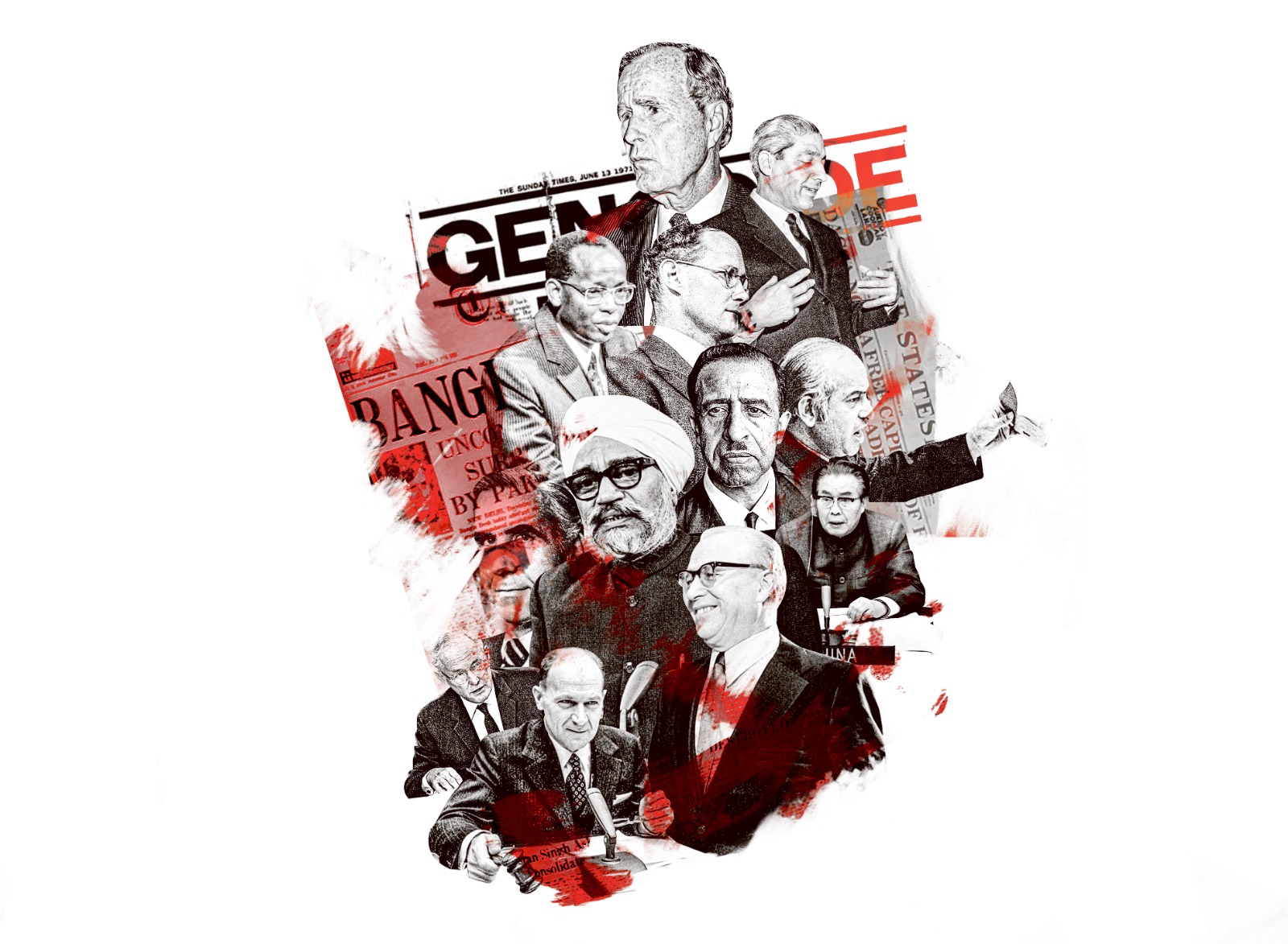
The War of Independence was not fought solely on the soil of Bangladesh; it was also waged across global diplomatic arenas. Beyond the battlefield at home, one of the most critical struggles unfolded at the headquarters of the United Nations in New York, where world powers were sharply divided over the Bangladesh issue.
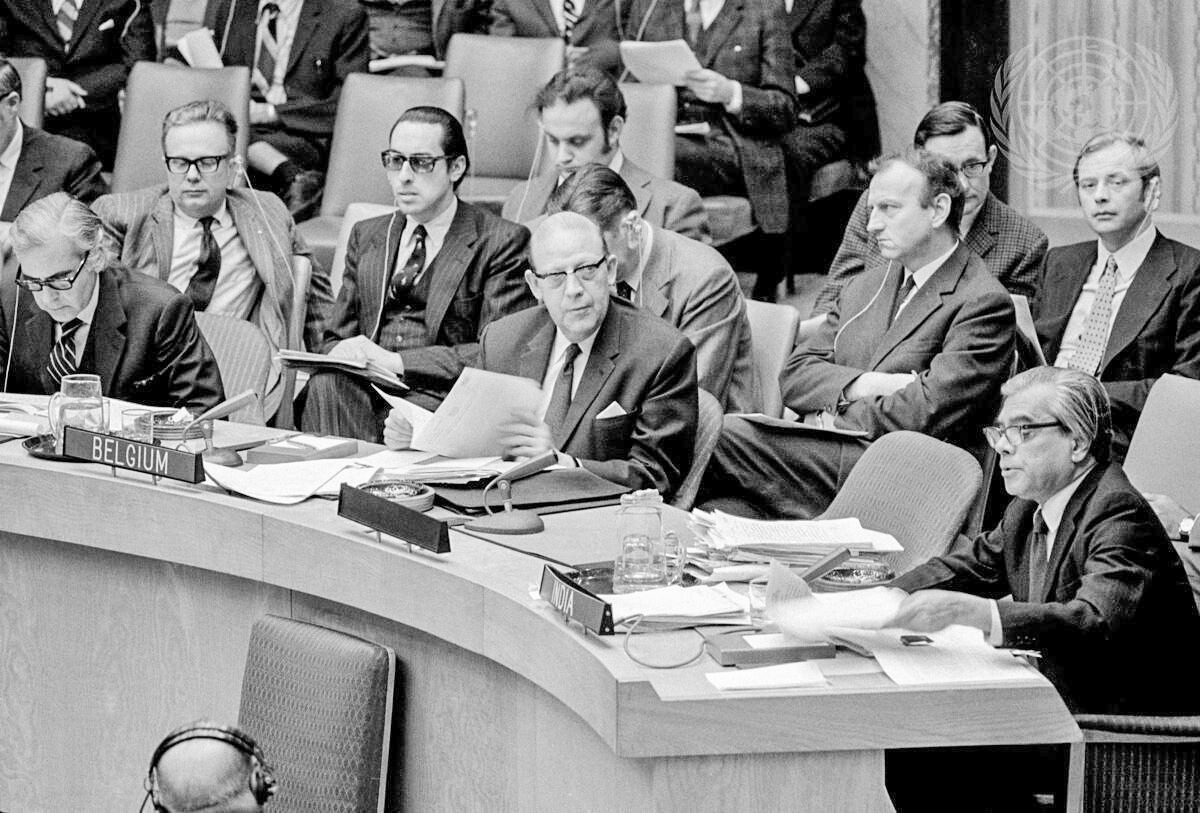
The UN Security Council held extensive debates on the crisis on 4, 5, 6, 12, 13, 14, 15, 16, and 21 December in 1971. During these deliberations, India and the then Soviet Union strongly supported the cause of Bangladesh, while the United States and China firmly backed Pakistan.
One of the most consequential developments in the Security Council was the Soviet Union’s decision to veto three draft resolutions related to the Bangladesh Liberation War. Had these vetoes not been exercised, the course of history might have been very different. The Soviet position was that a simple ceasefire was inadequate and that any resolution must include a political settlement acceptable to the people of Bangladesh.
In total, nearly 20 draft resolutions were proposed by various Security Council members during the debates. Ultimately, Resolution S/RES/307 was adopted on 21 December 1971—after the conflict had largely concluded—without any vetoes.
TIMES of Bangladesh is publishing a brief account of these historic debates, outlining the country-specific positions taken on Bangladesh in 1971 and the statements made during the UN Security Council meetings. The research for this has been done by TIMES Special Correspondent Sheikh Shahariar Zaman.
Dec 4: “Playing Hamlet without the Prince of Denmark”
The Security Council meeting on 4 December 1971 involved various member states and invited parties expressing diverse and often contradictory positions regarding the conflict between India and Pakistan, focusing heavily on procedural matters, the definition of aggression, and the invitation of representatives from Bangla Desh.
- Argentina (Mr. Ortiz De Rozas): Supported inviting India and Pakistan. Strongly opposed inviting the representatives of the “so-called Bangla Desh,” arguing this would set a “very delicate and dangerous precedent” by interfering in the internal affairs of Pakistan, a sovereign Member State. He supported an immediate cease-fire and the Pakistani proposal for UN observers on the East Pakistan border.
- Belgium (Mr. Van Ussel): As a co-signatory of the urgent meeting request, emphasized Belgium’s concern over the tragedy and the dangers of escalation. Called for immediate cessation of hostilities and appealed to Pakistani authorities to address the internal political crisis.
- Burundi (Mr. Terence): Expressed “unswerving devotion to peace” and impartiality. Stressed the immediate objective should be a cease-fire accompanied by the withdrawal of troops by both sides for effectiveness.
- China (Mr. Huang Hua): Vigorously opposed inviting representatives of the “so-called Bangla Desh,” calling them “rebellious elements” and viewing their participation as interference in Pakistan’s internal affairs, violating the UN Charter. It accused India of “armed aggression against Pakistan,” dismissing India’s self-defense claims as “the law of the jungle”. Beijing demanded immediate and unconditional withdrawal of Indian armed forces from Pakistan.
- Italy (Mr. Vinci): Advocated restricting initial deliberations only to Council members and the two main parties (India and Pakistan) due to the urgency of the crisis, suggesting deferring the participation of others, including Bangla Desh. Rome proposed an immediate cease-fire and cessation of military activities as a necessary first step towards a political solution.
- Japan (Mr. Nakagawa): Supported inviting India and Pakistan, noting that under Article 32 of the Charter, parties to a dispute must be invited. Tokyo agreed with restricting the participation of non-members (like Bangla Desh or Tunisia) at this preliminary stage to expedite the discussion due to urgency. It also urged effective steps toward an immediate cease-fire.
- Nicaragua (Mr. Roman): Joined the request for the urgent meeting out of humanitarian concern and urged India and Pakistan to accept peaceful mediation to avoid war.
- Poland (Mr. Kulaga): Favored extending invitations to India and Pakistan. Argued that the Security Council should hear the representatives of Bangla Desh to gain a complete understanding of the “complex and serious” problem. Warsaw stressed that the root of the crisis was the situation in East Bengal and the attempt by Pakistan authorities to stifle the resistance movement purely by military means, emphasizing the need for a political settlement respecting the aspirations of the people of East Bengal.
- Somalia (Mr. Farah): Stated the delegation’s immediate purpose was to halt the open warfare and demanded an immediate cease-fire and immediate withdrawal of forces. Somalia proposed postponing the procedural debate on inviting Bangla Desh to prioritize stopping the fighting.
- Syrian Arab Republic (Mr. Tomeh): Supported demands for immediate cessation of military operations and withdrawal of troops, respecting Pakistan’s territorial integrity.
- Union of Soviet Socialist Republics (Mr. Malik): Strongly advocated for inviting the representatives of Bangla Desh (who represent the 75 million inhabitants and the 10 million refugees) and circulating their documents, arguing that ignoring them prevents getting to the root cause of the crisis. Rejected any attempt to equate India and Pakistan, viewing Pakistan’s military repression and violence against its own population as the cause, not Indian “plotting”. Moscow introduced a draft resolution calling for a political settlement in East Pakistan leading to a cessation of hostilities and a halt to violence by Pakistani forces in the region.
- United Kingdom (Sir Colin Crowe): Acknowledged the severe complexity and urgency. Stressed the need for the Council to pursue a unanimous decision on a ceasefire and withdrawal, believing a non-unanimous resolution would be “wasted breath”.
- United States of America (Mr. Bush): Called for immediate action to address the “open hostilities” and stressed the priority should be given to an immediate cease-fire and withdrawal of forces from foreign territories. Proposed mutual withdrawal from borders, a proposal Pakistan accepted but India rejected. Introduced a draft resolution (S/10416) reflecting these immediate demands.
Invited Parties
- India (Mr. Sen): Argued the roots of the crisis lay in the West Pakistan military regime’s actions against the people of East Pakistan (Bangla Desh), calling this “refugee aggression” and military aggression against India. Delhi asserted that discussing the matter without hearing the voice of Bangla Desh, the elected representatives of 75 million people, was unrealistic. He said, “I like to think that all the members around this table, and many besides, are familiar with it-would know that to discuss this problem without hearing the voice of Bangla Desh is like playing Hamlet without the Prince of Denmark.”
- Pakistan (Mr. Shahi): Accused India of initiating large-scale military aggression and attempting to cause the dismemberment of Pakistan. Detailed Indian military incursions since November 21st. Maintained that Pakistan’s internal crisis was outside the UN’s concern and dismissed the refugee problem as purely humanitarian (since Pakistan guaranteed the right of return). Islamabad threatened that if the Council set a “dangerous precedent” by seating the “so-called representatives” of Bangla Desh, Pakistan would “reappraise seriously its co-operation with the Security Council and the United Nations”.

Dec 5: China strongly opposed invitation of representative of Bangladesh
The Security Council meeting on 5 December 1971 involved intense debate and voting attempts, revealing solidified positions among member states regarding the conflict between India and Pakistan and the role of the newly emerged Bangla Desh movement.
Below is a summary of the key positions held by the countries that spoke on that day:
- Union of Soviet Socialist Republics (USSR): Voted in favor of its own draft resolution (S/10418), which insisted on organically linking the cessation of hostilities with the need for a political settlement in East Pakistan based on respecting the lawful rights of the people, arguing that this situation was the “main cause” of the conflict. The Soviet delegation opposed the eight-Power resolution (S/10423) because it placed India and Pakistan on an “equality footing” and ignored the fundamental cause of the conflict. The Soviet representative stated that Pakistan’s repressive actions caused the tragedy and forced nearly 10 million people to flee to India. The USSR agreed not to insist on a vote regarding the invitation of the Bangla Desh representative after a suggestion for further consultations was made.
- China (Mr. Huang Hua): Voted against the Soviet draft resolution (S/10418) because it would constitute direct interference in the internal affairs of a Member State. Voted in favor of the eight-Power resolution (S/10423) but explicitly stated it was “unsatisfactory” because it failed to squarely face reality and condemn the aggressors (India). China strongly opposed the invitation of the “so-called representative of Bangla Desh,” viewing it as a substantive attempt to impose the status of a created entity onto the UN, facilitating the dismemberment of Pakistan. The Chinese delegation accused the Soviet Union of engaging in “social imperialism” and supporting India’s aggression and expansionist policies.
- United States (Mr. Bush): Voted in favor of the eight-Power draft resolution (S/10423). Washington stressed the urgent need to address “first things first” by putting a “tourniquet” on the conflict through an immediate cease-fire and withdrawal of forces, arguing that tackling the complex political solution simultaneously was unrealistic. The US insisted that the major goal must be stopping the fighting and preserving the territorial integrity of Member States.
- Argentina (Mr. Ortiz De Rozas): Co-sponsored the eight-Power draft resolution (S/10423) and introduced it, emphasizing that it was an attempt to achieve an immediate cease-fire and withdrawal while creating conditions for the repatriation of refugees. Argentina sought clarification on whether the proposed invitation to the representative of “the people and Government of Bangla Desh” implied recognition of an unrecognized government.
- Italy (Mr. Vinci): Voted in favor of the eight-Power resolution (S/10423). Advocated for continuing consultations after both the Soviet and eight-Power resolutions failed due to the veto. Subsequently Rome introduced a new, short six-Power draft resolution (S/10425) focusing only on an immediate cease-fire as a first step to halt the bloodshed.
- Poland (Mr. Kulaga): Voted in favor of the Soviet draft resolution (S/10418). Voted against the eight-Power resolution (S/10423), arguing that placing India and Pakistan on a “footing of equality” without addressing the root political causes in East Pakistan was inappropriate and ineffective. It supported inviting the Bangla Desh representatives.
- Belgium (Mr. Van Ussel): Voted against the Soviet draft resolution (S/10418), arguing that dissociating the political problem from the armed conflict prevented the Council from performing its duty. Brussels insisted on a resolution that included a cease-fire, troop withdrawal, and an appeal to Pakistan to create political conditions for refugee repatriation.
- United Kingdom (Sir Colin Crowe): Abstained on both the Soviet and the eight-Power draft resolutions. London maintained the view that only a unanimous resolution, or one that avoids a veto, could send a clear message and be effective.
- France (Mr. Kosciusko-Morizet): Abstained on both the Soviet and the eight-Power draft resolutions. Paris expressed regret over the Council’s failure (deadlock) and advocated for renewed consultations to achieve a unanimous text that addresses both the cessation of hostilities and a political solution enabling the “free and voluntary return of all refugees”.
- Burundi (Mr. Terence): Voted in favor of the eight-Power resolution (S/10423).
- Somalia (Mr. Farah): Voted in favor of the eight-Power resolution (S/10423).
Invited Parties

- India (Mr. Sen): Reiterated that Bangla Desh is the major party in the dispute, representing the majority of the population. he argued that India’s recent military actions were retaliation for Pakistan’s sustained firing on Indian civilian areas. Delhi insisted that India’s withdrawal offers were contingent on India stopping support for the “guerrillas,” which India would not agree to as they fled terror. India stated that any cease-fire agreement must be acceptable to the Bangla Desh Government (who are fighting for liberty) and denied that listening to the representative of Bangla Desh implied international recognition.
- Pakistan (Mr. Shahi): Repeatedly condemned India’s actions as aggression designed to bring about the dismemberment of Pakistan. He defended Pakistan’s actions in Kashmir and accused India of violating the Karachi agreement first. He asserted that India rejected proposals for troop withdrawals and deliberately chose war. Islamabad accused India of arming and training guerrillas from the refugee population and stressed that the invitation of the representative of Bangla Desh exposed a “sinister design” to disintegrate Pakistan.
- Tunisia (Mr. Driss): Supported Pakistan’s unity and territorial integrity and regretted the Council’s inaction.
- Saudi Arabia (Mr. Baroody): Criticized the Big Powers (US, USSR, and China) for freezing their policies, resulting in the Asian subcontinent being used as a “chequerboard of power politics”. He suggested that non-implementation of previous resolutions proved that diplomatic words were futile. He proposed an Asian solution involving Asian Chiefs of State meeting in a neutral country, facilitated by the UN, to put an end to the conflict.
Dec 6: India’s announcement of recognition of Bangladesh
The Security Council meeting on 6 December 1971 addressed the continuing military conflict between India and Pakistan, focusing heavily on the previous day’s failures to pass a resolution and the ultimate decision to refer the matter to the General Assembly. A major development on this day was India’s announcement of its recognition of Bangla Desh.
Here is a summary of the positions held by the countries speaking on 6 December:
- Argentina (Mr. Ortiz De Rozas): Reiterated regret over the protracted discussion and welcomed Somalia’s eloquent proposal to refer the matter to the General Assembly under the “Uniting for peace” resolution. Argentina co-sponsored this draft resolution (S/10429).
- Belgium (Mr. Van Ussel): Expressed regret that the Council had failed to discharge its primary responsibility to restore peace. He acknowledged that their previous diplomatic efforts were doomed to fail due to the fundamental differences in views held by India and Pakistan. Belgium announced it would vote in favor of the draft resolution (S/10429) to transfer the question to the General Assembly, as this course was necessary given the Council’s “impotence to act”.
- Burundi (Mr. Terence): Expressed deep distress over the continuing bloodshed and emphasized that the immense suffering of the population aggravated by hostilities means the Council is “in duty bound to take this matter up”.
- China (Mr. Huang Hua): Delivered a strong ideological attack on the Soviet Union and India, labeling the newly created “Bangla Desh” a “neo-quisling government” and a “neo-‘Manchukuo’ government,” comparing the situation to the Japanese occupation of Northeast China in the 1930s. He accused the Soviet Union and India of deliberately creating this entity to dismember Pakistan and perpetually occupy East Pakistan. China maintained that the Soviet Union was engaged in “social treachery” and seeking to control the Indian subcontinent and the Indian Ocean. The Chinese representative stated his intention not to press his own draft resolution.
- France (Mr. Kosciusko-Morizet): Expressed profound regret over the Council’s failure and inability to adopt a solution, stating that the debate “does no honour to the Council”. He stated that France would abstain on the resolution to transfer the matter to the General Assembly (S/10429), believing that this action would likely lead to more delays and simply result in a non-mandatory recommendation.
- Italy (Mr. Vinci): Announced the decision by Italy and other sponsors to withdraw their short, six-Power draft resolution (S/10425) calling for only a cease-fire. This decision was made because, in light of rapid developments, the resolution was deemed “inadequate” and likely lacked sufficient support for adoption, especially since events showed it might already be “too late” to focus only on a cease-fire. Italy firmly supported the resolution (S/10429) to move the issue to the General Assembly, emphasizing that the UN membership as a whole must act if the Security Council fails due to veto deadlock.
- Japan (Mr. Nakagawa): Expressed deep distress that a large-scale war had started between two nations with whom Japan shared traditional friendship. He stated that since the permanent members lacked unanimity, the Council faced an “impasse” and had no choice but to refer the matter to the General Assembly using the “Uniting for peace” resolution (S/10429) to ensure the UN membership could take effective steps.
- Nicaragua (Mr. Sevilla-Sacasa): Regretted that the solution to the grave problem did not depend on the majority of the Council members due to the veto under Article 27 of the Charter.
- Poland (Mr. Kulaga): Supported the position that a solution must deal with the “root of the evil” and be a judicious, realistic, and lasting political settlement addressing the crisis in East Pakistan, rather than solely focusing on a cease-fire. Approved and supported the new draft resolution introduced by the Soviet Union (S/10428) for dealing with the root cause of the evil.
- Sierra Leone (Mr. Taylor-Kamara – President): Speaking as the representative of Sierra Leone, expressed extreme distress at the continuation of bloodshed and suffering on the subcontinent and the Council’s duty to address the “continuing serious and grave situation between India and Pakistan”.
- Somalia (Mr. Farah): Maintained that the only safe course for the UN is to adhere strictly to the principles of international law and territorial integrity, believing that the UN must not fail.
- Syrian Arab Republic (Mr. Tomeh): Expressed concern over procedural discussions preventing a focus on the urgent and grave situation.
- Union of Soviet Socialist Republics (USSR) (Mr. Malik): Formally introduced a new draft resolution (S/10428), incorporating the cease-fire call of the now-withdrawn five-Power draft, but crucially linking it “inseparably and organically” to the need for a political settlement in East Pakistan recognizing the will of the population from the December 1970 elections. The USSR insisted that failure to include the root cause (Pakistan’s actions against East Pakistan’s population) makes any resolution “one-sided” and inadequate. Declared the Soviet delegation would not support the referral resolution (S/10429) and chose to abstain, arguing that sending the issue to the General Assembly (whose resolutions are merely recommendations) was an attempt to avoid a mandatory solution and deflect attention from the core issue.
- United Kingdom (Sir Colin Crowe): Stated that their delegation abstained on the referral resolution (S/10429). He expressed doubt that immediately moving the discussion to the General Assembly would be desirable or advance the necessary goal of achieving concrete results, an end to bloodshed, and reconciliation.
- United States of America (Mr. Bush): Stated that the U.S. policy was supported by its people and centered on seeking an immediate cease-fire and withdrawal, citing its support for previous resolutions. Argued that the core mission was stopping the “massive war” and preserving the territorial integrity of Member States. Strongly supported the referral resolution (S/10429) to the General Assembly under the “Uniting for peace” resolution, arguing this was the necessary course given that the Security Council’s action was blocked by a veto.
Invited Parties
- India (Mr. Sen): Announced that the Government of India had granted recognition to the People’s Republic of Bangla Desh. He explained this decision was based on the “unanimous revolt of the entire people of Bangla Desh” and the assessment that Pakistan was “totally incapable” of regaining control. He argued that the recognition placed the relationship of India to Bangla Desh in a “completely different legal, political and constitutional context”. He rejected the idea that any resolution should equate India and Pakistan, insisting that India was acting in self-defense against Pakistani aggression, which stemmed from the oppression and “genocide” carried out by Pakistan’s military regime. Delhi Insisted that the conflict’s underlying realities-refugees, genocide, and the will of the people-must be addressed.
- Pakistan (Mr. Shahi): Strongly condemned India’s recognition of Bangla Desh, stating that India had followed a plan of “meticulous exactitude” designed to bring about the dismemberment of Pakistan and use the Council to legitimize the secessionist state. He categorized the Mukti Bahini (Bangla Desh forces) as a mere “auxiliary of the 120,000 Indian armed forces” and accused India of violating an agreed cease-fire in Dacca meant for the evacuation of UN personnel and diplomats, calling this a “deplorable action”. Responded to the Soviet draft resolution, arguing it contained an internal contradiction by giving status to secessionist elements while speaking of respecting the will of the people as expressed in the 1970 elections (a mandate the secessionists had rejected). Reaffirmed Pakistan’s position against military occupation and coercion, arguing that political solutions cannot be imposed while a country is under invasion.
- Saudi Arabia (Mr. Baroody): Asserted that basic principles of the UN Charter, particularly non-intervention in internal affairs, had been violated. He argued that civil conflicts should be resolved internally and warned against encouraging separatist movements in other countries. He appealed for the major powers (USSR and China) to set aside their bilateral differences and focus constructively on the immediate humanitarian tragedy to prevent total “insolvency” and famine in the subcontinent.
- Tunisia (Mr. Driss): Stated that Tunisia withdrew as a co-sponsor of the short cease-fire resolution (S/10425) to avoid prolonging the debate on a procedural question and to facilitate the Council’s work.
Dec 12: Bhutto admits Pakistan “made mistakes”
The Security Council meeting held on Sunday, 12 December 1971 (the Sixteenth Hundred and Eleventh Meeting), focused on renewed efforts to deal with the crisis between India and Pakistan after the General Assembly had adopted a resolution calling for a cease-fire and withdrawal. The debate included procedural arguments, accusations of aggression, and differing perspectives on the foundational cause of the conflict.
The main speakers were the representative of the United States (which called the meeting), the Foreign Minister of India, and the Deputy Prime Minister and Foreign Minister of Pakistan. The delegations of Tunisia and Saudi Arabia were invited to take seats in the Chamber.
Here is a summary of the key positions presented:
Security Council Members



- United States of America (Mr. Bush): Requested the meeting because it was “essential that this body promptly and effectively deals with the threat to international peace and security”. He stated that the General Assembly’s resolution (104 to 11 votes) called for an immediate cease-fire and withdrawal, which Pakistan accepted but India refused, demonstrating India’s “defiance of world opinion”. While acknowledging Pakistan’s “tragic mistake” in using force in East Pakistan in March, the U.S. stated this did not “justify the actions of India in intervening militarily and placing in jeopardy the territorial integrity and political independence of its neighbour Pakistan”. He expressed concern that Indian military actions were moving beyond occupying East Pakistan and constituted “an attack on the very existence of a Member State”. He urged India to disavow any intention to annex West Pakistan territory or change the status quo in Kashmir. He introduced a new draft resolution (S/10446) substantially the same as the General Assembly’s resolution.
- Union of Soviet Socialist Republics (USSR) (Mr. Malik): Responded procedurally by seeking confirmation of an understanding that the meeting would be limited to statements due to the urgency. He asserted that the U.S. representative enjoyed a “privileged position” due to access to high-level U.S. government meetings for instructions that other representatives lacked. He stressed that the Soviet proposal for a cease-fire must be coupled with an “immediate political settlement in East Pakistan” on the basis of the people’s will. Moscow argued that separating the military conflict (cease-fire/withdrawal) from the political crisis in East Pakistan renders any solution unrealistic. He stated that failure to deal with the true causes, specifically the human tragedy and mass exodus of 10 million people, overlooks the unusual and unprecedented nature of the crisis.
- China (Mr. Huang Hua): Asserted that China was not a party to any internal “understanding” regarding the debate structure. He strongly accused the Soviet Union and India of deliberately delaying substantive discussions. Characterized the Bangla Desh movement as a “toy in the pocket of the Indian expansionists and the Soviet social-imperialists,” and called its representatives rebels and national traitors. He maintained that Pakistan’s cause succeeded in the General Assembly because it rested on the principle that a sovereign State “cannot be dismembered by the use of force”. He urged the Council to adhere to the world verdict of 104 nations supporting Pakistan’s unity.
Invited Parties
- India (Mr. Swaran Singh): Challenged the U.S. narrative, agreeing that the war “need never have occurred,” but insisted that India was driven to war by Pakistan’s oppressive actions. He argued that the core of the problem lay in the denial of the demands and repression of the overwhelming majority (75 million) of East Bengal’s population. He recounted Pakistan’s military actions, including a “premeditated and massive aggression against India” on 3 December, which led to India being forced to defend itself. He reasserted that India has “no territorial ambitions in Bangla Desh or in West Pakistan”. India’s recognition of the People’s Republic of Bangla Desh on 6 December was necessary because Pakistan’s aggression extinguished the hope of a negotiated political settlement, and provided a “proper juridical and political basis” for India’s military presence, ensuring Indian forces would remain “only as long as the people and Government of Bangla Desh require and welcome their presence”. He insisted that any resolution must recognize the Bangla Desh Government as a necessary party to any cease-fire or withdrawal negotiations.
- Pakistan (Mr. Bhutto): Affirmed Pakistan’s acceptance of the General Assembly resolution calling for a cease-fire and withdrawal. He argued that the main issue was the violation of the international principle that a sovereign State cannot be dismembered by force. He admitted Pakistan has “made mistakes,” but asserted it was ready to rectify them in a “civilized spirit”. He suggested India instigated the conflict to preempt the return of civilian rule in Pakistan. He argued that Pakistan was fighting for the unity and integrity of the whole nation. He warned that dismembering Pakistan would set a “tragic precedent for the world at large” affecting smaller countries in Asia, Africa, and Latin America. He rejected the idea that the crisis was about self-determination in East Pakistan, noting that India constantly blocked self-determination in Kashmir. He acknowledged the mass exodus of people from East Pakistan, calling it an “unusual expression of political distrust and protest,” but vehemently opposed Indian intervention.
The meeting ultimately failed to resolve the ongoing procedural disputes over voting on the U.S. draft resolution (S/10446/Rev.1), leading the President to adjourn the debate until the next day to allow for further consultation. The U.S. resolution was later rejected due to the Soviet Union’s veto.
Dec 13: USSR vetoes US resolution
The Security Council meeting on Monday, 13 December 1971, primarily addressed the India-Pakistan conflict and a separate matter regarding the United Nations Peace-Keeping Force in Cyprus (UNFICYP). During the discussion on the India-Pakistan situation, the focus was procedural—namely, the failed attempt by the USSR to force a vote on inviting a representative of Bangla Desh—and the substantive debate on the revised draft resolution submitted by the United States (S/10446/Rev.1), which was ultimately vetoed.
Here is a summary of the positions of the countries involved in the discussions regarding the India-Pakistan conflict on 13 December:
Security Council Members
- Argentina (Mr. Ortiz De Rozas): Voted in favor of the revised U.S. draft resolution (S/10446/Rev.1) because it focused on three primary points: an immediate cease-fire, mutual troop withdrawal from the borders (which was considered an indispensable complement of the cease-fire), and the creation of necessary conditions for refugee return. Argentina opposed the formal invitation of any representatives of the “Government of Bangla Desh,” warning that it would establish a “serious and very dangerous precedent” by encouraging secessionist or subversive movements globally.
- Belgium (Mr. Van Ussel): Supported the draft resolution (S/10446/Rev.1) because its objective was the immediate cessation of hostilities and withdrawal of armed forces.
- China (Mr. Huang Hua): Voted in favor of the revised U.S. draft resolution (S/10446/Rev.1) but declared it “highly unsatisfactory” because it failed to condemn India’s aggression and failed to distinguish between the aggressor and the victim. China strongly opposed the repeated attempts by the USSR to invite a representative of “Bangla Desh,” deeming it a “mere puppet” used to obstruct the Council and a deliberate move by India and the Soviet Union to interfere in Pakistan’s internal affairs. China warned that the preambular clauses concerning a political solution should not be distorted as a pretext for any interference in the internal affairs of Pakistan.
- France (Mr. De La Gorce): Abstained on the U.S. draft resolution (S/10446/Rev.1) for the same reasons it had abstained on previous proposals: France sought a position acceptable to the Council and the parties concerned that addresses all aspects of the problem (cessation of fighting, disengagement, and ensuring justice through a political settlement).
- Italy (Mr. Vinci): Voted in favor of the U.S. resolution (S/10446/Rev.1) because it upheld principles of international law and embodied the content of the earlier 104-vote General Assembly resolution. Italy later introduced, jointly with Japan, a new draft resolution (S/10451), aiming to break the deadlock by focusing on achieving a comprehensive political settlement, implementing a cease-fire, troop disengagement/withdrawal, and establishing a three-member Security Council committee to assist the parties.
- Japan (Mr. Nakagawa): Voted in favor of the U.S. resolution, noting it was similar to the General Assembly’s resolution .
- Nicaragua (Mr. Sevilla-Sacasa/Mr. Roman): Voted in favor of the U.S. draft resolution, stating that adopting this minimum measure was essential to fulfill the Council’s sacred mission under the Charter.
- Poland (Mr. Kulaga): Voted against the U.S. draft resolution (S/10446/Rev.1). Poland insisted that the core of the conflict was internal to East Pakistan and that any solution must be based on political realities (the balance of power in East Bengal) and inextricably link a cease-fire with a realistic and lasting political settlement that respects the will of the people of East Pakistan.
- Sierra Leone (The President, Mr. Taylor-Kamara): As the representative of Sierra Leone, supported the efforts to achieve peace and security in the region and endorsed immediately referring the matter to the General Assembly.
- Somalia (Mr. Farah): Voted in favor of the U.S. draft resolution.
- Syrian Arab Republic (Mr. Tomeh): Voted in favor of the U.S. draft resolution (S/10446/Rev.1).
- Union of Soviet Socialist Republics (USSR) (Mr. Malik): Vetoed (voted against) the U.S. draft resolution (S/10446/Rev.1). The USSR’s core position remained that the military conflict stemmed from the anti-democratic, violent actions against the people of East Pakistan. They insisted on a solution that simultaneously and “indissolubly” linked the cease-fire and cessation of hostilities with a political settlement in East Pakistan based on the will of the 75 million people, as expressed in the 1970 elections. Malik condemned the U.S. and Chinese delegations for taking a one-sided, unrealistic position by supporting resolutions that focused only on a cease-fire. He argued that suggesting refugees “voluntarily return” without fundamental political change was unrealistic. Malik also failed in a procedural attempt to invite Justice Abu Sayeed Chowdhury (a key figure associated with Bangla Desh) as a “competent person” under Rule 39.
- United Kingdom (Sir Colin Crowe): Abstained on the U.S. draft resolution (S/10446/Rev.1). The UK maintained that supporting resolutions that were clearly going to fail due to the veto provided no practical advantage and did not hasten a cease-fire.
Invited Parties
- India (Mr. Swaran Singh): Expressed deep disappointment with the “one-sided and partisan attitude” of the U.S.. Reiterated that India was forced into military action due to Pakistani oppression, the resultant refugee crisis (10 million people), and Pakistan’s declaration of war. India insisted it had no territorial ambitions in West Pakistan or the newly recognized People’s Republic of Bangla Desh. India firmly demanded that a cease-fire and withdrawal must include the people and Government of Bangla Desh as a necessary party. India characterized the rejected U.S. draft resolution as defective because it selectively applied Charter principles and totally ignored the massive human rights violations in Bangla Desh.
- Pakistan (Mr. Bhutto): Affirmed Pakistan’s acceptance of the General Assembly resolution (which called for a cease-fire/withdrawal) . Bhutto argued that Indian aggression was turning a severe political crisis into a catastrophe. He stressed that the solution to Pakistan’s internal problems must be consistent with its sovereignty and territorial integrity and free from external interference. He presented a long list of Pakistani peace initiatives rejected by India, claiming this proved the premeditated nature of India’s aggression. Bhutto insisted that Pakistan was ready to implement a cease-fire and withdrawal if Indian forces (including the Mukti Bahini, which he called Indian auxiliaries) cease large-scale violence and remove their intervention.
Dec 14: Debate on need for urgent action
The 1614th meeting of the Security Council concerned “The situation in the India/Pakistan subcontinent”. The primary discussion revolved around the need for urgent action versus the necessity of holding consultations to draft a widely acceptable resolution. Below is a summary of the positions expressed by various countries:
Core Parties (Invited to Participate)
- Pakistan (Mr. Bhutto, Deputy Prime Minister and Foreign Minister): Asserted that Pakistan was an independent sovereign State and that its dismemberment was due to a military attack by a powerful neighbour, not internal movement. He condemned India’s use of the refugee crisis as an “ugly, crude pretext” for “naked, brutal aggression” against East Pakistan. He stated that the Security Council had “failed miserably, shamefully,” denying Pakistan justice by using “dilatory tactics” (procedural delays) intended specifically for Dacca to fall. He refused to be a party to the “legalization of abject surrender” or the endorsement of aggression. He declared he was leaving the Security Council, finding it disgraceful to remain a moment longer, stating, “I am not ratting, but I am leaving your Security Council”.
Security Council Members and Participants
- United Kingdom (Sir Colin Crowe): Proposed an adjournment until the next day to allow for extensive consultations on a draft resolution being worked on jointly with France.
- France (Mr. Kosciusko-Morizet): Supported the suggestion for a general agenda title “The situation in the India/Pakistan subcontinent”. He agreed that while movement needed to be swift, a premature meeting might not yield results. He advocated for flexibility, suggesting the meeting be suspended, giving the President authority to reconvene the Council immediately if consultations proved fruitful, possibly that evening or the next morning.
- China (Mr. Huang Hua): Agreed with adopting the agenda title relating to the India/Pakistan subcontinent. He opposed delaying the meeting until the next day, citing the extreme gravity of the situation where cities were under gunfire and masses of people were suffering. He urged that the meeting be resumed as early as possible, suggesting that evening by 7 p.m. at the latest. He supported the proposal to invite representatives of Pakistan and India to participate.
- United States of America (Mr. Bennett): Emphasized the urgency of the situation, noting that “a war is going on” and lives were being lost while consultations continued. He stated that the US delegation was ready to meet as soon as possible, preferably that evening, following the consultations.
- Union of Soviet Socialist Republics (Mr. Malik): Recognized the urgency of the question and agreed on the necessity and desirability of continuing consultations. He proposed a flexible formula: consultations should continue, and if positive results were achieved in an hour or three, the meeting should be convened immediately; if not, it should be convened no later than the next morning.
- Somalia (Mr. Farah): Raised a point of order regarding the need for a formal agenda title, which was adopted.
- Argentina (Mr. Ortiz de Rozas): Shared China’s belief that the Council must act soon due to the “tragic crisis,” but felt time was essential for fruitful consultations among members and with the two principal parties.
- Italy (Mr. Vinci): Shared the anxiety about the serious problem. He endorsed the French proposal, emphasizing that the President should be free to convene the meeting at the earliest possible moment based on the progress of negotiations.
- Belgium (Mr. Van Ussel): Shared the concern and impatience and favored continuing consultations with a view to meeting that evening if “concrete results” could be reached.
- Syrian Arab Republic (Mr. Tomrh): Supported the French proposal, calling it a practical compromise that left open the possibility of meeting that night.
- Poland (Mr. Kukaga): Agreed on the need for consultations and sought clarification regarding whether the representatives of India and Pakistan intended to speak at the afternoon meeting.
- Tunisia (Mr. Driss): Declared support for Pakistan in the legitimate defense of its territory and sovereignty and deplored any foreign interference in its internal affairs.
Dec 15: China criticises India on committing aggression against Pakistan
The 1615th meeting of the Security Council concerned “The situation in the India/Pakistan subcontinent.” The discussion centered on the introduction of several new draft resolutions and sharp disagreement, particularly between Pakistan and China versus the Soviet Union, regarding whether a political settlement must precede troop withdrawal in East Pakistan.
Core Parties
- Pakistan (Mr. Shahi): Stressed that a cease-fire and withdrawal of troops must logically and indispensably precede any political settlement. He argued that the Polish draft resolution was unacceptable because it called for the transfer of power while Indian forces occupied East Pakistan, forcing the resulting government to operate under duress,. he stated that the Polish draft resolution, despite omitting the word, was a formula for the dismemberment of Pakistan. He asserted that rejecting the will of the majority (104 votes in the General Assembly) was undemocratic. He questioned whether dismemberment was the proper solution based on the refugee figures, especially when the wishes of the remaining 120 million Pakistanis must be considered. Claimed the Indo-Soviet treaty was the event that led directly to the unleashing of Indian aggression against Pakistan.
Security Council Members and Participants
- Union of Soviet Socialist Republics (USSR) (Mr. Malik): Insisted that any solution must recognize the necessity for a cease-fire combined with a simultaneous decision on a political settlement in East Pakistan. He argued that to ensure the return of the more than 10 million refugees, power must be transferred to the representatives of the majority party elected in December 1970. He strongly criticised the Pakistan authorities for using “terror and violence to stifle the will of the population of East Pakistan,” which led to the massive refugee flight. He accused Pakistan’s Deputy Prime Minister (Bhutto) and the Chinese representative (Huang Hua) of ignoring the deaths of hundreds of thousands of people and the tragic consequences of events in East Pakistan, calling the official misjudgment of the internal crisis a “crime”.
- China (Mr. Huang Hua): Declared that the Indian Government openly committed aggression against Pakistan with the support of the Soviet Government. He criticized the Soviet representative for repeatedly abusing the veto power to delay action and shield India’s occupation of East Pakistan. Described the Polish draft resolution as aiming to dismember and legalize the dismemberment of Pakistan, labeling it a Soviet resolution. He stated the Chinese Government firmly supports Pakistan’s struggle against foreign aggression and to defend its national independence and unity. He vowed China would have no part in any resolution that interferes in Pakistan’s internal affairs, disrupts national unity, or supports the creation of the so-called “Bangla Desh” puppet regime.
- United Kingdom (Sir Colin Crowe) & France (Mr. Kosciusko-Morizet): Confirmed they had been engaged in nonstop negotiations, creating an Anglo-French draft resolution (S/10455), the goal of which was to stop fighting and provide peaceful and honorable solutions.
- Poland (Mr. Kulaga): Defended the Polish draft resolution (S/10453/Rev.1) as aiming for a joint and interrelated solution addressing the urgency of the situation, political realism, and humanitarian concerns.
- Ceylon (Mr. Amerasinghe): Stressed a policy of strict and scrupulous neutrality as a sincere friend and conciliator to all parties. He stated that if withdrawal is dictated by the will of the people, Pakistan must be given the opportunity to do so with honor and dignity in response to a request for a political settlement, not a military solution,.
- Argentina (Mr. Ortiz de Rozas): Expressed deep frustration over the Council’s complete paralysis, noting that talking and consulting continued to fail because the parties’ views remain irreconcilable,.
- Syrian Arab Republic (Mr. Jouejati): Introduced a draft resolution (S/10456) in an effort to break the deadlock endangering peace and the UN’s role,.
- Italy (Mr. Vinci): Confirmed that the draft resolution submitted earlier by Italy and Japan (S/10451) remained before the Council, and he was gratified it helped spark the “proliferation of draft resolutions”.
Dec 16 morning session: India declares unilateral ceasefire
The 1616th meeting of the Security Council concerned “The situation in the India/Pakistan subcontinent.” The meeting was marked by a major announcement from India regarding a unilateral cease-fire and a passionate speech by Saudi Arabia reflecting deep frustration with the Council’s paralysis.
Core Parties
- India (Mr. Swaran Singh, Foreign Minister): Conveyed a statement from the Prime Minister of India, declaring that India had no territorial ambitions and, since the Pakistani armed forces had surrendered in Bangla Desh and it was now free, continuing the conflict was pointless. India had therefore ordered a unilateral cease-fire everywhere on the Western front effective from 2000 hours Indian Standard Time on Friday, 17 December 1971. India’s representative called the unilateral cease-fire proposal “positive and constructive” and appealed to the Council to focus on bringing about the cease-fire before discussing other juridical or complex matters.
Security Council Members and Participants
- Saudi Arabia (Mr. Baroody): Expressed profound despair and disappointment, arguing that the United Nations and the Security Council had been “reduced to a shadow of what it should be”. He attributed this failure to permanent members prioritizing national interests over peace and justice. He criticized the prolonged consultations aimed at achieving a “weak consensus,” calling them a “farce” and a “face-saving device” that failed to stop the war.
- Italy (Mr. Vinci): Expressed relief that India had unilaterally ordered a cease-fire and declared it had no territorial ambitions.
- Somalia (Mr. Farah): Regretted that the cease-fire was not implemented earlier, following the General Assembly’s call on December 7.
- United Kingdom (Sir Colin Crowe) & France (Mr. Kosciusko-Morizet): The UK representative noted that their joint draft resolution (Anglo-French draft revision 5, subsequently circulated as S/10455) had been the result of nonstop, intensive negotiations.
- Union of Soviet Socialist Republics (Mr. Malik): Introduced a new draft resolution (S/10457). He stressed that any successful resolution must clearly define the close and organic relationship between the cessation of hostilities and a political settlement in East Pakistan.
- Syrian Arab Republic (Mr. Jouejati): Introduced a draft resolution (S/10456) to break the deadlock endangering international peace and security and annulling the role of the Security Council.
- Poland (Mr. Kulaga): The Polish representative mentioned that he was not pressing for a vote on Poland’s draft (S/10453/Rev.1) and was allowing for consultations and possible revision.
Dec 16 afternoon session: Debate on draft resolutions
The following is a summary of the positions and actions taken by the countries specifically mentioned as speaking or sponsoring draft resolutions during the United Nations Security Council’s 1617th meeting on 16 December afternoon 1971, concerning the situation in the India/Pakistan subcontinent:
Union of Soviet Socialist Republics (USSR) represented by Mr. Malik, based its position on the fact that the Indian Government had officially decided to initiate a cease-fire on both the eastern and western fronts, meaning hostilities and military actions had ceased and bloodshed had stopped. He argued that previous draft resolutions were obsolete due to the new de facto situation created by India’s cease-fire decision. The Soviet delegation submitted a new draft resolution (S/10458) to the Security Council, arguing its adoption would greatly assist normalization due to the prevailing specific and de facto situation. They withdrew their previous draft resolution (S/10457).
United States of America (USA) represented by Mr. Bush was a co-sponsor of a joint draft resolution (S/10459) with Japan, which was developed during extensive consultations. The US delegation noted that this draft had come reasonably close to achieving agreement among most Council members, although securing concurrence from both conflicting parties (India and Pakistan) remained uncertain.
Japan represented by Mr. Ogiso, was the co-sponsor of the joint draft resolution S/10459 with the United States. The delegation believed the new draft resolution (S/10459), resulting from wide consultations, was an appropriate approach given the development of the situation.
Italy represented by Mr. Vinci, emphasized the spirit of cooperation needed to resolve the crisis. The Italian delegation stressed that all members were making a joint effort to achieve a unanimous agreement so the Council could finally act.
Somalia represented by Mr. Farah noted its involvement in negotiations to find common ground between the conflicting parties. The delegation had been in close contact with India and Pakistan to draw up a mutually satisfying formula.
Argentina represented by Mr. Ortiz De Rozas indicated general approval of the consensus efforts. Argentina reported having no major objections to the text being discussed.
The representatives of India (Mr. Swaran Singh) and Pakistan (Mr. A. Shahi) were invited to participate in the discussion of the situation without the right to vote.
Dec 21: UNSC finally adopts resolution
The 1621st meeting of the Security Council marked the successful adoption of a compromise draft resolution, S/10465, concerning “The situation in the India/Pakistan subcontinent.” The positions articulated by the various participants largely focused on explaining their vote, interpreting the resolution’s meaning regarding cease-fire and withdrawal, and addressing the failure of the Council to act sooner.
Core Parties (Invited to participate)
- Pakistan (Mr. Shahi): Asserted that the Security Council failed signally in dealing with the situation in accordance with the Charter’s principles, noting that despite open aggression, war, and blatant breach of peace, the Council did nothing to stop the conflict or save lives. The adopted resolution is regarded as weak as the situation is grave. He emphatically rejected India’s contention that Pakistan had no right to troops in “so-called Bangla Desh,” stating East Pakistan is an integral part of Pakistan’s territory whose status cannot be altered by aggression or military occupation. The term “territories” in the resolution refers only to national territories constituted in 1947. He argued that because there are no Pakistani forces on Indian territory in the eastern theatre, withdrawals must be one-sided, applying only to the Indian occupation forces. He hoped the Indian military occupation authorities would stop the “savagery and the killing” now occurring in Pakistan under Indian occupation and address the censorship preventing the truth from being revealed.
- India (Mr. Swaran Singh, Foreign Minister): Stated the existence of Bangla Desh and its government cannot be ignored. India intends to withdraw its armed forces from Bangla Desh as soon as practicable but must remain temporarily for tasks like the protection and earliest possible repatriation of surrendered Pakistani troops and the prevention of reprisals, which India is committed to handling in accordance with the Geneva Conventions. India asserted that Pakistan has no longer any right to keep troops there, and forceable entry would endanger peace.
Security Council Members
- Somalia (Mr. Farah, Sponsor): The adopted resolution (S/10465) was reached due to the “untiring efforts of the representative of Somalia, Ambassador Farah”. On behalf of the sponsors, Somalia provided an interpretive statement:
▪ The resolution demands a cease-fire and cessation of hostilities.
▪ In the eastern theatre (where fighting has stopped), foreign armed forces should be completely withdrawn as soon as practicable.
▪ In the western theatre, disengagement leading to mutual withdrawal of armed forces of both parties should commence without delay.
▪ The sponsors acknowledge India’s declaration of having no territorial ambitions, allowing for mutually acceptable arrangements by the parties.
- China (Mr. Huang Hua): Voted in favor of the resolution but stated the delegation was “highly dissatisfied”. He complained that the resolution failed to draw a line between right and wrong. He asserted that the Council remained helpless and unable to act, making the situation a “big mockery”. He stated that the fall of Dacca was not a victory milestone for India but a starting point toward defeat, predicting greater upheaval and intranquility due to the military occupation of East Pakistan. He affirmed unwavering support for Pakistan in defense of its sovereignty, territorial integrity, and national unity.
- Union of Soviet Socialist Republics (USSR) (Mr. Malik): The USSR delegation could not support the resolution because it explicitly referred to the General Assembly resolution 2793 (XXVI), which the USSR had voted against, viewing it as one-sided because it ignored the primary cause of the conflict: the repressive actions against the people of East Pakistan. He, however, welcomed that the resolution provided for a cease-fire and cessation of hostilities, indicating that “reality has triumphed” and the war has ended. He stressed that normalization requires measures to ensure a political settlement based on the transfer of power to the representatives elected in December 1970. He expressed “profound regrets” over the new President of Pakistan’s reported statement that he intended to “take revenge,” and urged him to adopt a more objective attitude.
- Argentina (Mr. Ortiz de Rozas, Sponsor): Ardently hoped that India and Pakistan would seek co-operation instead of confrontation, enabling them to live in peace and overcome underdevelopment problems.
- Italy (Mr. Vinci): Expressed gratification that the adopted text evolved from a working paper drafted by Italy and other non-permanent members.
- Japan (Mr. Nakagawa, Sponsor): Expressed “great satisfaction” that the Council adopted the resolution (S/10465), acknowledging that it was the culmination of continued efforts, particularly those of Ambassador Farah.
- Poland (Mr. Ludwiczak): Fully maintained its position of principle that the conflict’s fundamental character lies in the internal situation of East Pakistan, requiring a political solution in accordance with the expressed will of the people (manifested in the December 1970 elections) as the only right road to cease-fire and troop withdrawal.
- Syrian Arab Republic (Mr. Tomeh): Voted in favor of the resolution.
- United Kingdom (Sir Colin Crowe): Voted in favor, expressing “considerable satisfaction” that the Council was able to act, crediting Ambassador Farah’s “unremitting efforts”.
- United States of America (Mr. Bush): Joined in congratulating Ambassador Farah. While unhappy that the Council took so long to act, the delegation was pleased that it finally acted authoritatively on points concerning cease-fire, withdrawal, and the preservation of human life.
- Burundi (Mr. Terence, Sponsor): Voted in favor, intending to show its determination to find a rapid and peaceful solution.
- Nicaragua (Mr. Sevilla Sacasa, Sponsor): Co-sponsored and voted for the resolution, expressing gratitude to Ambassador Farah.