


The boundary between reality and fiction is slowly being blurred in Miami, even if only for a short period. Through what could only be described as the most ambitious real-world marketing takeover in gaming history, the South Floridian cultural and tourist hub is transforming into its famous digital counterpart. Fueled by a multi-million-dollar corporate initiative, this massive campaign integrates fictional fast-food chains, custom police supercars, and physical promotional displays, turning the iconic city into a real-life Vice City.
With the launch of GTA VI, developers Rockstar Games have ramped up their marketing worldwide, especially in Miami, Florida. This is not surprising, as the city was the main inspiration for Vice City in the controversial but critically acclaimed blockbuster GTA: Vice City (2002). Those who have played the game are familiar with its vibrant neon-soaked streets, pastel-coloured art deco architecture, and synth-heavy 1980s aesthetic capturing the city’s golden age. Because of this connection, Rockstar has focused heavily on marketing the game, turning the fictional city into a reality.
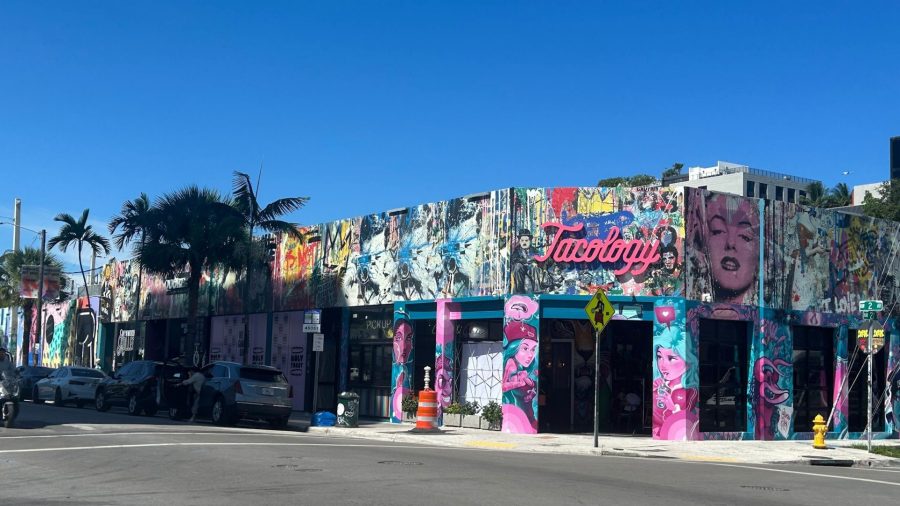
To pull off this ambitious campaign, Rockstar Games reportedly spent over $7 million on local marketing within Miami. The company commissioned high-impact signs, murals, and satirical billboards. The tourist-heavy Wynwood district has been draped in hand-painted murals by renowned street artists. Major transit hubs, highways, and high-rise buildings have been taken over with signage, implementing the iconic neon branding in advertisements.

Additionally, Rockstar Games paid nearly one million dollars to install a massive, 4,700-square-foot glowing “Welcome to Vice City” sign on the rooftop of the Kaseya Center, the home arena of the Miami Heat basketball team.
The arena’s interior has been heavily modified to feature real-life versions of GTA’s famous fictional fast-food franchises, Burger Shot and Cluckin’ Bell. Existing concession stands inside the Kaseya Center were completely rebranded with video game logos, menus, and employee uniforms to mimic the in-game restaurants.




Fans attending the games can purchase food items served in custom-designed video game packaging, complete with satirical promotional text straight from the Grand Theft Auto universe. This physical rollout marks the first time these iconic virtual fast-food chains have been brought into a real-world sports venue as operational pop-ups.


The promotional campaign extends directly into the daily lives of residents and tourists through an aggressive outdoor presence. A wrapped Vice City Goodyear blimp has been spotted patrolling the downtown skyline, while promotional planes drag massive banners across Miami Beach. Down on the sand, standard beach gear has been replaced with Vice City-branded pink and blue cabanas, chairs, and umbrellas. On the ground, convoys of supercars matching the game’s aesthetic and replica “Vice City Police Department” patrol cars have been seen driving down major Miami avenues to build maximum hype.
As Miami temporarily sheds its real-world identity to become its gaming counterpart, it offers a surreal experience for travellers fortunate enough to witness it. This unprecedented marketing campaign has turned the vacation hotspot into a living, interactive attraction—blurring the lines between a physical holiday destination and a digital monopoly. For tourists and lifelong fans alike, walking the neon-soaked streets today might feel like stepping directly inside a living video game universe.
For Rockstar Games, the campaign is more than advertising. It is a statement: that a video game can transcend the screen and inhabit the real world. And for Miami, it is a rare moment of transformation—a city that inspired a game, now becoming the game it inspired. The lines between the digital and the physical have never been thinner. And for a few weeks, at least, Vice City is not just a fictional place. It is a destination.