In northern Bangladesh, Naogaon holds stories stretching across centuries, preserved in medieval mosques, ancient mounds and historic estates. Its landscape also includes forests and water bodies.
The district, formed on March 1, 1984, has 11 upazilas and covers approximately 3,435 square kilometres. Its attractions include Kusumba Mosque, Paharpur Buddhist Monastery, Rabindranath Tagore’s Kacharibari at Patishar, Dibor Dighi, Altadighi National Park, Jagaddal Vihara, Halud Vihara, Dubolhati Rajbari and Balihar Rajbari.
Kusumba Mosque
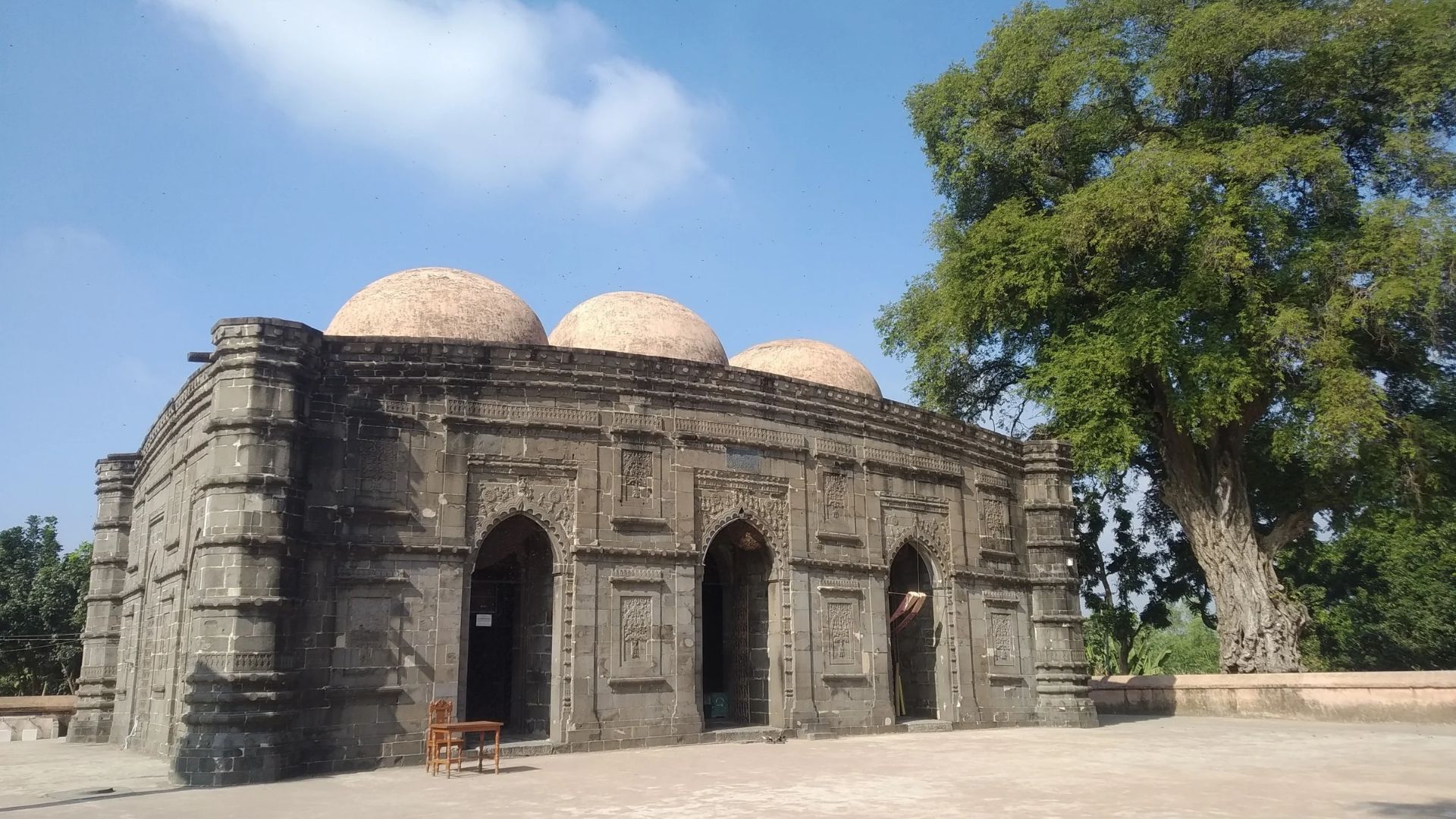
Standing on the western bank of Kusumba Dighi in Kusumba village, Manda upazila, Kusumba Mosque is one of the finest examples of medieval Muslim architecture in Bangladesh. Located around 35 kilometres from Naogaon town, it is recognisable for its grey stone exterior.
An inscription at the entrance records that the mosque was completed in 1559. Historical accounts associate its construction with the reign of Ghiyasuddin Bahadur Shah of the Suri dynasty, towards the end of Afghan rule in Bengal.
Measuring approximately 58 feet by 42 feet, the brick-and-stone structure has six domes in two rows, curved cornices and octagonal corner towers. Its western wall contains three mihrabs, decorated with carved grape clusters and floral motifs, while the other walls have six entrances. Greenery and the pond in front add to the setting.
Paharpur

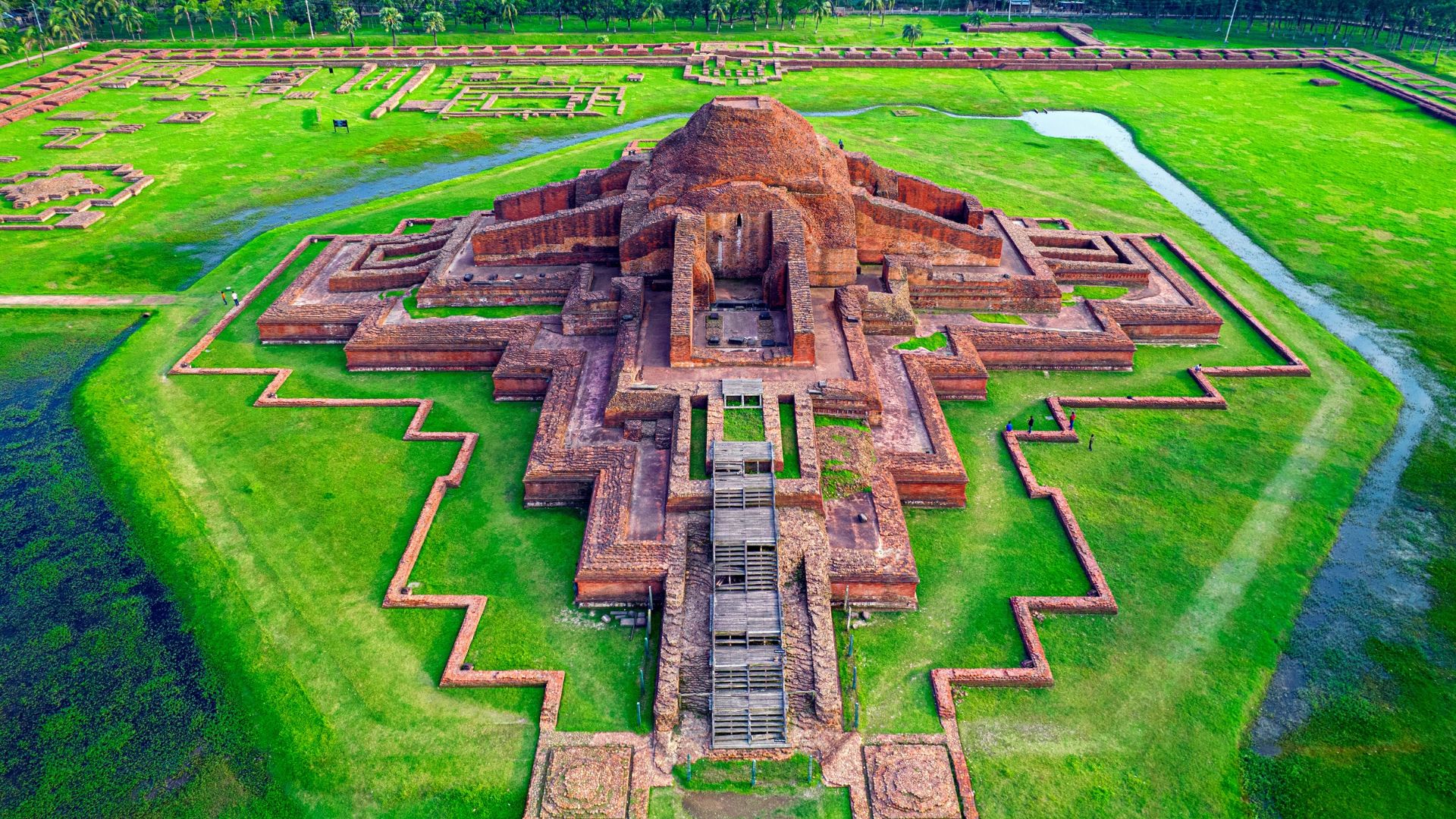
No journey through Naogaon’s history is complete without a visit to Somapura Mahavihara, widely known as Paharpur Buddhist Monastery. Located in Paharpur village, Badalgachhi upazila, around 30 kilometres from Naogaon town, it is one of South Asia’s most significant archaeological sites.
Archaeologist Sir Alexander Cunningham brought the remains to wider attention in 1879. Excavations revealed the scale of the complex, which UNESCO recognised as a World Heritage Site in 1985.
Covering approximately 70 acres, the monastery is an outstanding example of Pala-period architecture and Buddhist learning. It is believed to have attracted monks and students from across the Indian subcontinent, including Tibet and other parts of Asia. Its central temple, monastic cells and terracotta plaques reflect the architectural and artistic achievements of ancient Bengal. The remains also offer insight into the organisation of a large monastic complex and the role such institutions played in the region’s intellectual life.

Patishar Kacharibari
Naogaon’s connection with Nobel laureate Rabindranath Tagore comes alive at Patishar Kacharibari in Atrai upazila, around 40 kilometres from the district town. The estate preserves memories of the poet’s time managing the Tagore family’s zamindari and his engagement with rural Bengal.
Tagore visited Patishar several times from 1891, travelling by boat along the Nagar River. The countryside and village life shaped his experiences and literary imagination; the place is associated with his poem Amader Chhoto Nadi (Our Little River). Between 1891 and 1937, he wrote songs, poems, stories, novels and letters here. Local accounts identify July 26, 1937, as his final visit.



The Tagore family also took an interest in agriculture and rural welfare. The estate therefore reflects both the poet’s literary connection with the area and the family’s activities as zamindars. In 1934, his son Rathindranath reportedly initiated the introduction of mechanised ploughs for local farmers. Today, the Kacharibari is a museum preserving memorabilia from the poet’s life.

Dibor Dighi
Located in Patnitala upazila, around 16 kilometres from its headquarters and close to the Sapahar-Naogaon road, Dibor Dighi combines history, folklore and natural beauty.
Deodar trees mark the entrance. At the pond’s centre stands the Jayastambha, an octagonal victory pillar carved from a single piece of granite. It is approximately 31 feet and eight inches tall, with around 25 feet and five inches visible above the water. Folk stories surround the pond and pillar, though archaeological research is needed to establish their history. Its setting, with trees and plantations around the water, makes it a popular place for visitors seeking a quiet stop.

Altadighi National Park
Altadighi National Park in Dhamoirhat upazila offers a change of scenery. Close to the Indian border, it is around 61 kilometres from the district town and five kilometres north of the upazila headquarters.
The park centres on a large water body surrounded by an old sal forest. Altadighi covers approximately 43 acres, while the surrounding forest extends across around 264.12 hectares.
The water and forest attract birds, including watercock and cormorants, while migratory species visit in winter. The forest supports diverse plants, medicinal trees and wildlife, contributing to local biodiversity. Visitors can explore the woodland and lakeside setting. Beyond recreation, the park’s forest and wetland provide an important habitat for local and migratory wildlife.

Dubolhati Rajbari

Around six kilometres south of Naogaon town, Dubolhati Rajbari is a reminder of the district’s zamindari history. Associated with the influential Ray family, the palace dates back more than two centuries.
Its development is linked to Raja Krishnanath and his successor Raja Harnath Ray, under whom the estate expanded. The family reportedly supported a theatre, memorial structures and water bodies, and helped establish an educational institution in 1864, later known as Raja Harnath High School.
After the abolition of the zamindari system, family members moved to India. Much of the palace’s grandeur has disappeared, though surviving elements reflect the period’s history. Its remains offer a glimpse of the influence once held by the zamindar family in the area.

Balihar Rajbari
Around 20 kilometres from Naogaon Sadar, Balihar Rajbari was once the centre of the influential Balihar zamindar family. It stands in Balihar Union, west of the Naogaon-Rajshahi road.
Bimelendu Ray was the zamindar at Partition and reportedly moved to India after the abolition of the zamindari system. Many furnishings and historical objects disappeared, with several looted during the Liberation War and later years.
The grand entrance gate remains prominent. The grounds contain a natmandir, the Rajarajeshwari Temple, twin Shiva temples and a two-storey residence. Much of the decoration has deteriorated, and some buildings are damaged or abandoned. The estate once had ponds including Malahar, Sitahar, Balihar and Antahar. Some palace buildings served as classrooms, while religious structures continue to serve the community.
Muhammad Fazlul Karim, custodian of the Paharpur Archaeological Museum, describes Naogaon as a place where visitors can encounter different periods of history, from Sultanate-era mosques and ancient Buddhist centres to Tagore’s retreat, zamindar palaces and sal forests.
Travellers can reach Naogaon by direct buses from Dhaka, departing from Kallyanpur, Gabtoli and Abdullahpur. Local travel information lists Shah Fateh Ali, Hanif, Shyamoli and SR Transport among the operators, with daytime and overnight services.
Train passengers can take the Rangpur Express, Drutajan Express or Kurigram Express from Kamalapur or Airport Railway Station and get off at Santahar Junction in neighbouring Bogura. Naogaon town is approximately seven kilometres from Santahar and can be reached by CNG-run auto-rickshaw or other local transport.
Local buses, CNG-run auto-rickshaws and other vehicles connect Naogaon town with the attractions. As the sites are spread across different upazilas, visitors planning to see several of them may wish to arrange transport in advance.
A journey through Naogaon brings together the legacy of ancient Buddhist institutions, medieval craftsmanship and the literary memories of Rabindranath Tagore. For travellers willing to venture beyond familiar destinations, the district has many stories to discover. Its combination of archaeological sites, literary heritage and natural landscapes makes it a rewarding destination for those interested in exploring the country’s past.