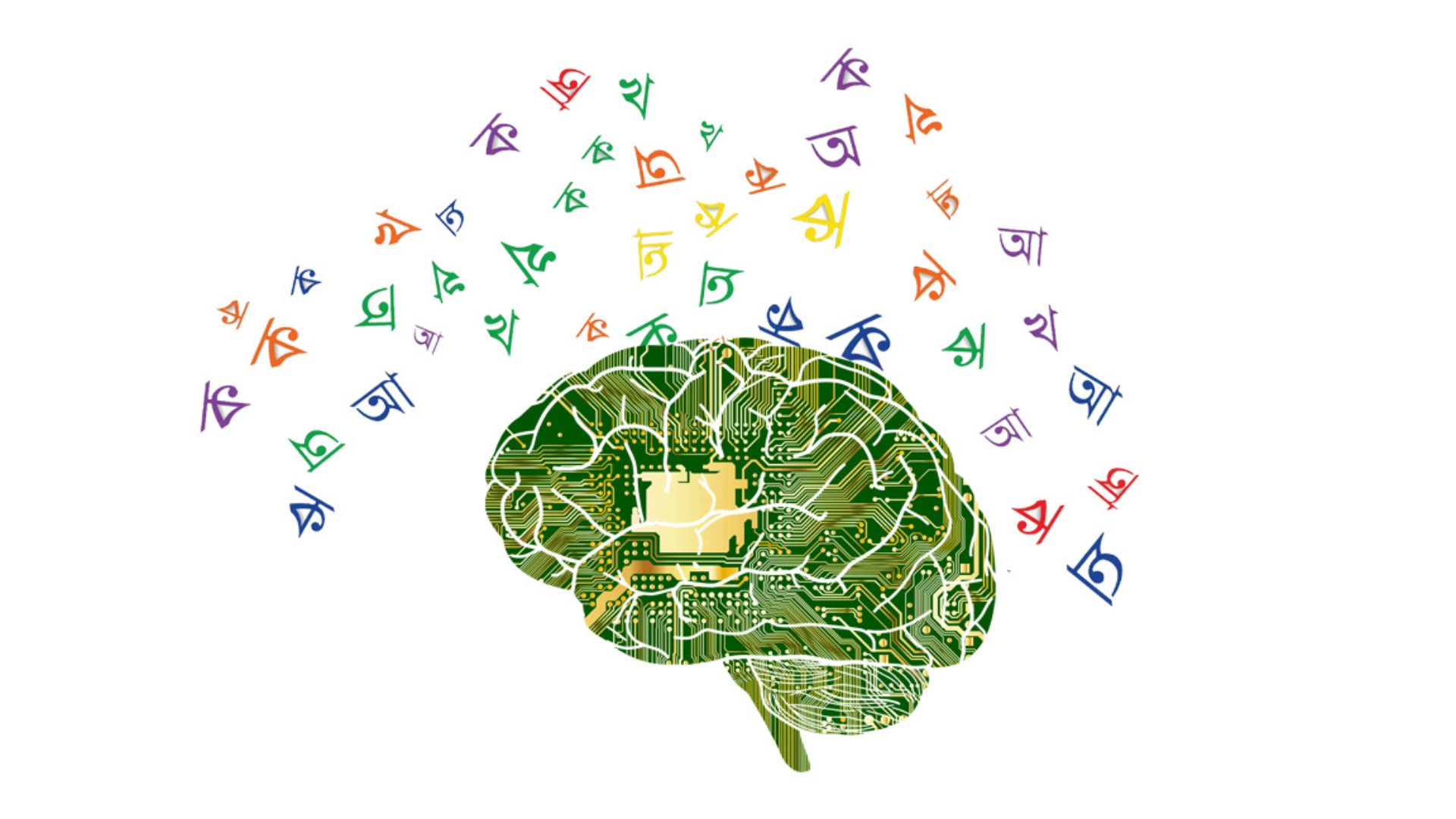



Ask a leading AI chatbot a nuanced question in English, and the answer usually arrives fluent, confident and precise. Ask the same model something in Bangla – particularly anything touching regional dialect, cultural context, or the specific phrasing of a Bangladeshi government form and the cracks tend to show.
Despite ranking among the five most-spoken languages on Earth, Bangla remains what researchers call a “low-resource language” in AI terms: Chronically underrepresented in the training data that shapes how these systems actually think.
The imbalance isn’t really about how many people speak the language; it’s about how much of that language exists online in digitised, usable form. English’s dominance of the internet means AI labs can pretrain on enormous, readily available English corpora; Bangla text, by comparison, is comparatively scarce, unevenly digitised, and split across dialects – Sylheti, Chittagonian and standard Bangla among them – that global AI labs building general multilingual models have little incentive to untangle in detail. That gap is precisely where Bangladesh’s own research community has stepped in.
The most established effort runs out of the Bangladesh University of Engineering and Technology’s CSE NLP Group, led by Rifat Shahriyar. The lab built BanglaBERT, one of the first serious Bangla-specific language understanding models, trained on 27.5 gigabytes of Bangla text crawled from 110 local websites, a deliberate effort to root the model in how Bangla is actually written online rather than in translated English data.

The group followed it with BanglaT5 and the BanglaNLG benchmark suite for Bangla text generation and has since moved toward pretraining billion-scale Bangla GPT and T5 models, incorporating instruction fine-tuning and reinforcement learning from human feedback specifically calibrated to Bangla cultural and linguistic norms, the same alignment techniques that shape global models, but tuned for a very different set of values and contexts.
Standard Bangla is only part of the picture, and a smaller, less-heralded project at Daffodil International University in Dhaka has been tackling the harder problem directly: regional dialect. A team there built a translation system specifically for converting Sylheti – a regional variety of Bangla distinct enough that standard Bangla speakers often struggle to follow it – into standard modern Bangla, testing LSTM, Bi-LSTM and sequence-to-sequence models against a purpose-built dataset.




Their best-performing model reached 89.3 per cent accuracy, a modest-sounding number that represents genuine progress on exactly the kind of dialectal nuance most large multilingual models simply flatten over.
Capability isn’t the only thing Bangladeshi researchers are testing. A BUET study led by Jayanta Sadhu examined gender and religious bias specifically within Bangla-language model outputs – the first work of its kind for the language, according to the researchers – on the reasoning that a model fluent in Bangla but blind to how bias manifests in Bangladeshi cultural and religious context isn’t actually ready for local deployment, however well it scores on standard benchmarks.
Parallel projects have emerged from Bangladeshi researchers working internationally, underscoring how distributed this effort has become. TigerLLM, built by researcher Nishat Raihan alongside Marcos Zampieri, used a Bangla-Instruct dataset of 100,000 native instruction-response pairs – generated with the help of teacher models including Claude 3.5 Sonnet – to outperform larger proprietary systems on Bangla-specific benchmarks.
TituLLM, developed through a Hamad Bin Khalifa University-affiliated effort, introduced the first large pretrained Bangla models built specifically for reproducibility, alongside five new benchmarking datasets addressing a field that had none.
The stakes go well past academic benchmarks. A Bangla-fluent AI that actually understands dialect, local idiom and cultural context has direct application in government service delivery, education technology, and financial services reaching the majority of Bangladeshis who don’t operate comfortably in English – the exact population global AI development has, until recently, mostly built around rather than for.
The researchers behind BanglaBERT, TigerLLM and the rest are, in effect, arguing that closing this gap can’t be left to be solved as a side effect of some future giant multilingual model. For 237 million Bangla speakers, someone has to build it on purpose.