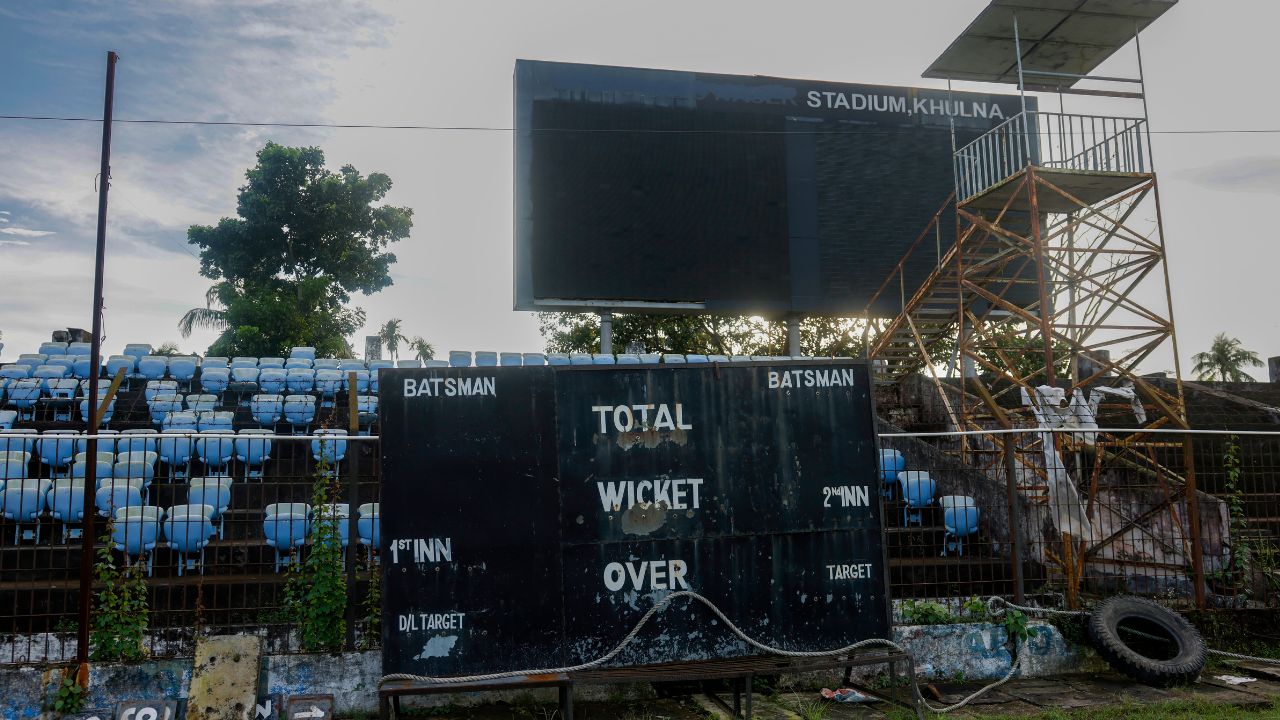



As soon as you enter through the main gate, a large black direction signboard covered in rust and moss comes into view. The signboard seems to capture the current condition of Khulna Divisional Cricket Stadium.
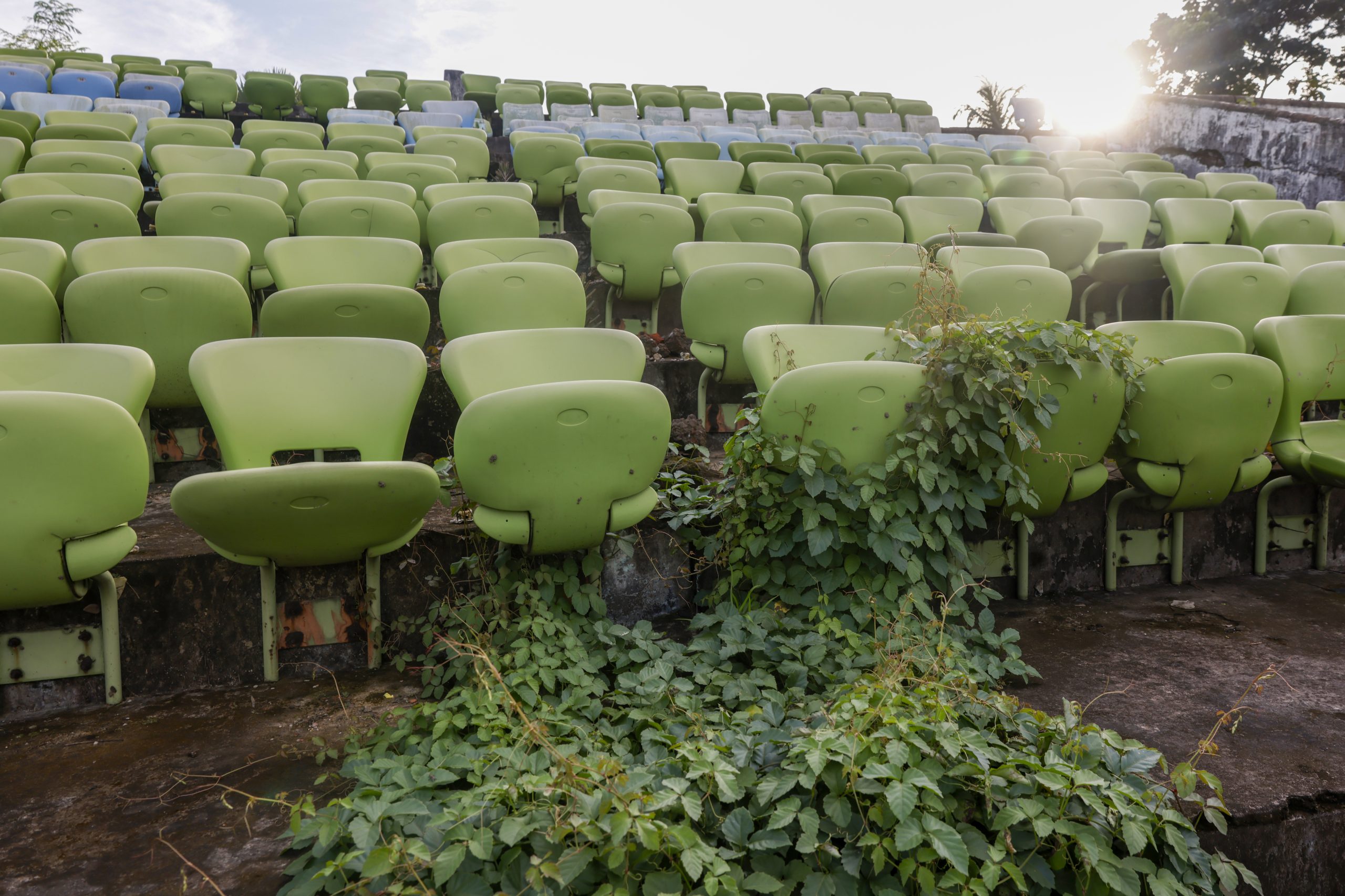
Rows of faded green chairs still line the gallery, but most are no longer fit to sit on. In some places, only the clamps, nuts and bolts remain; the chairs themselves are gone.
Creepers, shrubs and vines have grown through the gaps, reclaiming the structure for nature. The lower gallery looks even worse. Moss covers the stairs, water seeps down the walls, leaving the area damp and neglected. Plastic bags, bottles and other waste are scattered across the floor.
The glass windows of the media and hospitality boxes are covered in dust and moss. The room from which commentary was once broadcast across the country is now locked, with dust covering the chairs and tables inside. The silence is deafening.

In August 2024, following the political change, the stadium’s name was changed back to Khulna Divisional Cricket Stadium after 21 years. The stadium had been reopened in 2004 after major reconstruction costing nearly Tk100 crore. It was rebuilt as an alternative venue for the 2011 World Cup. In 2006, it received international cricket venue status, and in 2012, it became the country’s seventh Test venue.
But international cricket has not returned to the ground since 15 January 2016.


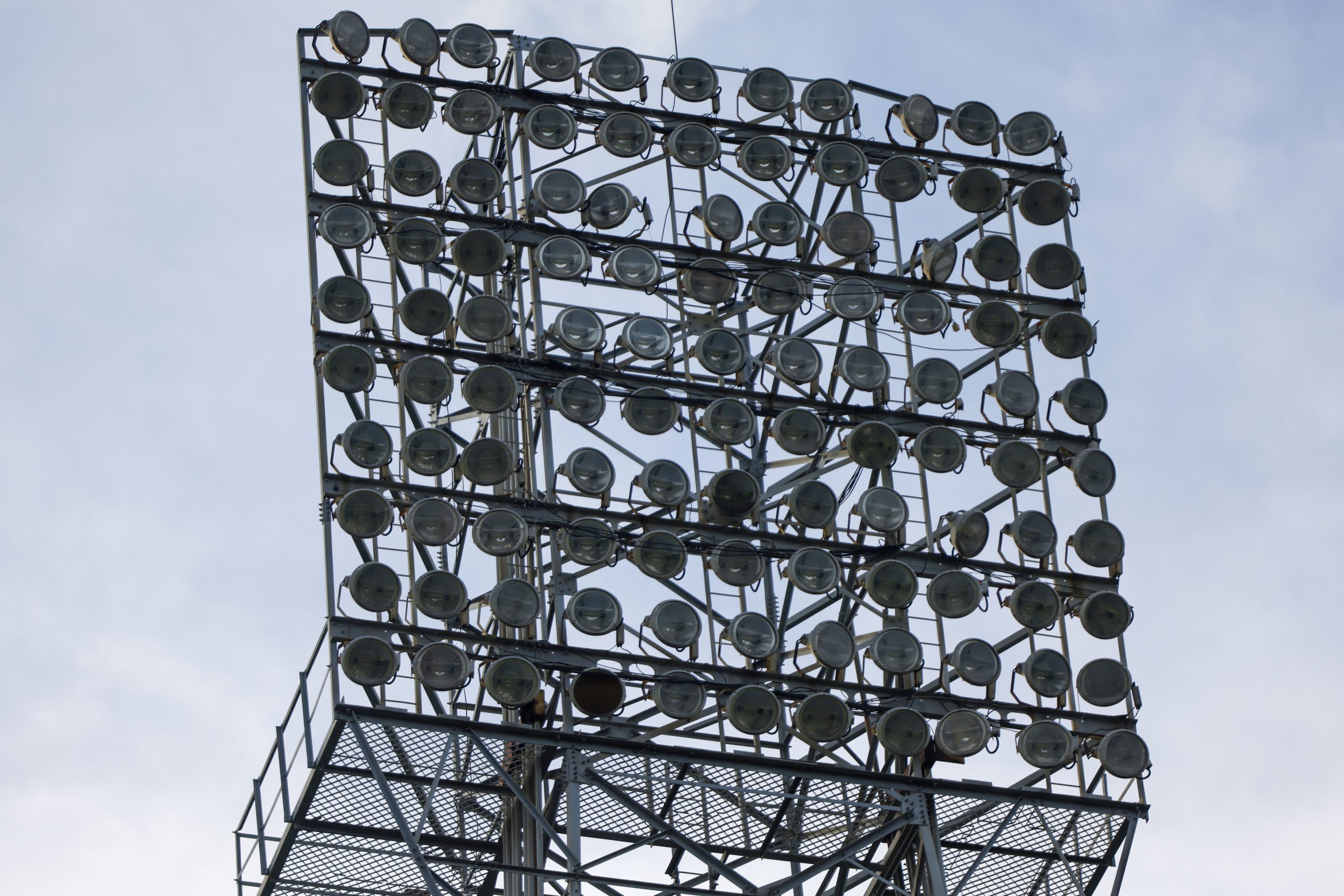
According to people connected with the stadium, key equipment including the sight screens, electronic scoreboard and giant screen is now out of order. The facilities that once met international standards have deteriorated beyond use.
Local sports fans have been demanding its modernisation. Kazi Shamim Ahsan, former general secretary of the Khulna Divisional Sports Association, organised rallies and human chains calling for its renovation.
There have been efforts to improve the stadium. On 4 January 2023, the National Sports Council took up a Tk121 crore project to renovate and modernise the stadium. But the project never saw the light of day.

Built as an international-standard venue, the stadium is now mainly used for age-group cricket, while the gallery, pavilion and media box usually remain locked. Md Al Amin, the stadium’s venue manager, told TIMES of Bangladesh about his disappointment over the long absence of international cricket at the ground.
After years of uncertainty, there is now some new hope. On 3 August 2026, BCB director Shafiqul Alam Tuhin said Tk137 crore had been allocated to renovate the stadium and bring it back to international standards.
For the people of Khulna, the wait has been long.
A stadium built to host the world’s best cricketers now stands as a monument to neglect. But with the new funding, there is hope that international cricket may finally return to this forgotten fortress.