A wave of layoffs across the tech industry has sparked debate over whether artificial intelligence drives job cuts or simply provides a convenient explanation for wider corporate restructuring. While companies report strong profits and rising valuations, they also continue to cut tens of thousands of jobs, often citing AI as a key reason.
Layoffs accelerate across the tech sector
Industry data shows a sharp rise in job losses this year. Tech firms have carried out an estimated 363 rounds of layoffs, affecting nearly 150,000 workers. That averages around 974 job losses per day, about 44 per cent faster than last year, according to TrueUp, a tech job platform and layoff tracker.
The trend continues to intensify. Tech layoffs reached their highest monthly level in two years last month, with close to 40,000 job cuts. Outplacement firm Challenger, Gray & Christmas reported that companies most often blamed AI for layoffs for the third consecutive month across industries.
AI blamed, but doubts grow
Scepticism has grown around the claim that AI directly causes most job cuts. Critics argue that firms use AI as a “cover story” for deeper issues such as over-hiring and management mistakes.
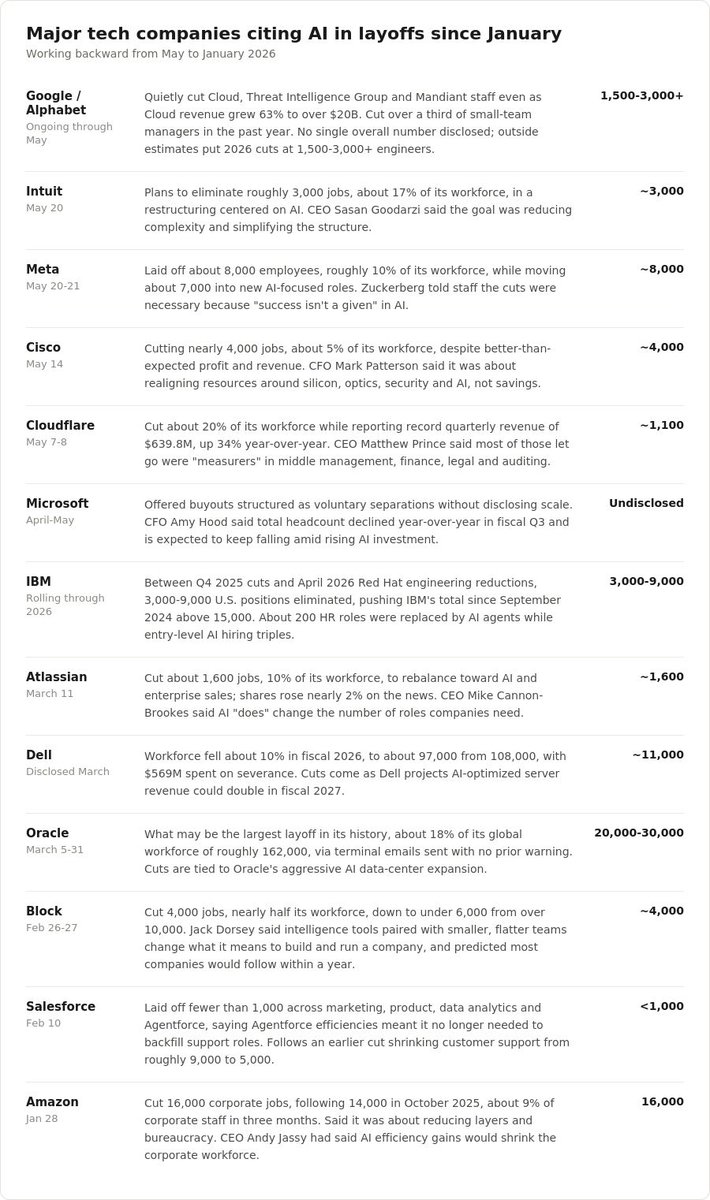
Block, led by Jack Dorsey, became a key example. The company faced backlash after laying off nearly half its workforce earlier this year. Dorsey initially said AI tools had changed how companies operate and justified restructuring. Later, he acknowledged the firm had over-hired during the pandemic.

Investor Marc Andreessen also described AI as a “silver bullet excuse” for layoffs. In a podcast conversation, he said most large companies remain heavily overstaffed, estimating excess staffing levels between 25 per cent and 75 per cent.
Wealth boom contrasts with job losses
At the same time, AI-linked wealth creation continues at a rapid pace.
Chipmaker Cerebras Systems saw its Nasdaq debut surge 68 per cent above its IPO price of $185, pushing its market value to about $67 billion. Co-founders Andrew Feldman and Sean Lie became billionaires, although shares later fell by around 30 per cent.




SpaceX reached a market valuation of about $2.1 trillion after going public, turning Elon Musk into a paper trillionaire and creating an estimated 4,400 millionaires and around 400 centimillionaires, assuming valuations hold. Meanwhile, AI firms such as Anthropic and OpenAI move closer to public listings with valuations near or above $1 trillion.
AI wealth reshapes cities and lifestyles
The effects now extend into housing markets. In San Francisco, where many AI companies operate, luxury homes sell for millions above asking prices as new wealth flows into the region.
High-profile spending also continues elsewhere. Meta CEO Mark Zuckerberg bought a $170 million mansion in Miami’s “Billionaire Bunker” in March, setting a record for Miami-Dade County. Two months later, Meta announced 8,000 job cuts, equal to about 10 per cent of its workforce.
Workers face rising financial pressure
While wealth concentrates among tech leaders, many Americans face rising living costs.
Employer-sponsored health insurance premiums rise by 6per cent to 7per cent this year, more than double inflation. Private health insurance costs have nearly doubled since 2008. Median home prices have increased by 28 per cent since early 2020, while mortgage rates have almost doubled.
Public sentiment reflects this pressure. A January 2026 New York Times/Siena poll found 65% of respondents believe a middle-class lifestyle no longer remains attainable. A separate survey showed 76 per cent of Americans now rank cost of living as their top concern, up from 58 per cent a year earlier.
Growing divide fuels concern
The contrast between layoffs and soaring tech wealth has intensified concerns about inequality. Economists point to broader factors such as tariffs, geopolitical conflict and economic uncertainty as drivers of corporate caution, beyond AI alone.
Analysts warn that the optics resemble a widening divide: workers lose jobs while AI-linked fortunes grow rapidly. Some compare the situation to the aftermath of the 2008 financial crisis, which triggered public anger and movements like Occupy Wall Street.
However, observers note a key difference. Unlike 2008, no financial crash drives the current layoffs. Companies remain profitable while they restructure and expand AI adoption.
As layoffs continue and AI wealth accelerates, the debate grows sharper over whether technology reshapes work fairly or deepens existing economic divides.