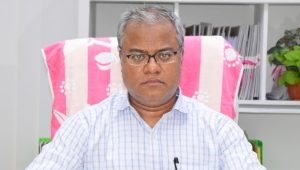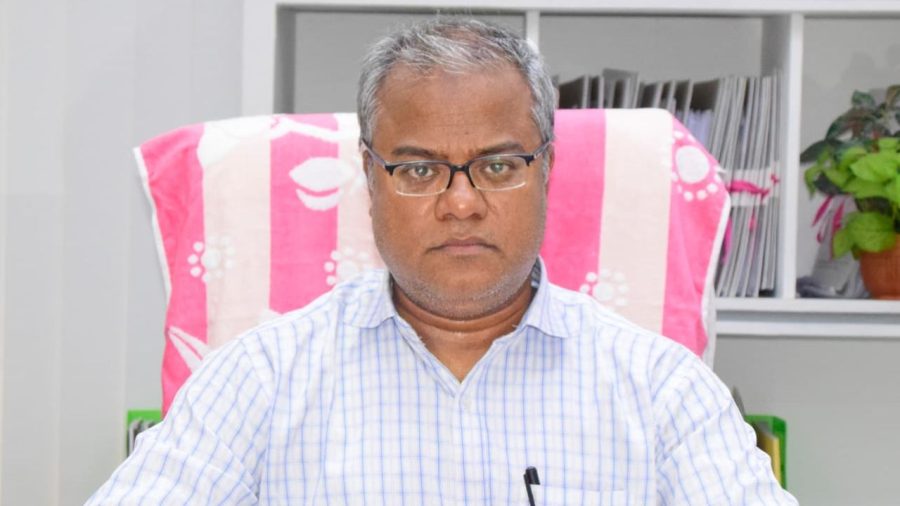



The ongoing crisis surrounding the appointment of Vice-Chancellor Professor Sheikh Shariful Alam at Chittagong University of Engineering and Technology (Cuet) has taken a more complex turn.
Following his release from hospital, the vice-chancellor convened a syndicate meeting from Circuit House, scheduled to take place virtually at 6pm on Friday.
However, uncertainty clouds the outcome of the meeting due to questions raised by syndicate members regarding the procedure of convening it, demonstrating students’ firm stance against the vice-chancellor returning to campus, and an ongoing non-cooperation movement by teachers, officers, and employees.
On Thursday, vice-chancellor Professor Alam returned to Circuit House after receiving treatment at Chittagong Medical College Hospital.
Earlier, on the evening of 13 October, he was rescued from the university’s administrative building after being held confined for nearly 30 hours, through the intervention of Chittagong Deputy Commissioner Mohammad Zahidul Islam Miah and Superintendent of Police Md Masud Alam, before being admitted to hospital.
Regarding the meeting, Professor Md Rashidul Hasan, a syndicate member and dean of the Faculty of Architecture and Planning at Cuet, said the vice-chancellor had informed him of the virtual session.

However, being currently on leave, Professor Hasan said he was uncertain whether he would be able to join.
Another Syndicate member, Professor Kazi Delwar Hossain, dean of the Faculty of Electrical and Computer Engineering, shared that he received a message from the vice-chancellor about the meeting.
Professor Hossain expressed uncertainty over whether calling a meeting via text message complies with official regulations, adding that meeting notices are customarily dispatched through the registrar.




Moreover, no statement could be obtained from the vice-chancellor regarding the procedure of convening the meeting, leaving it uncertain whether the session will take place at the scheduled time or yield any decision to resolve the crisis.
Students’ claim of conditional release
Demonstrating students claimed that the vice-chancellor was allowed to leave his confinement on the strict condition that he would not return to campus.
They asserted that Deputy Commissioner Mohammad Zahidul Islam Miah and Superintendent of Police Md Masud Alam were informed of this condition prior to his extraction.
Vice-Chancellor Professor Alam, however, denied making any such commitment.
In a video message released on 14 October, he clarified that he had neither resigned nor given any undertaking not to return to campus, expressing his intention to resume duties upon recovery.
Meanwhile, students reiterated that their “complete shutdown” programme will continue until their demands are fulfilled, warning of intensified protests should the vice-chancellor attempt to return.
Their primary demand remains the reinstatement of former Vice-Chancellor Professor Abu Sadat Muhammad Sayem.
This sharp contradiction between the students’ demands and the vice-chancellor’s statement further complicates his return, presenting a significant administrative and operational challenge on campus while his appointment remains valid.
Non-cooperation stalls academic, administrative activities
Meanwhile, normal academic and administrative operations at Cuet remain crippled due to the non-cooperation movement observed by the university’s Teachers’ Association, Officers’ Association, and Staff Association, coupled with the students’ boycott of classes and examinations.
The prolonged deadlock has heightened uncertainty over semester examinations, next academic year’s schedules, and ongoing research activities.
On 12 October, a joint meeting of the three associations of teachers, officers, and staff resolved to press ahead with their all-out non-cooperation movement, while students continue their campaign to cancel the new vice-chancellor’s appointment and reinstate the former vice-chancellor.
What lies ahead in resolving crisis
The calling of the Syndicate meeting is viewed as a crucial administrative step amidst the crisis. Nevertheless, questions remain as to who will attend, how the procedural objections will be settled, and whether any tangible decision will be reached.
The vice-chancellor’s intent to return, student resistance, and the staff non-cooperation stand as major hurdles to resolving the stalemate, making it difficult to restore normalcy without mutual compromise or effective government intervention.
Consequently, students face severe uncertainty over when academic activities will resume, turning the crisis at Cuet into a broader threat to administrative stability and educational progress.