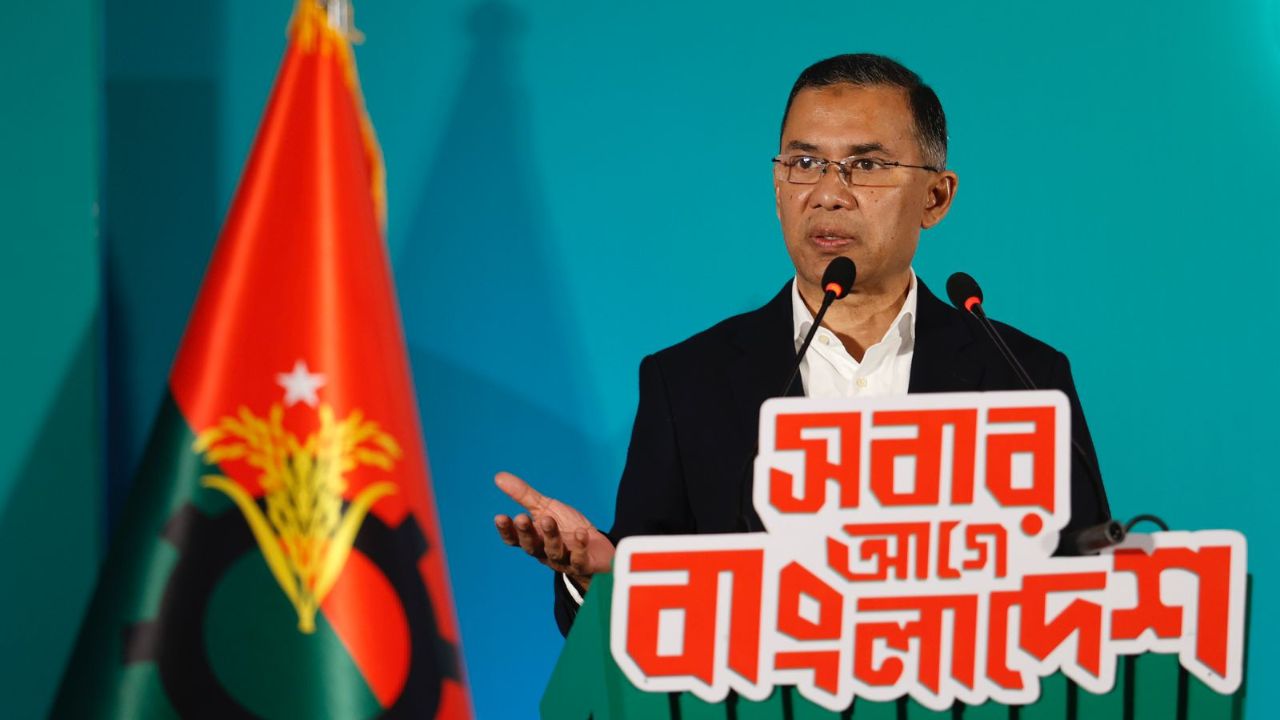

The country sets for a significant political transition on 17 February as BNP Chairman Tarique Rahman is scheduled to be sworn in as the next prime minister. This event marks the formal return of BNP to power following the 13th parliamentary election.
The ceremony is expected to be held at the Southern Plaza of Parliament. According to BNP sources, the day’s proceedings will commence with the swearing-in of newly elected Members of Parliament, followed by the oath-taking of the new prime minister and the cabinet later in the afternoon, reports NDTV.
Chief Election Commissioner AMM Nasir Uddin will administer the oath to Tarique Rahman, underscoring the constitutional transition following the electoral process. In a significant diplomatic outreach, Chief Adviser Muhammad Yunus has extended invitations to the heads of government from 13 countries to witness the proceedings.

The list of invitees includes representatives from India, China, Saudi Arabia, Pakistan, Turkey, the United Arab Emirates, Qatar, Malaysia, Brunei, Sri Lanka, Nepal, the Maldives, and Bhutan.
While Indian Prime Minister Narendra Modi has received a formal invitation, sources indicate he is unlikely to attend because of prior commitments in Mumbai involving French President Emmanuel Macron.




Instead, India is expected to be represented at the ceremony by either External Affairs Minister S Jaishankar or Vice President CP Radhakrishnan.
A BNP spokesperson has described 17 February as a “historic day for Bangladesh,” signalling a fresh political chapter after a prolonged and closely scrutinised electoral process.
Diplomatic observers suggest that India’s participation at any level will be closely analysed for signals regarding the future trajectory of Dhaka-New Delhi relations under the new administration.
Although past BNP governments have had complex ties with New Delhi, recent party statements have emphasised regional cooperation, trade, connectivity, and stability.
As regional leaders converge on the capital, the ceremony is viewed as an early test of how the new leadership positions itself within South Asia.