Picture a brand new, 250-bed hospital standing tall against the Sylhet skyline. It is fully built and ready to serve, yet it remains hauntingly hollow.
There are no frantic footfalls of doctors, no hushed whispers of nurses, and no patients seeking relief. There is only the heavy, sterile silence of a facility that has everything except a soul.
This is not a scene from a dystopian film; it is the new district hospital in Sylhet city, completed in 2023 but yet to open its doors to the public.
The hospital was built against public will, demolishing a 150-year-old Assam-style architectural relic that once housed the Abu Sina Hostel of Sylhet Medical College.
Meanwhile, just a short drive away, mothers in labour are forced to travel extra miles to reach a maternal care centre that was moved from the downtown Madina Market area to a suburban location, not for patient convenience, but for political visibility.
Welcome to Sylhet’s healthcare reality: a landscape dotted with facilities on government maps, yet stripped of the staff, supplies, and strategy needed to save lives.
Here, the numbers look impressive. The region lists 370 community-level health institutions and a flagship 900-bed medical college hospital, with new buildings rising in upazilas and unions across the district.
But scratch beneath the surface and a different story emerges: clinics without doctors, pharmacies without medicines, and patients without options.

This is the paradox of progress in Sylhet. Infrastructure is being built at pace, but the human element is being left behind, leaving citizens navigating a maze of empty promises.
A pattern of political patronage
The story of Sylhet’s healthcare infrastructure is, in many ways, a story of political geography. In 2005, the District Mother and Child Welfare Centre was relocated from the accessible Madina Market area to a newly built complex in Dakshin Surma.
The move, initiated by the then-local MP, was hailed as development. Yet, for patients from distant upazilas, the new location proved inconvenient, and the centre’s reach shrank.
Fast forward to 2019, and a different political narrative unfolded. The traditional Abu Sina hostel was demolished to make way for the new district hospital.
Despite initial reservations from civil society and the then-foreign minister AK Abdul Momen, construction began. Today, the building is ready, but no health authority has agreed to operate it.



“The infrastructure was built without consulting the health sector,” explains a senior official who requested anonymity. “Now, the department shows little interest in taking it over. The Public Works Department cannot hand over a building with no designated operator.”
Illusion of access
On official documents, Sylhet district lists 370 government healthcare institutions at the community level. The promise is healthcare at the doorstep of the marginalised, but the reality is starkly different. Shortages of doctors, nurses, and medicines, coupled with weak coordination, have rendered most of these facilities ineffective. At least ten new institutions were launched at the district and upazila levels during the Awami League tenure, yet many began their journey understaffed.
“BCS cadre doctors are posted to union health centres, but most do not sit there regularly,” notes Dr Mahbubur Rahman, deputy director of Sylhet MAG Osmani Medical College Hospital. “Patients visit mainly to collect free medicines. When medicines are unavailable, even that footfall disappears.”
A visit to union health centres in Sylhet Sadar, Dakshin Surma, and Jaintapur reveals a system held together by sheer individual effort.
At Khadimapara Union Health and Family Welfare Centre, Family Welfare Assistant Ranjita Rani has been working alone for nine months. “No Sub Assistant Community Medical Officer (SACMO) has been posted yet,” she says. “I manage everything from reception to nursing. Medicines arrived only once in nine months… patient attendance has naturally fallen.”
A similar scene unfolds at Moglabazar Union Health Centre, where Pharmacist Ayman Biswas performs nearly all duties. “The medical officer is posted here but works at the upazila hospital,” she explains.
Crisis in numbers
The staffing crisis is quantifiable and severe. Of the 25 union sub-health centres under the health department, 11 medical officer posts are vacant, alongside 14 assistant community medical officer posts and 24 pharmacist posts.
In the 69 union health and family welfare centres, managed by the family planning department, there are no doctor posts at all. Services depend entirely on SACMOs and Family Welfare Inspectors, yet only 19 of 64 SACMO posts and 74 of 113 FWA posts are occupied.
Even at the grassroots level, 18 community healthcare provider posts remain vacant across 276 community clinics.
Dr Janmejoy Dutta, deputy civil surgeon of Sylhet, acknowledges the strain, explaining that high patient loads at upazila complexes make it impossible to post doctors to all sub-centres full-time. Doctors often visit sub-centres only once or twice a week, leaving facilities without consistent medical oversight.
The issue is not a lack of infrastructure, but a failure to utilise existing resources. According to the Sylhet Divisional Health Director’s office, the region has a network of 1,311 government institutions.
This includes one 900-bed hospital, three 250-bed district hospitals, various specialised hospitals (ranging from 31 to 100 beds), 35 upazila hospitals, 933 community clinics, 234 union health and family welfare centres, and 85 union sub-health centres. The list continues with trauma centres, chest clinics, and even a prison hospital.
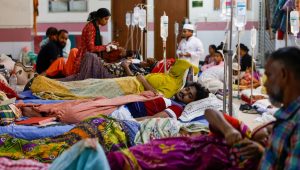
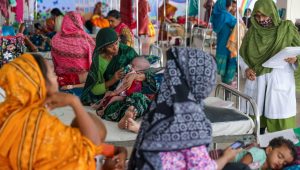
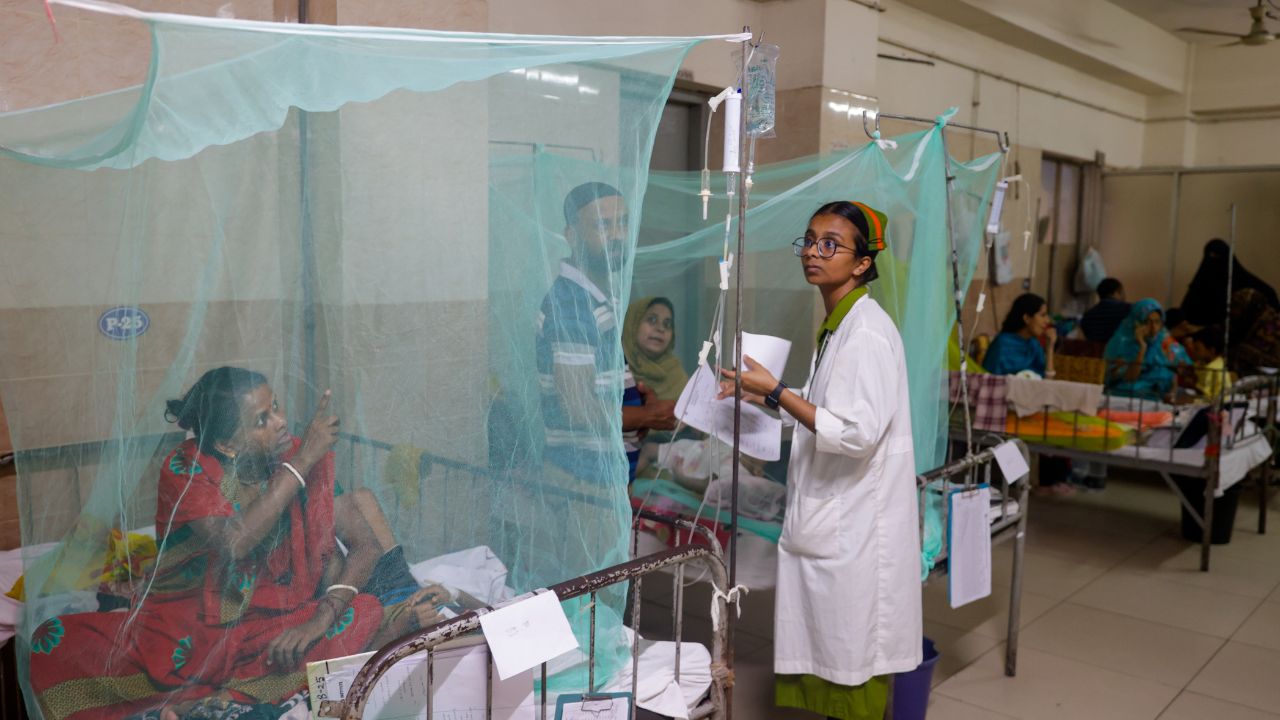
When grassroots facilities fail, all roads lead to Sylhet MAG Osmani Medical College Hospital. Every morning, 3,000 to 4,000 outpatients flood the corridors, while nearly 3,000 souls are packed into wards designed for only 900 beds.
Staffing is even further behind, officially equipped to handle only 500 patients.
“The shortage isn’t just here; it’s a systemic drought across all four district hospitals in the Sylhet division,” says Dr Mahbubur Rahman. “If we could scale each district hospital to 500 beds with the manpower to match, the crushing weight on Osmani might finally begin to lift.”
Local representatives and civil society agree that the root issue is a lack of strategic planning. Healthcare institutions are often treated as political trophies, established for “ribbon-cutting” ceremonies rather than sustainable care.
Md Niazur Rahman, deputy director of the District Family Planning Office, points out that while land is donated and buildings are constructed by the Public Health Engineering Department, the lack of coordinated planning for human resources leaves these buildings as hollow shells. Fragmented governance further complicates matters; facilities under the family planning department lack medical officers, while those under the health department do not.
Experts are calling for a shift: conducting needs assessments before building, securing staffing commitments before inauguration, and strengthening coordination between departments.
Until upazila health management committees are empowered with clear accountability, the silent hospital in Sylhet city and the underused centre in Tetli Union will stand as monuments to a tragic paradox. For the people of Sylhet, healthcare remains a promise deferred, a right trapped behind the locked doors of empty buildings.