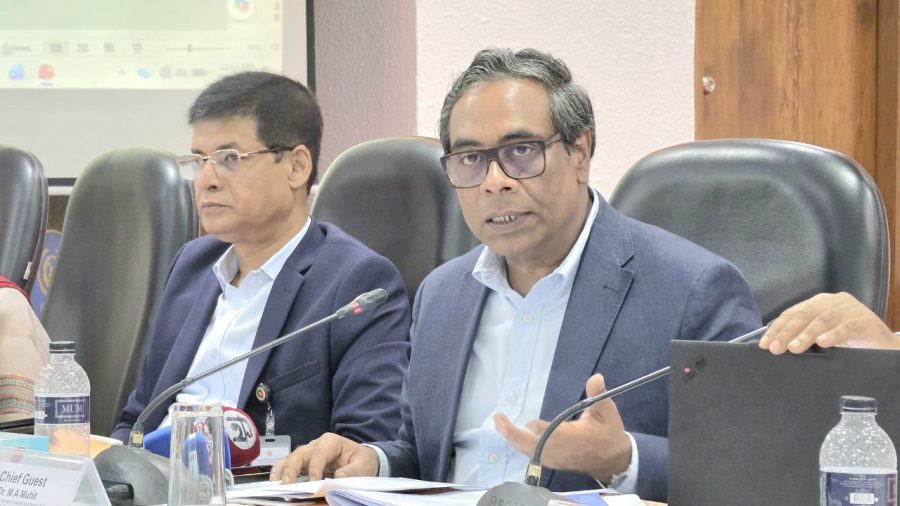

The government has taken a policy to bring urban healthcare directly under the core framework of the Ministry of Health and is actively working to overhaul the system, State Minister for Health MA Muhit announced on Tuesday.
He said it is impossible to build a sustainable national health system while keeping urban healthcare outside the mainstream amid growing urbanisation.
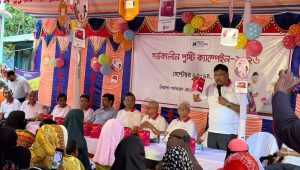
Muhit made these remarks at a national consultation meeting on a sustainable Sexual and Reproductive Health and Rights (SRHR) ecosystem held at the CIRDAP Auditorium in Dhaka. The session was organised by the CSO Forum.
Muhit noted that following independence, less than 10 per cent of the country’s population resided in urban areas, prompting the health system at the time to focus entirely on rural communities.

However, with nearly 30 per cent of citizens currently living in cities and towns, a proportion projected to reach 50 per cent by 2050, the decision to incorporate urban healthcare into the mainstream public health system was taken based on practical realities to safeguard the future.
Addressing structural changes, the state minister explained that urban healthcare has traditionally been managed through city corporations, municipalities, and non-governmental organisations (NGOs).
Considering the flexibility and positive aspects of that existing model, a comprehensive and sustainable framework is now being developed directly under government oversight.



Under the proposed structure, the Directorate General of Health Services and the Directorate General of Family Planning will jointly administer urban health services, with the Directorate General of Family Planning holding crucial responsibility for sexual and reproductive healthcare.
To strengthen grass-roots health delivery, Muhit highlighted the pledge to recruit 100,000 new health workers, who will undergo integrated training alongside 40,000 existing personnel under a unified framework.
These “Community Health and Wellbeing” workers will be equipped with modern diagnostic kits and artificial intelligence (AI)-powered digital applications, enabling them to conduct door-to-door preliminary health assessments and deliver accurate advice.
To assist low-income urban workers, the government is seriously considering introducing evening clinic services.
Specific ward-based catchment areas, designated as one unit per 50,000 to 100,000 population, are being established to guarantee targeted health coverage for floating populations as well as women and children with disabilities.
Urging the swift finalisation of the Development Project Proposal (DPP), Muhit emphasised that executing this outline will build a people-friendly and inclusive urban health system capable of serving the nation effectively for the next 20 to 30 years.
The meeting was moderated by Sayed Rubayet, country director of Ipas Bangladesh and convener of the CSO Forum. Other key speakers included AKM Benjamin Riazi, secretary of the Health Education and Family Welfare Division under the Ministry of Health and Family Welfare, and Zinat Rehana, director general of the Directorate General of Family Planning.