BSRM began in 1952 as Bangladesh’s first steelmaker, supporting an economy just beginning to take shape.
Seven decades later, its responsibilities as the industry champion have expanded to showing how a legacy sector can cut emissions, conserve resources, and build resilience in a nation increasingly exposed to climate risk.
Long-term investments in clean energy, circular systems, skilled people, and community development now sit at the centre of its sustainability strategy.
“Sustainability and profitability can reinforce each other when approached strategically,” said BSRM Group Head of Corporate Strategy and Projects Mohammad Monir Hossain in an interview with TIMES of Bangladesh.
A legacy industry moves toward cleaner steel
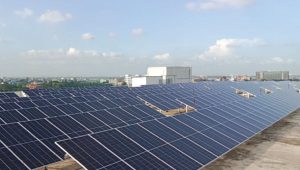
BSRM’s decarbonisation roadmap is most visible in its energy transition. The company is installing 19 MW of rooftop solar and exploring further opportunities of 100–200 MW ground-mounted solar plant, marking one of the largest future renewable-energy deployments in the country’s steel sector.
“We’ve continued advancing our clean-energy initiatives,” he said, adding that renewable energy is integral to the company’s future competitiveness.
Energy-efficient technologies such as hot billet charging — a process that reuses residual heat rather than burning new natural gas — are being introduced to recently installed plant that reduce fuel consumption and cut emissions.
The company’s circular-economy model forms another major pillar. In FY2024–25, BSRM recycled 1.86 million metric tons of scrap steel, avoiding 2.8 million tons of CO₂ emissions through scrap-based steelmaking.

“I assume this is one of the largest contributions to industrial decarbonisation in Bangladesh,” he said.
The water, air, and waste systems rarely seen in heavy industry
Several sustainability practices set BSRM apart in Bangladesh’s industrial landscape. Its closed-loop water recirculation and rainwater-harvesting systems reduced water consumption by 2.63 per cent last year. Furthermore, the Mirsarai plant has reduced its reliance on groundwater by sourcing water from the
Feni River, located six kilometres away, through a dedicated pipeline system. An advanced air-pollution control system captures and repurposes APC dust and mill scale, reinforcing circular waste management and reducing pollution.
In a move toward sustainable material use, process waste—particularly induction furnace slag chips—is now being repurposed as a substitute for traditional brick chips. The recycled material is being increasingly utilised in road construction, serving effectively as sub-base, PCC, paving blocks, and in a variety of other infrastructure applications.
“Recycling at this scale is not just an efficiency measure, it is a climate intervention,” he said. BSRM’s water-stewardship programmes extend into surrounding communities. Rainwater-harvesting structures and deep tube wells now ensure safe water access for more than 15,000 people, while another 405 individuals received direct support through water initiatives.



The company’s inclusive development programmes have skilled more than 200 rural women, supported more than 5,000 youth with disabilities and engaged over 200 transgender individuals.
A footprint spanning economic, climate and social outcomes
“For us, sustainability is both a business imperative and a national responsibility,” he said.
Scrap-based steelmaking avoided 2.8 million tons of CO₂ this year, while the scheduled 19 MW rooftop solar installation is expected to advance cleaner industrialisation across BSRM’s operations.
The company continues to play a significant role in the national economy. In FY2024–25, BSRM contributed Tk15335 crore to GDP and paid Tk1626.9 crore in taxes, VAT, customs duty, power consumption and natural gas consumption.
A workforce of 4,925 people received Tk505 crore in benefits, while thousands more were supported indirectly across the supply chain.
CSR investments totalled Tk14.3 crore, reaching 218,769 people nationwide. Employees received 111,198 hours of training, building what he described as a “future-ready workforce.”
“And on the governance side, we continue to hold some of the highest compliance and transparency standards in Bangladesh’s manufacturing sector,” he said, referring to multiple national governance awards.
Long-term investments designed for value
Although sustainability initiatives require substantial upfront investment, the payoff is clear.
“The returns — financial and social — have been substantial,” he said. Solar expansion, though capital-intensive, is expected to deliver “substantial reductions in electricity costs and meaningful carbon savings.” Over time it is also likely to ease pressure on the national grid.
Recycling infrastructure, despite high establishment costs, reduces raw-material expenses and boosts production efficiency.
BSRM ended the last financial year with Tk19938.5 crore in revenue and Tk1131.8 crore in net profit.
“The financial benefits align closely with our broader performance — demonstrating that sustainability and profitability can reinforce each other when approached strategically,” he said.
A roadmap for three horizons
Short-term priorities include expanding renewable-energy capacity, improving energy efficiency, scaling automation, strengthening Environmental, Social and Governance systems, enhancing reporting and monitoring frameworks, and widening CSR activities.
“We are intensifying our efforts in waste management and employee safety while expanding our CSR programmes,” he said.
Medium-term goals include reducing Scope 1 and Scope 2 emissions, accelerating renewable-energy adoption across multiple sites and deploying digitised environmental-monitoring tools for real-time performance tracking.
The company will also increase programmes on disability inclusion and women’s empowerment, while improved recycling systems and advanced material-efficiency measures are expected to reduce overall carbon intensity.
Looking ahead, BSRM aims to fully operationalise its renewable-energy roadmap and explore emerging clean-energy technologies to support the shift to low-carbon manufacturing.
“We aim to advance steadily along our carbon-neutral pathway in alignment with our SBTi commitments,” he said.
Long-term ambitions include deepening circular-economy practices, scaling waste-to-resource innovations, and strengthening water stewardship.
For a company that pioneered steelmaking in Bangladesh more than 70 years ago, BSRM’s sustainability strategy reflects an industry adapting to global expectations while maintaining its foundational role in the national economy.