


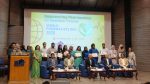
The four-year Feminist Opportunities Now (FON) project concluded in Dhaka on 27 September with project leads, civil society representatives and international stakeholders calling for continued flexible, trust-based funding to support grassroots feminist organisations.
Funded by the Agence Française de Développement (AFD) under the Support Fund for Feminist Organizations (FSOF) and implemented by a global consortium led regionally in South Asia by CREA, the project supported more than 20 partner civil society organisations (CSOs) in Bangladesh and 23 in Sri Lanka, according to a press release.
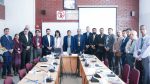
The FON Bangladesh Capitalization Dissemination Meeting highlighted the project’s work in addressing gender-based violence (GBV) and featured discussions on sustaining feminist movements beyond individual project cycles.
A panel discussion titled “What Does Feminist Funding Make Possible, and What Comes After?” examined the role of flexible funding, intermediary support and long-term sustainability of civil society organisations. The session was moderated by Sayed Md Saikh Imtiaz, Professor at the Department of Women and Gender Studies, University of Dhaka.

Tamanna Binte Rahman, Project Manager and Gender Focal at the AFD Dhaka Office, said traditional project funding often limits small grassroots organisations dealing with changing ground realities.
“AFD made a deliberate choice to fund the FON project through a flexible, trust-based model rather than a conventional output-driven grant,” she said in a press release. “By prioritising trust and flexibility, we aimed to empower organisations addressing gender-based violence to innovate and respond effectively to complex, intersectional realities.”


Priya Das, Director of Programs and Innovation at CREA, said feminist funding required more than financial support, including capacity strengthening, mentorship and long-term organisational support.
She said managing multiple CSOs across diverse social, economic, political and cultural contexts required investment in language justice, accessibility and relational care, adding that AFD had provided flexible and open-minded support for grassroots organisations.
Nishath Sultana, Director of Influencing, Campaign and Communications at Plan International Bangladesh, said intermediary support should go beyond administrative functions and help grassroots organisations overcome structural barriers.
Syeda Samara Mortada, Partnership and Coordination Analyst at UN Women Bangladesh, stressed the need for sustained backing for feminist civil society organisations amid changing development priorities and challenges to gender equality initiatives.
“Rather than competition, we need collaboration among the organisations,” she said.
Before the panel discussion, five representative FON Bangladesh CSOs presented their achievements and lessons from work in technology-facilitated GBV, GBV case management and access to justice, community-based prevention strategies, GBV advocacy and GBV and intersectionality.
The presentations highlighted how direct funding helped local organisations support excluded communities, women and girls living with disabilities and gender-diverse populations while strengthening organisational capacity and long-term sustainability.
The meeting ended with reflections, closing remarks from CREA and diplomatic representatives, and a call for international development partners to adopt flexible, relationship-based funding mechanisms for feminist movements worldwide.