
Maintaining a family business is not just about managing capital or labour, as people with the right values, discipline and experience are needed to sustain it, according to speakers at a seminar.
“Family businesses are built on generations. So, leadership transitions should be handled with care, foresight and above all – meritocracy,” said Salman Ispahani, managing director of MM Ispahani Ltd.
Speaking at a seminar, styled “Where Family Values Meet Future Vision: Strategy for Sustainable Succession”, he asserted that simply owning a company’s shares does not entitle someone to lead its operations.
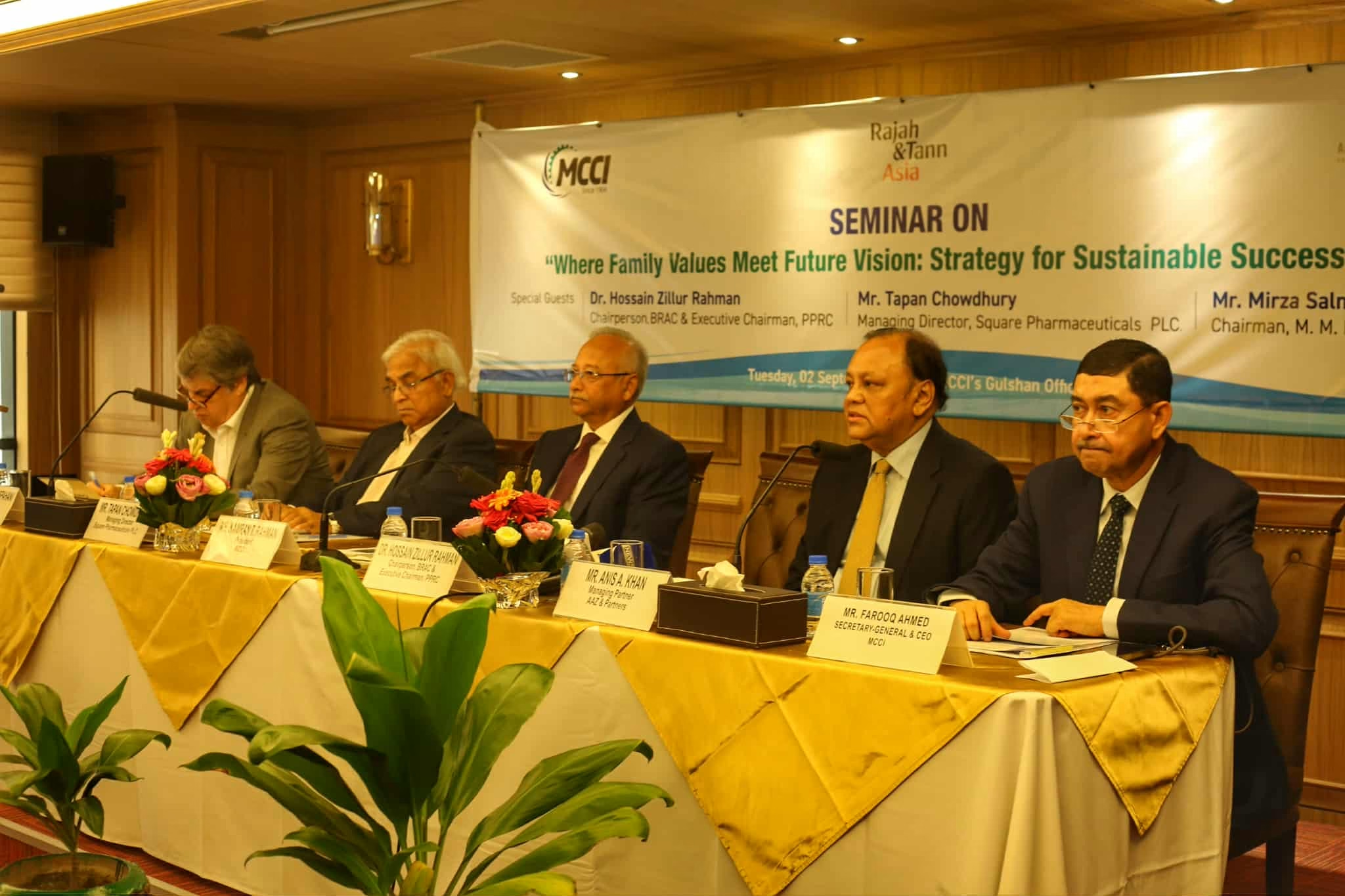
Held by the Metropolitan Chamber of Commerce and Industry (MCCI) at its Gulshan office on August 2, the event was attended by officials of long-standing family businesses, including Square Pharmaceuticals, Pran-RFL Group and Radiant Pharmaceuticals.

Ispahani also said that what truly counts in sustaining a family business is a person’s ability and education.
“As such, succession planning is not optional, it is essential. It is not enough to be the eldest son or daughter,” he added. “Our business has been running professionally for many years. As the family expands, external expertise is crucial.”
Tapan Chowdhury, managing director of Square Pharmaceuticals, echoed the same.




“We cannot appoint someone as CEO simply based on family relations. The most competent individual should be chosen. Otherwise, it becomes difficult to sustain and grow the business,” he said.
Chowdhury recalled a moment early in his career, when a friend questioned why he had not been made managing director sooner.
“It was an uncomfortable moment,” he said while explaining how the matter of succession is a sensitive topic even today in our culture.
“But such intergenerational tensions are common. That’s why founders must clearly plan how the business will continue operating after their departure,” he added.
Pointing to how even many employees begin to feel like family, Chowdhury said the leadership at Square Pharmaceuticals work as a team and recognise each other’s contributions.
MCCI President Kamran T Rahman stressed the economic importance of family businesses.
“For generations, family businesses have driven our economy, created jobs, and preserved cultural values,” he said.
“But succession is not just about handing over control, it is a strategic process that ensures long-term sustainability,” Rahman added.
The seminar concluded with a collective call to move beyond inheritance-driven leadership and towards visionary, inclusive and strategic succession planning, ensuring that family businesses not only survive – but thrive – for generations to come.