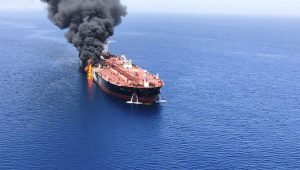
Syria has carried out its first official crude oil export in over a decade, sending 600,000 barrels of heavy crude from the port of Tartus on Monday under a deal with a private trading company.
Prior to the outbreak of the conflict in 2011, Syria produced and exported around 380,000 barrels of oil per day. However, years of war devastated the country’s infrastructure and crippled its energy sector. The collapse of Bashar al-Assad’s government in December last year brought in a new Islamist-led administration, which has pledged to rebuild the economy.
Riyad al-Joubasi, assistant director for oil and gas at the Syrian Ministry of Energy, said the consignment was sold to trading firm B Serve Energy. The shipment was carried by the Nissos Christiana tanker, according to an official ministry statement. Joubasi added that the oil had been extracted from multiple Syrian fields, though he did not disclose which ones.

Many of Syria’s key oilfields lie in the northeast, a region controlled by Kurdish-led authorities. While those authorities initially began supplying oil to Damascus in February, relations have since soured amid disputes over inclusivity and minority rights.


Throughout the war, control over oilfields shifted repeatedly, while US and European sanctions complicated energy exports and imports. Even after Assad’s ouster, sanctions remained in place for several months, restricting energy supplies for the new administration.
A turning point came in June, when US President Donald Trump issued an executive order lifting American sanctions on Syria. Following that move, several US-based firms began drawing up long-term plans for oil and gas exploration and production.
Separately, Syria signed an $800 million memorandum of understanding with DP World to develop, manage, and operate a new multi-purpose terminal at Tartus. This came after the government revoked an earlier contract with a Russian company that had been running the port under Assad’s rule.