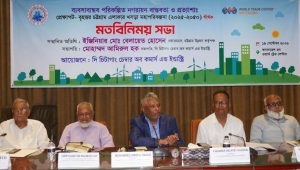
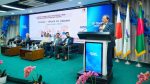
Stamford University Bangladesh organised a post-budget symposium on the proposed national budget for the 2026-27 fiscal year, bringing together policymakers, economists, academics, and industry leaders to discuss its implications for the country’s economic development.
The symposium was jointly organised by the Department of Business Administration and the Department of Economics, where participants exchanged views on key budgetary priorities, investment prospects, energy development, and strategies for achieving sustainable economic growth through stronger collaboration among the government, industry, and academia.
Presiding over the event, Vice Chancellor Professor Dr Sharif Nafe As-Saber emphasised that allocating funds alone is not enough, and that effective utilisation of public resources is equally essential.
“A successful national budget requires meaningful coordination among the public, industry, and educational institutions,” he said.

Bangladesh Energy Regulatory Commission (BERC) Chairman Jalal Ahmed expressed optimism that the country’s electricity generation capacity would reach 7,000 megawatts by 2030.
World Bank Senior Agricultural Economist Dr Iftikhar Mostafa noted that a national budget reflects the aspirations and expectations of the people, stressing the importance of a people-centred approach to budget formulation.


Economic Relations Division Additional Secretary AKM Sohel said investment in Bangladesh has increased significantly compared with the previous year, indicating growing confidence among domestic and international investors.
Bangladesh Knitwear Manufacturers and Exporters Association (BKMEA) President Mohammad Hatem described the proposed budget as an improvement over last year’s, saying it would strengthen the country’s industrial and export sectors.
Former NBR Chairman and former ACC Commissioner Dr Nasir Uddin Ahmed highlighted the challenges India and Pakistan faced in implementing large-scale solar power projects, noting that both countries incurred substantial losses and were unable to fully achieve their original plans.
The programme was moderated by Assistant Professor of Business Administration Faria Kabir and jointly conducted with Assistant Professor of Economics Susmita Banik.
The welcome address was delivered by Chairman of the Department of Economics Prof Dr Abdus Sattar. The vote of thanks was delivered by Head of the Department of Management and Human Resource Management Md Golam Rabbani.
The symposium concluded with a shared call for closer cooperation among the government, industry, and academia to ensure effective implementation of the national budget and promote sustainable economic growth.