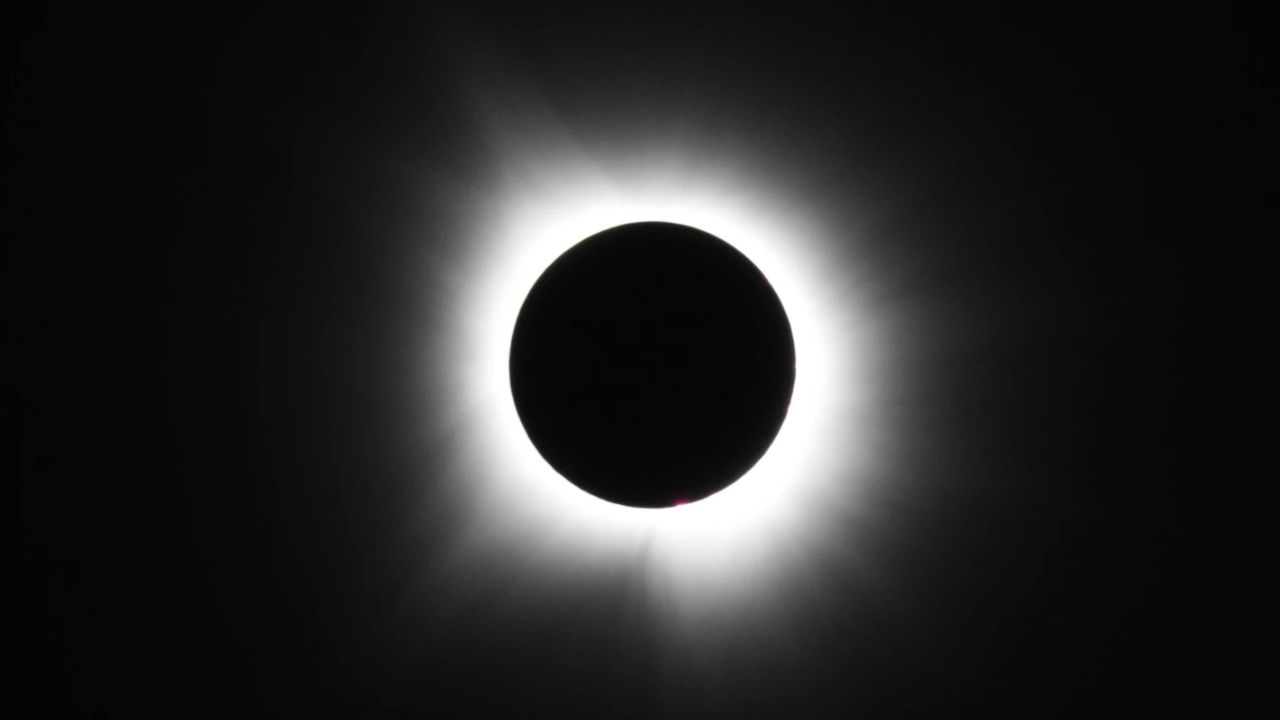



For the first time in more than a century, mainland Spain will witness a total solar eclipse, a spectacle that will also touch Iceland and Greenland before fading into the Mediterranean.
The event comes with cosmic companions — a six‑planet alignment before dawn and the Perseid meteor shower peaking after nightfall. Daytime darkness will descend across the Iberian Peninsula near sunset as the sun, moon and Earth align.
The eclipse begins near the North Pole, racing south along an 8,260‑kilometer path. Totality will last up to two minutes and 18 seconds, with maximum darkness off Iceland’s west coast.
By the time the shadow reaches Portugal and Spain, totality will shrink to about a minute before ending in the Mediterranean.

When to watch
The eclipse will occur on 12 August, beginning near the North Pole and sweeping south. The moon’s shadow will take one and a half hours to cover its 5,130‑mile course.
Maximum totality, two minutes 18 seconds, will occur off Iceland’s west coast while in Portugal and Spain, near sunset, totality will last about a minute before fading in the Mediterranean.




Partial views will be visible across Alaska, Siberia, Canada, the northern US, much of Europe and West Africa. The eclipse will be seen across multiple regions, with coverage varying by location — 94% in Dublin, 83% in Oslo, 18% in Montreal, 9% in New York, and 2% in Norfolk, Virginia.
Special eclipse glasses are essential even for partial phases. Adding to the spectacle, six planets will form an arc before dawn, and the Perseid meteor shower will peak after nightfall under a new moon. Meteors could streak across the sky during totality, with planets and stars visible in the background.
Where to watch
Mainland Spain will be the centerpiece, joined by slivers of Greenland and Iceland. Most of the eclipse path runs over the Atlantic before ending in the Mediterranean. Massive crowds are expected in Spain, where the eclipse will be brief but historic.
Observers worldwide can tune in too. The European Space Agency will webcast from Spain’s Javalambre Observatory and host celebrations in Leon; NASA, the Virtual Telescope Project, and others will provide coverage.
Scientists will study the corona from more than 60 high‑altitude balloons launched in Spain and Iceland, while a NASA jet will chase the eclipse at 740 kph, extending totality to nearly three minutes in the air.
Future eclipses
Spain will see an even longer eclipse on 2 August 2027 up to six minutes and 23 seconds of totality stretching into North Africa and the Middle East.
A ring‑of‑fire eclipse will follow in January 2028. Spain’s last full solar eclipse occurred in 1912, two days before the Titanic sank.