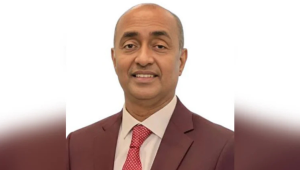



When software engineer Shubho Al-Farooq purchased his first car back in 2009, the bitter experiences he encountered revealed how deeply entangled Bangladesh’s vehicle maintenance system truly was.
At the time, Shubho was building a solid professional reputation in software engineering both at home and abroad, earning substantial incomes in US dollars.
Yet, the seed of an idea to resolve car repair troubles continued to grow. The turning point arrived in 2017 when his car broke down on the road, leaving him stranded for hours due to a lack of mechanics.
Realising the urgency of the problem, Shubho decided to step into the field, utilising software design processes to bring the entire automobile ecosystem into a transparent and trustworthy framework.
The following year, in 2018, tech-startup Zantrik began its journey.
Explaining the underlying crisis to TIMES, Shubho said the automobile ecosystem in Bangladesh is completely unorganised, marked by a lack of transparency, standards, and commitment.
Consequently, all five core stakeholders – car owners, garage owners, mechanics, spare parts suppliers, and drivers – face constant harassment.
Zantrik was established as a technology-driven platform directly connecting these five parties, positioning honesty and transparency as its core strength.

Through the platform, car owners can access hassle-free, transparent maintenance services from home, complete with warranties on both repair work and replacement parts.
Spare parts suppliers expand their businesses by using Zantrik’s garages as sales outlets, while honest mechanics gain opportunities for higher earnings.
The platform also addresses driver placement and road safety. Car owners can hire certified drivers whose background checks and skill assessments are conducted by Zantrik, with provisions for compensation if an accident occurs due to a driver’s mistake.
Drivers, in turn, secure stable employment and good salaries. Zantrik tackles longstanding customer grievances regarding mechanic credibility, frequent spare parts theft during repairs, opaque pricing, and the lack of dignity or brand recognition for honest garage workers.
Operating on a model akin to Uber – which arrived in Bangladesh around 2015 using subsidies to accustom drivers and customers – Zantrik does not employ mechanics as salaried staff. Instead, it allows mechanics to use its platform.



In its initial phase, Zantrik trained mechanics and drivers while refining its platform through extensive testing. To assist motorists during emergencies, Zantrik operates a round-the-clock roadside assistance service that requires no prior registration.
When a vehicle breaks down on the road, contacting the hotline or a designated official prompts the immediate dispatch of a mechanic from the nearest unit. If on-site repair is impossible, the vehicle is towed to a nearby garage, or ultimately to Zantrik’s dedicated workshop.
Currently, Zantrik primarily services sedans, hatchbacks, and SUVs, alongside a limited scope of light commercial vehicles such as one-tonne, one-and-a-half-tonne, or two-tonne small pickups.
While large commercial vehicles are generally excluded, Zantrik regularly services small pickup fleets for major corporate clients, including Paragon Group.
Zantrik’s business model has evolved significantly over time. Between 2018 and 2021, the company operated strictly as a service platform relying on third-party partners. However, like Pathao or Uber, clients and partners frequently attempted to bypass the platform.
Consequently, Zantrik shifted its model in 2023 to directly own and operate garages. Customers can select Economy or Premium garage packages directly on Zantrik’s website, alongside separate services for bodywork and vehicle inspections.
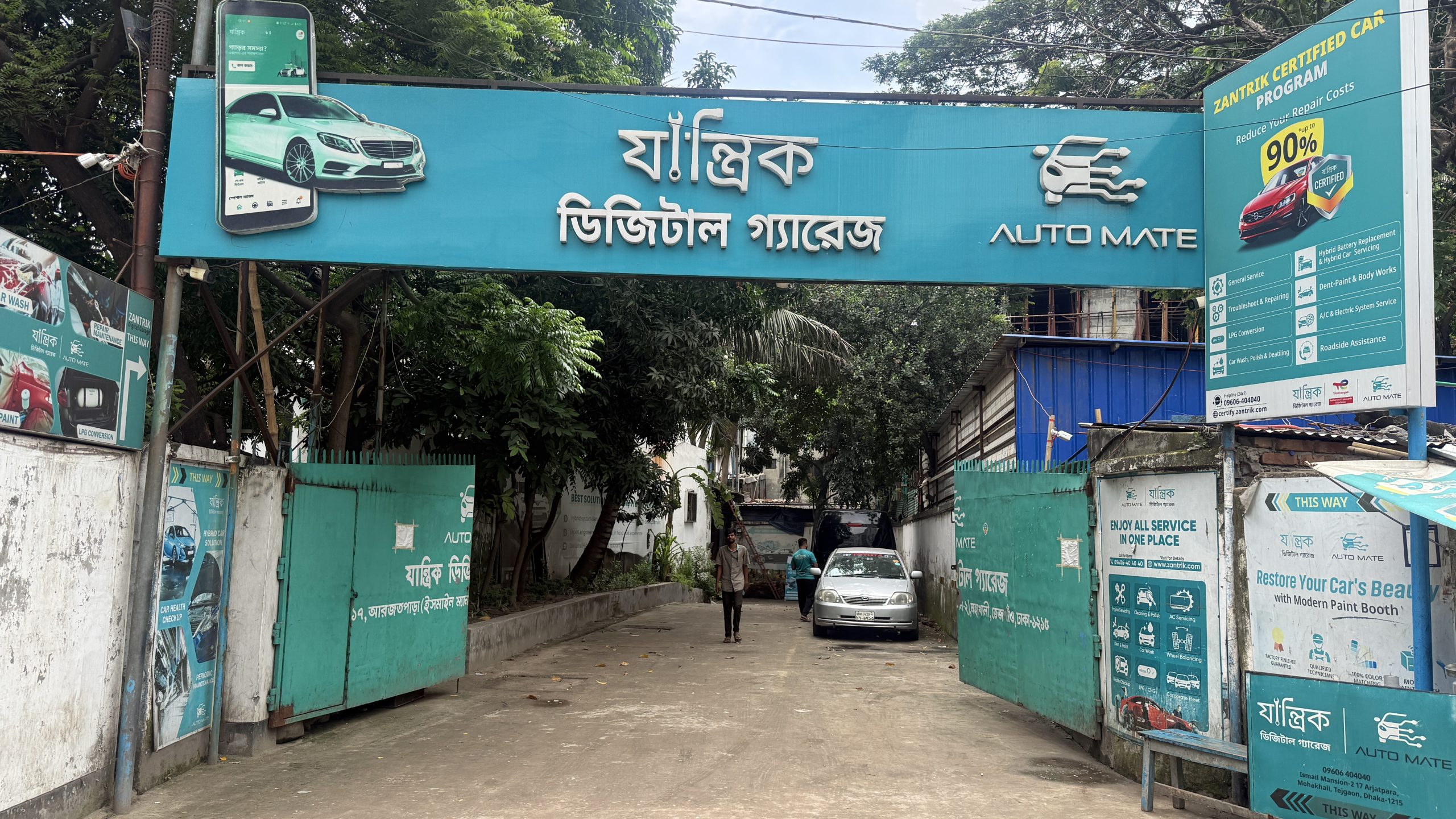
Zantrik currently owns and operates three garages in Dhaka – located in Uttara, Mohakhali, and Dhanmondi – while workshop launches are underway in Badda-Vasundhara, Motijheel, Mirpur, Mohammadpur, Khilgaon, and Kalyanpur.
Beyond maintenance, Zantrik sells warranted used cars and facilitates overseas car imports at comparatively lower costs.
A standout feature of Zantrik’s service portfolio is its digital “Certification” system. Functioning like a human health checkup, Zantrik conducts digital health checks across 25 major car components and generates detailed reports.
Scanning a QR code reveals the exact condition percentage of each part and how many years it will serve hassle-free.
Zantrik assumes financial liability for any damage occurring within the certification validity period, protecting owners from fraud and enabling buyers and sellers to trade used vehicles with confidence.

Today, Zantrik’s platform serves over 150,000 customers, a figure that grows daily.
Shubho told TIMES that Zantrik’s long-term vision is to first organise the automobile ecosystem and eventually unify buying, selling, maintenance, and servicing for all vehicles in Bangladesh – from motorcycles to buses – onto a single platform.
Franchise expansion, Bengali voice AI
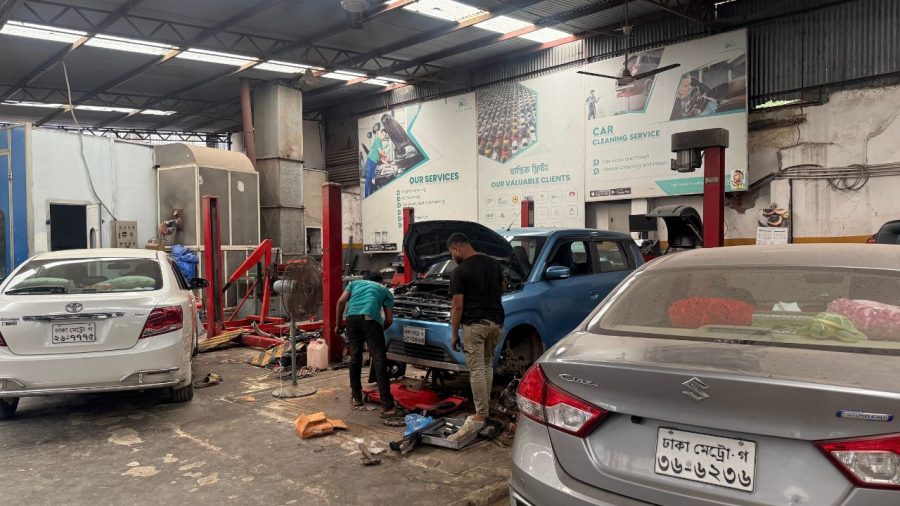
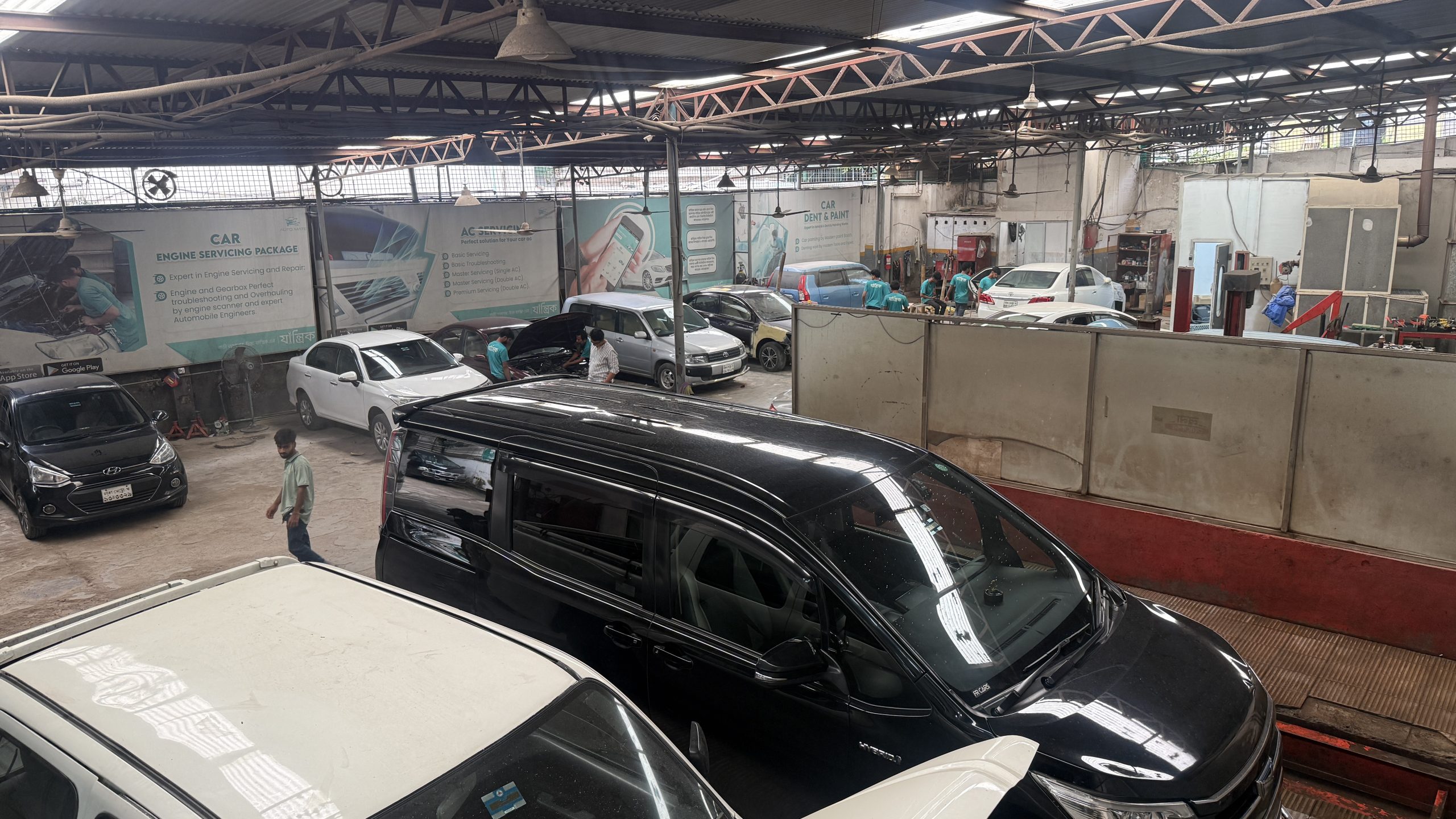
Inside Zantrik’s main workshop in Mohakhali, Dhaka, lined-up service bays, vehicle lifts, paint booths, storerooms, and busy technicians illustrate the scale of operations. This single facility services over 300 cars monthly and offers 24-hour customer support.
Kingkar Mondol, manager of the workshop, said the facility employs 32 staff members. The engineering team recruits personnel through practical and oral examinations to verify skills precisely, followed by continuous on-the-job training.
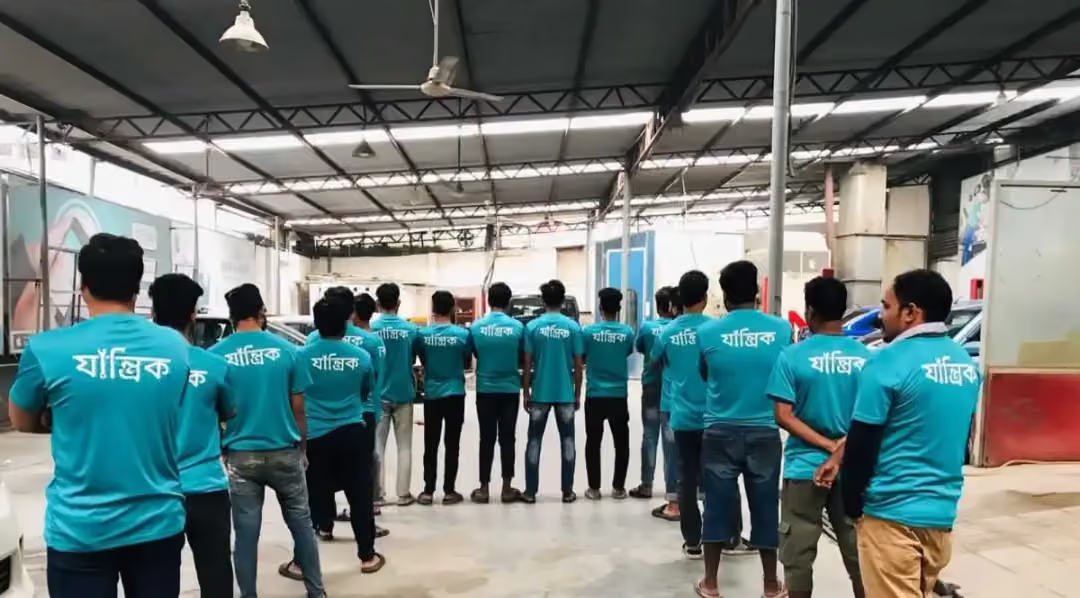
Humayun Kabir, a technician who has worked at the workshop for a year and a half, shared that unlike previous employers who failed to pay salaries on time, Zantrik provides timely wages alongside regular skill development.
Four trained engineers with 10 to 12 years of experience each supervise operations, supported by top automobile engineers in Zantrik’s wider network. While head-office officials oversee corporate client accounts separately, the Mohakhali facility focuses primarily on retail customers.
Looking to the future, Zantrik plans to launch a franchise model called “Digital Garage” in 2027, built upon three years of operational experience. This initiative will allow external entrepreneurs to operate garages using Zantrik’s brand and technology.
Investment opportunities start at Tk20,000 for general partners and Tk5 lakh for permanent partners, with an overall goal of connecting several hundred garages across Bangladesh.
To address technical challenges arising from the influx of varied electric, semi-electric, and hybrid car models alongside petrol and CNG vehicles, Zantrik has developed a voice-based artificial intelligence system in Bengali.
When mechanics describe a problem using Bengali voice commands, the AI provides step-by-step repair solutions, bridging the gap between traditional mechanics and rapidly changing automotive technology.