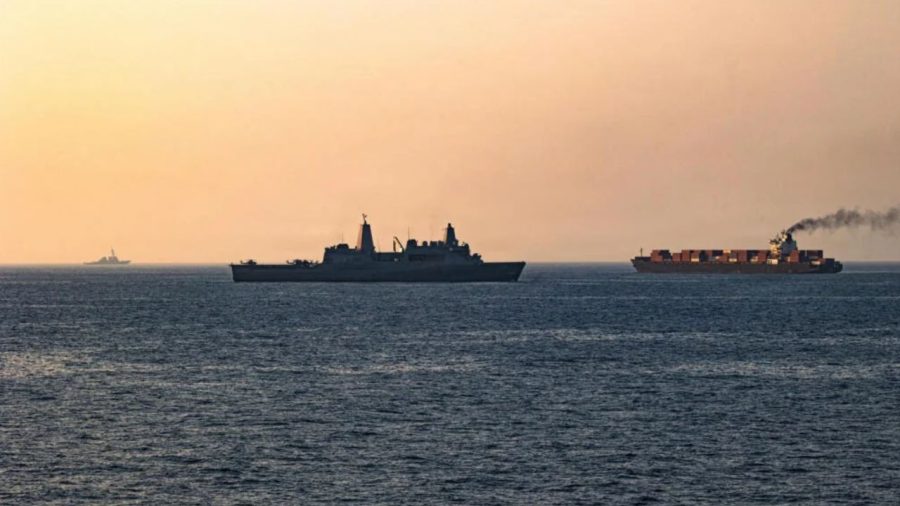



Tehran has granted passage through the Strait of Hormuz to commercial vessels from India, China, Iraq and Qatar, introducing selective exemptions to its maritime restrictions during ongoing conflict.
Amir Hayat Moqaddam, deputy chairman of the Iranian parliament’s National Security and Foreign Policy Committee, told Iranian Students’ News Agency that ships from these four nations pass unhindered without American interception.
The decision follows months of severe maritime disruption across the region. Iran effectively closed the strategic waterway shortly after the outbreak of the US-Israel war on Iran on 28 February 2026, reports Al Jazeera.
In response, the United States reimposed a naval blockade targeting Iranian southern ports in July 2026, creating a standoff across key maritime lanes.
Although Tehran frames the move as a diplomatic gesture, experts view the selective access as a calculated strategy to breach Western sanctions while securing essential supplies and revenue.
Economic quid pro quo, strategic revenue gains
Hayat Moqaddam noted that Tehran expects economic and political returns from each exempted partner. India is set to provide vital pharmaceutical products, while China offers political backing internationally.
Meanwhile, Qatar delivers diplomatic support while leading active mediation efforts between Washington and Tehran to negotiate an end to the conflict.
Financial terms for passage vary across the exempted states. Hayat Moqaddam explained that Iran collects transit tolls from Indian and Chinese vessels, whereas Qatari ships are permitted free movement. It remains undisclosed whether Iraqi vessels pay similar charges.

Rouzbeh Parsi, an Iran analyst at Lund University’s department of history and human rights studies, noted that bartering is an established method for Tehran under sanctions.

He explained that the present strategy focuses on poking holes in the embargo to ensure the flow of essential goods and services.
Nader Hashemi, associate professor at Georgetown University, added that Tehran is almost certainly charging transit fees or taking a percentage of cargo value.
Security analysts highlighted the economic logic behind Tehran’s policy.
Wolfgang Pusztai, security analyst and former Austrian defence attache to Libya, described the policy as a clever move.
He pointed out that China purchases nearly 90 percent of Iran’s crude oil exports, providing an indispensable revenue stream.


Pusztai added that by including Qatar and India, Iran aims to weaken international acceptance of Washington’s strategy while driving a wedge between Western allies and Asian energy consumers.
Energy dependence, geopolitical exposure
The four exempted nations rely heavily on the Strait of Hormuz for domestic energy needs and export economies.
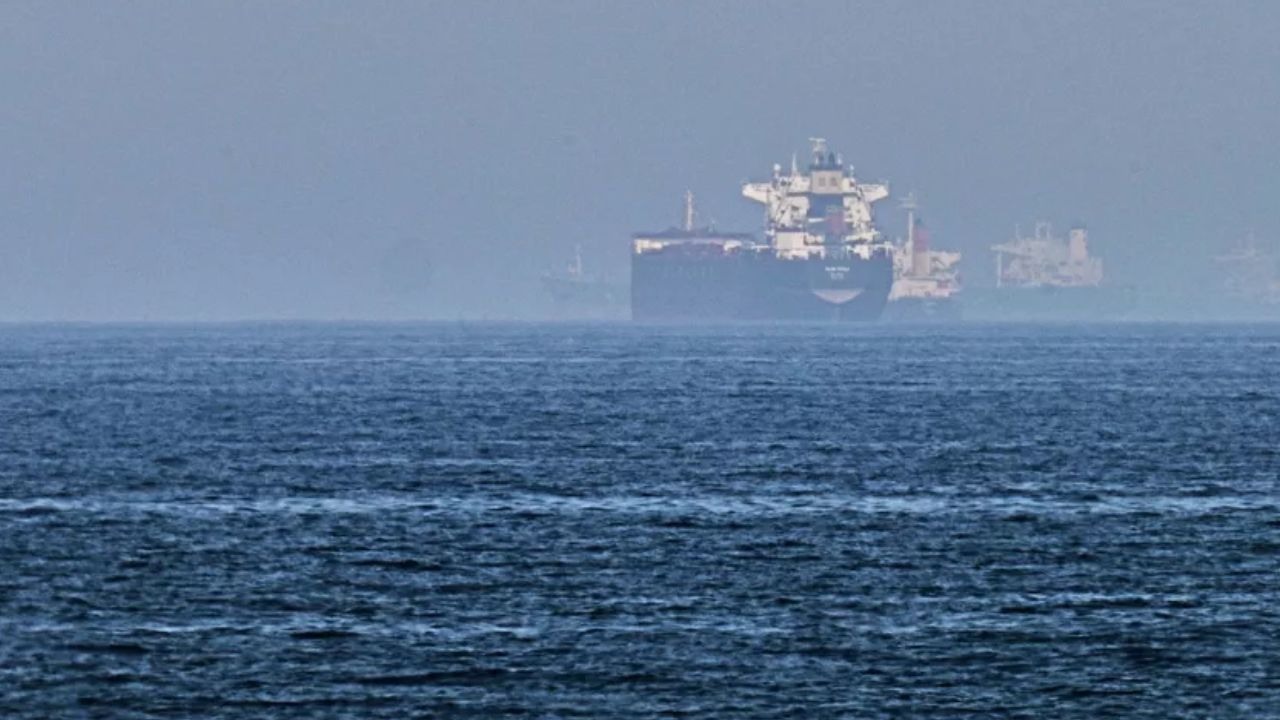
Muyu Xu, senior crude oil analyst at energy analytics firm Kpler, explained that 10.23 million barrels per day of Gulf crude passed through the waterway in October. China absorbed 42 percent of this volume, while India accounted for 13 percent.
Kpler data highlights shifts in regional shipping volumes. Qatari liquefied natural gas shipments through the strait fell to zero in August before rebounding to 1.8 million tonnes in October.
Qatari crude exports decreased from 517,000 barrels per day to 193,000 barrels per day during the same period.
Conversely, Iraqi crude shipments via the waterway rose from 1.69 million barrels per day to 2.65 million barrels per day.
Xu noted that Kpler has been unable to trace the origin of up to two million barrels per day of Middle Eastern crude, suggesting actual flow figures could be higher.
Geopolitical trade-offs accompany these benefits. Parsi observed that taking advantage of Iranian exemptions carries political exposure.

He noted that China possesses the capacity to challenge American interests, though Beijing must evaluate whether economic gains outweigh potential political friction with Washington.
For India, losing access to Gulf crude has caused severe economic strain, making Iranian pharmaceutical exchanges attractive.
Parsi added that both India and Qatar maintain critical diplomatic relationships with Washington despite feeling let down by recent American foreign policy, yet Qatar considers maintaining working relations with neighbouring Iran vital.
Consequently, all four countries face a complex mix of economic relief and geopolitical risk.

Blockade precedents and diplomatic outlook
The selective opening expands existing military policies rather than establishing a new measure.
Iran began permitting passage to select vessels from friendly nations within weeks of the war starting, and military commanders officially exempted Shia-majority Iraq in April to support its economic recovery.
The viability of Iran’s exemptions depends heavily on Washington’s reaction.
US Central Command explained that its naval blockade applies strictly to all vessels of all nations entering or leaving coastal areas or ports in Iran, whilst permitting inspected shipments of humanitarian food and medical supplies.
However, Hayat Moqaddam did not explicitly restrict exemptions to vessels trading exclusively with Iranian ports.

Pusztai observed that if exemptions cover vessels servicing other Gulf nations such as Saudi Arabia, it could significantly undermine the operational effectiveness of the American blockade.
He also highlighted technical ambiguity regarding whether exemption criteria depend on vessel flag registration, beneficial ownership, or operational control.
Reopening the strait remains tied to broader diplomatic efforts. Qatar-mediated negotiations focus on an Iranian seven-point proposal to reopen the waterway in exchange for lifting sanctions and ending the US blockade.
Pusztai explained that Tehran appears to be separating free passage and oil exports from broader negotiations surrounding its nuclear programme.
Meanwhile, global energy markets have shown limited immediate reaction. Chris Beauchamp, chief market analyst at IG Group, explained that market participants are currently pricing in the likelihood of a broader diplomatic settlement.
However, safety hazards across the waterway remain acute. On 30 October, Qatari liquefied natural gas carrier Al Mayeda was struck by unidentified objects in the Gulf, among over 120 commercial vessels attacked since the conflict began.