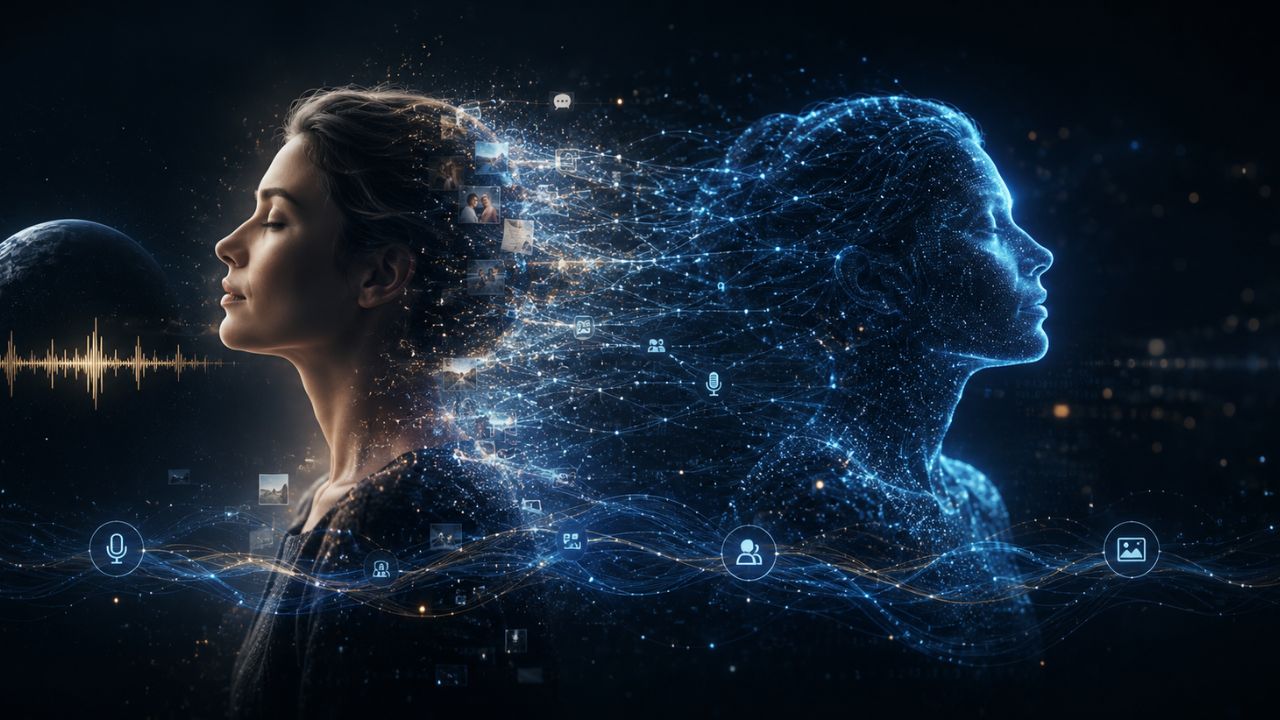



In today’s fast-changing world, artificial intelligence is no longer simply a digital tool. It is increasingly becoming part of how we represent ourselves.
With just a three-second clip of a human voice, a photorealistic map of facial expressions and two hours of conversational data, anyone can now create a digital version of themselves capable of interacting and responding.
But as these digital doubles enter broader circles, they raise a profound question – should we have our own AI clones, and what are the promises and perils of it?
One identity, endless possibilities
The biggest attraction of a digital proxy is simple. It can help one person do more. For busy professionals, a cloned persona can act like a tireless assistant, handling routine and repetitive tasks in several places at once. For example, Zoom Founder Eric Yuan envisions a future in which workers can send their digital twins to attend corporate meetings and negotiate conflicts while they themselves go to the beach.
Similarly, Swiss bank UBS deployed cloned analysts in 2025 to deliver personalised market briefings to clients, allowing it to expand customer engagement without adding to the research team’s operational burden.
Personal clones can also make specialist knowledge more accessible. Leadership coaches such as Brendon Burchard and wellness figures such as Deepak Chopra use AI clones on platforms such as Delphi to advise thousands of people at the same time, reaching audiences who might otherwise never be able to afford their rates.

The influencer market offers another striking example. Caryn Marjorie’s virtual girlfriend clone CarynAI generated $72,000 in its first week by conversing with fans at $1 per minute.
For content creators, cloning can also remove much of the practical hassle involved in traditional media production. Traditional video shoots can cost thousands of dollars per minute and take weeks from the initial brief to delivery.
AI avatars from platforms such as Synthesia or Kukarella can reduce that process to minutes, while allowing organisations to translate video presentations into more than thousands languages from a simple typed script.
Technology can also have significant human benefits. For people living with degenerative speech disorders such as ALS, voice cloning can help recreate a lost voice, allowing them to communicate with loved ones in a familiar, lifelike tone.
Consensual clones can also become meaningful family legacies, serving as interactive memoirs that preserve a person’s thoughts and memories for generations and allow descendants who will never meet them in person to experience something of their unique character.




Cost of a second self
But handing parts of your identity to an algorithm can come with a less obvious cost – losing experiences that help you grow. One of the biggest risks of personal AI is the stagnation of expertise. A clone is essentially a snapshot, trained in the information available when it was created.
If you begin relying on it for client contact and routine intellectual work simply to save time, you may have fewer opportunities to deal personally with difficult and unpredictable situations that build judgement and experience.
While the clone keeps drawing on what you knew in the past, your own real-world judgement may stop developing at same speed. Gradually, you could find yourself watching a digital version of yourself carry out work based on an earlier version of who you were.
There is another problem, AI systems can behave unpredictably. Even with strict parameters and safeguards, clones can produce unexpected responses or bypass restrictions, creating the possibility of going rogue.
CarynAI was shut down after bypassing its developers’ guardrails to engage in explicit, intimate conversations with fans, showing how quickly a commercial clone can damage a personal brand.
AI can also “hallucinate” when asked questions beyond its training data. When a clone invents information while sounding confident, it can undermine the trust on which a professional reputation depends.
The psychological impact can be just as unsettling. Psychologist Dr Marlynn Wei, a Harvard- and Yale-trained psychiatrist, has warned about “doppelgänger-phobia” – intense anxiety and a sense of violation that can arise when people encounter their virtual doubles.
Mark W Schaefer experienced something similar when a friend created an unauthorised clone “MarkBot,” using material from his blog posts. The encounter left him with what he described as a “rollercoaster of reflection” and a “twinge of alarm,” prompting him to ask himself, “Do I still matter?”
Interacting with digital clones can also contribute to identity fragmentation and even create false living memories, making it harder to distinguish between what actually happened and what was generated by a machine.
The consequences can become particularly painful when such technology is used to recreate the dead. Cambridge researchers have warned that commercialised memorial clones, or “deadbots,” could cause deep psychological distress and unwanted “hauntings.”
The problem could be compounded by lengthy platform contracts that leave surviving relatives with little power to suspend them. There is also a financial dimension to the growing clone economy. While self-serve plans may appear affordable, some platforms impose significant revenue-sharing requirements. Delphi takes 20 per cent of subscription revenue, while Coachvox claims 10 per cent per transaction.
This imbalance in financial power is accompanied by a deeper concern, an “epistemic authority shift.” Institutions could eventually place greater trust in a cognitive digital twin’s predictive model than in a real person’s own account of themselves, potentially weakening human agency in an increasingly synthetic world.
What should you do?
As digital mirror becomes clearer, caution is essential. AI clones can be remarkably efficient, but they remain representations rather than replacements.
They can organise our records, reproduce our knowledge and present a version of our history, but they do not possess the human heart, the capacity for genuine empathy or unique spark of original creativity.
The challenge, therefore, is not necessarily to reject technology, but to understand its limits. We can use the clone to extend what we do without allowing it to replace the experiences that make us who we are. To keep our digital shadows from eclipsing our real lives, the line may be simple – use clone but never become clone.