In the bustling heart of Dhaka, the New Market area stands as a chaotic symphony of commerce and transit. Yet, amidst the roar of engines and the sea of shoppers, a towering irony remains: the footover bridge.
While designed as a sanctuary for safe passage, it often stands as a lonely sentinel, bypassed by thousands who prefer a perilous dance with moving traffic at ground level.
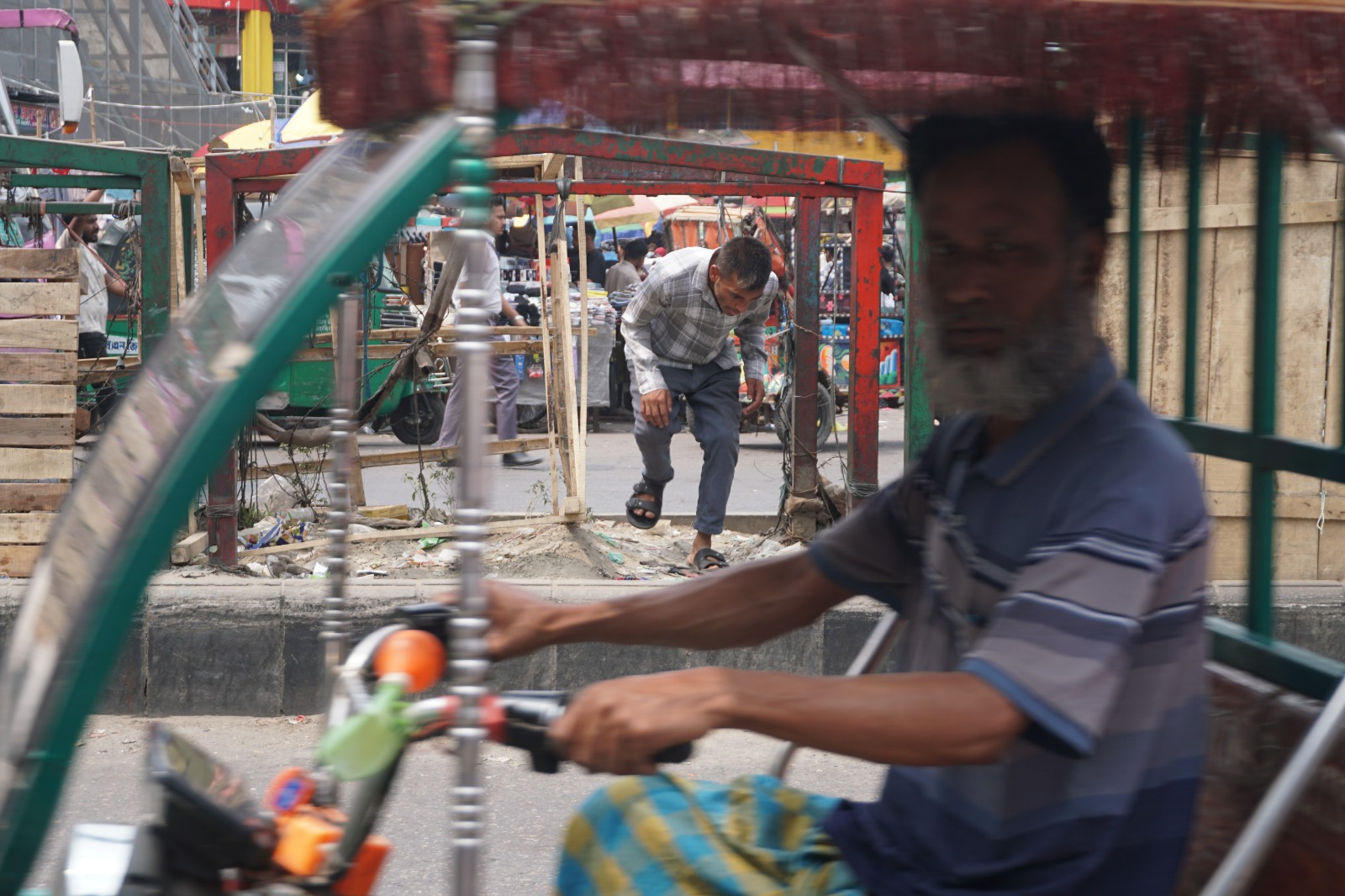
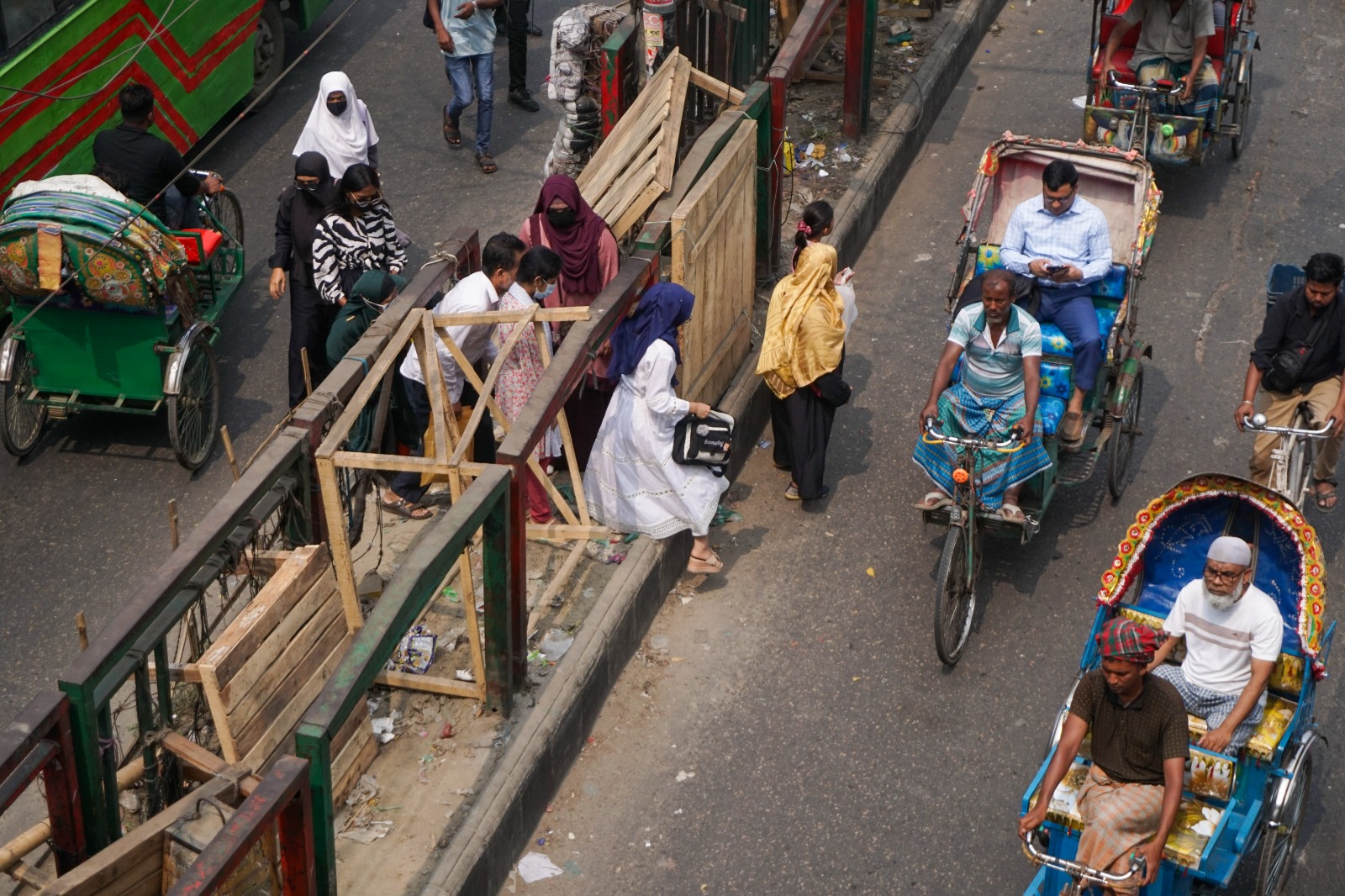
Shoppers, office-goers and street vendors often take the shortcut, believing it saves time. For many, climbing the stairs of the foot-over bridge seems cumbersome, especially when carrying groceries or heavy bags.

The crowded streets and the constant honking of rickshaws, cars, and motorcycles fail to deter them. What should be a few minutes of extra walking has turned into a daily gamble.




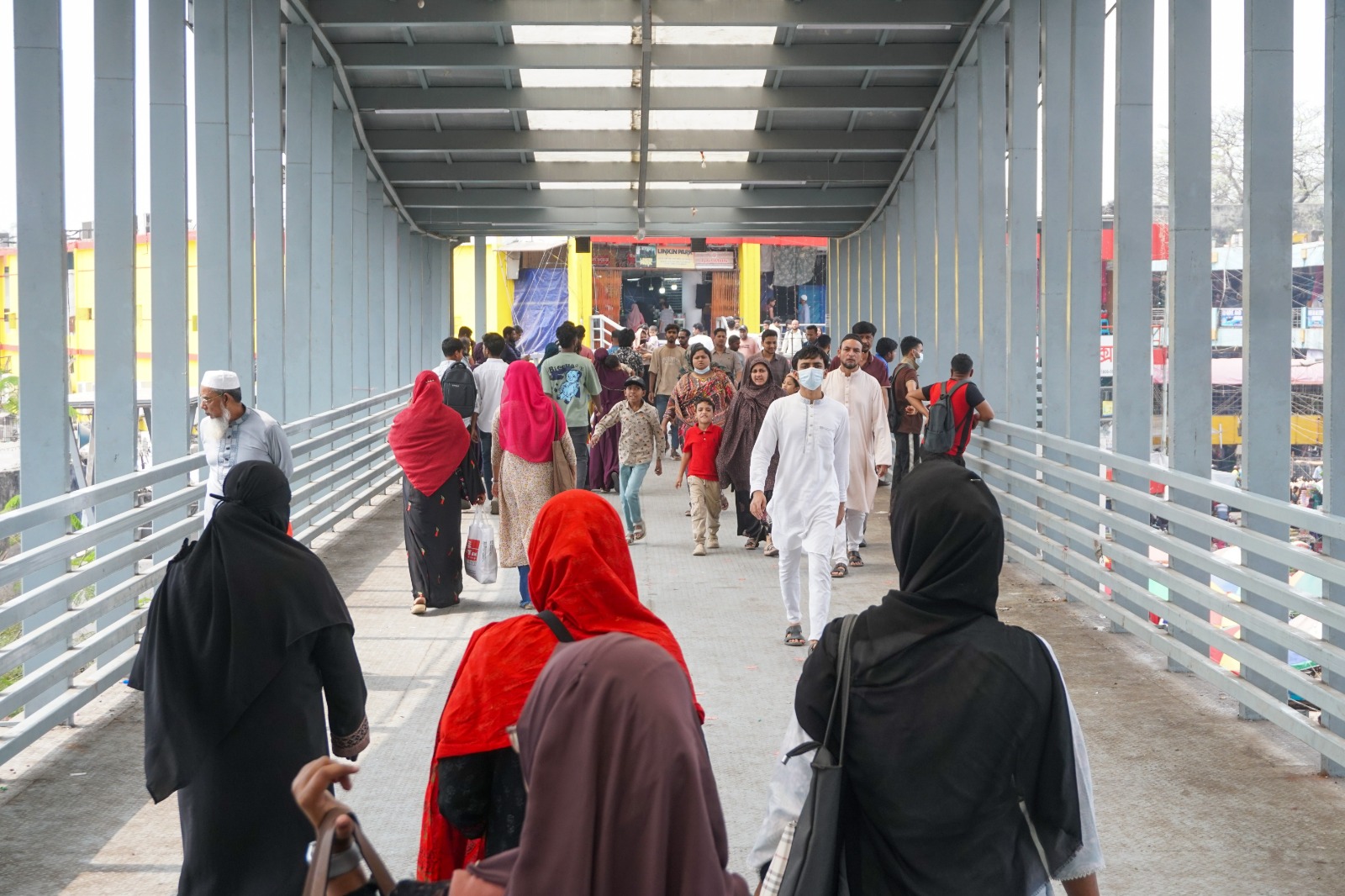
Traffic police and local authorities say the bridge was designed to ensure public safety and smooth traffic flow. Yet, enforcement is minimal, and public awareness campaigns have not been effective.
Observers note that the bridge is often empty while the road below remains perilous, with near-miss accidents occurring almost daily.
Experts highlight that this behaviour reflects a deeper issue: the lack of a road safety culture. Infrastructure alone cannot save lives. People must understand the value of using pedestrian facilities. Ignoring them is not just risky; it’s potentially fatal.
For now, the foot-over bridge stands underutilised, a silent reminder of lives at stake. Until the public realises that a few extra steps could prevent serious injuries or fatalities, every road crossing in front of New Market will remain a dangerous risk, a choice some are willing to make despite the consequences.