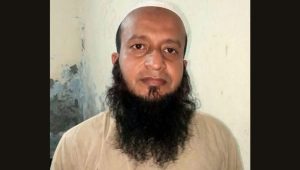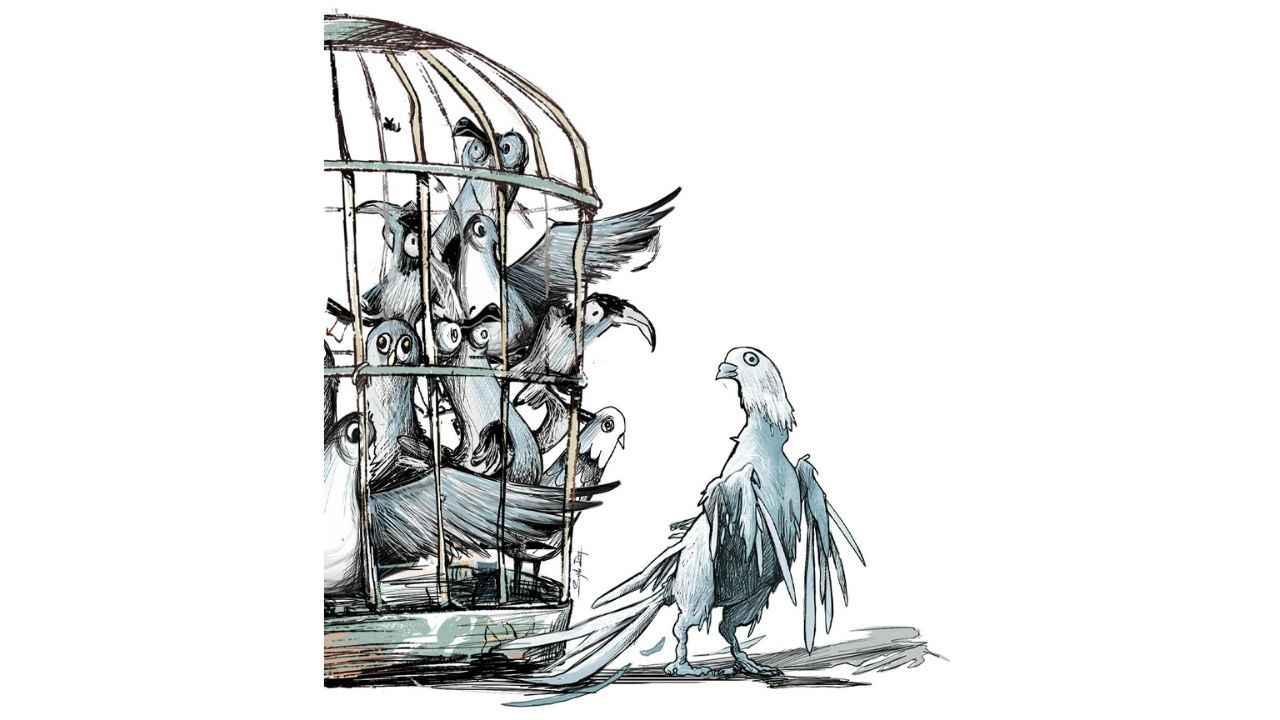



For 14 years, Mohammad Ismail Hossain and Mohammad Sonaruddin lived in a windowless condemned cell, waiting for a death that never came.
The eight-by-eight-foot room housed four or five people at a time. A toilet and bathing space occupied the same cramped area. There were no windows, and the door opened only briefly during bathing.
In summer, heat, humidity and the warmth of human bodies made the space unbearable.
This is where prisoners are sent after being sentenced to death. But for some, the punishment begins long before execution – and continues even after courts declare them innocent.
They remain under the shadow of the gallows until higher courts overturn their convictions and clear their names.
In 2006, nine-year-old Parveen and her mother Roksana were murdered in their village. Ismail and Sonaruddin – residents of Godagari in Rajshahi – were arrested two days later.
A trial court sentenced both men to death in 2008, and they were transferred to the condemned cell the same day.
In 2022, the Appellate Division found no evidence linking them to the crime and said a flawed investigation had led to their implication. They were released in May that year.
The verdict restored their freedom, but not the years they lost, the damage to their health, the relationships that broke down or the livelihoods their families sacrificed.
Their cases expose a gap in Bangladesh’s justice system: people who spend years on death row before being cleared have no dedicated mechanism for compensation or rehabilitation.
Many victims never seek further remedies because they cannot afford another legal battle or have lost faith in the system.
Legal experts say justice must include not only correcting wrongful convictions but also helping victims rebuild their lives.
The experience of Ismail and Sonaruddin was not isolated. High Court and Appellate Division records show that many death sentences by trial courts are later overturned, reduced or altered at higher stages of the judicial process.
Photographer Mosfiqur Rahman Johan, who has been advocating against the death penalty for many years, told TIMES that, according to information obtained from authorities, 294 people sentenced to death between 2009 and June 2026 were later acquitted by higher courts. More than 20 were cleared in the past two months alone.
Meanwhile, more than 2,700 death-row prisoners in around 1,200 cases are still waiting for their appeals to be resolved.

For many, punishment begins with the trial court verdict. Years spent in condemned cells mean living with the constant fear of execution even before higher courts determine their guilt.
Although executions can only take place after several legal stages – including High Court confirmation, appeals, review petitions and consideration of presidential mercy petitions – the psychological burden of death row begins much earlier.
Home ministry data shows that 47 executions took place in Bangladesh between 2009 and 2020. Since independence, 452 executions had been carried out by 2020, with four more recorded in 2021.
The possibility of wrongful conviction remains a major concern in death penalty cases because the punishment cannot be reversed once carried out.
The murder case of madrasa student Nusrat Jahan Rafi illustrates how dramatically trial court decisions can change at higher stages of the judicial process.
A Feni court sentenced all 16 accused to death in 2019. Seven years later, the HC commuted the sentences of four and acquitted 10 others.
For those cleared after years on death row, however, acquittal ends the legal battle – not the consequences of losing years of life.
Living under the shadow of the gallows
Ismail said years in the condemned cell left lasting psychological scars.
“If you stay there, you will go mad. If you are punished after committing a crime, perhaps you can accept it. But if you are punished despite being innocent, it cannot be endured,” he said.
“For 16 years, one question remained in my mind – why am I in prison?”




He said he saw prisoners who had spent more than 22 years in condemned cells while their cases remained unresolved.
Legal experts say wrongful convictions can result from flawed investigations, weak evidence or judicial errors. Yet prisoners are moved to condemned cells immediately after death sentences are issued, even though executions require several stages of legal review.
Johan said the system was outdated.
“In a country where the justice system has weaknesses, condemned cells become a place where human rights violations can take place,” he said.
A punishment before execution
For Ismail, the psychological pain of death row was as severe as the physical conditions.
“As the days pass, you feel like you die again and again. Many people lose their sanity. The hanging rope remains before your eyes all the time,” he said.
Sonaruddin said the memories of those years continue to haunt him.
“Whether I would be hanged or not was a separate matter. The bigger question was how a human being could live there. Even animals are kept in better conditions,” he said.
He described overcrowding, extreme heat, poor sanitation and food shortages inside the cell, where “a dried fish and rice” was often their meal.
He said many prisoners struggled to cope after arriving, breaking down emotionally and sometimes being placed in shackles following conflicts.
When the verdict changes, but the damage remains
For Ismail and Sonaruddin, release did not mark the end of suffering.
Both men alleged that they were beaten after arrest and pressured to provide confessional statements under Section 164 of the Code of Criminal Procedure.
“The kind of torture they carried out is shameful. It cannot be fully described,” Ismail said.
Sonaruddin said he was beaten for seven days before being sent to prison, leaving him with lasting health problems.
“I now have problems with my eyes, pain in my knees and in every joint of my body. I am no longer able to work,” he said.
Lawyers say several convictions based mainly on confessional statements have later collapsed before higher courts.
On 17 June, the Appellate Division acquitted Fatihah Mashkura, who had spent years in a condemned cell after being convicted in a case involving the alleged murder of her husband.
Her lawyer, SM Shahjahan, told TIMES that there was no reliable evidence against her apart from her confession.
Ismail and Sonaruddin were also convicted based on the confessional statement of another accused, Tarikul. That statement later failed to stand before the higher court.
Released, but never restored
Freedom did not restore the lives Ismail and Sonaruddin lost.
The legal battle destroyed their financial security. Sonaruddin said he was left with Tk3 lakh in debt and could not afford medical treatment.
Ismail said his family sold their land, ponds and house to support his legal fight.
But the losses went beyond money.
Ismail’s wife left him after his arrest, and he missed the deaths of several close family members during his imprisonment.
“Those younger than me have become grandparents, while I could not even become a father,” he said.
Sonaruddin said the stigma of conviction pushed his family into poverty.
Neither man wants to pursue compensation claims. Ismail said he lacks faith in winning a case against the state, while Sonaruddin said the cost of legal action – around Tk5 lakh – was beyond his means.
When courts correct mistakes, who repairs the damage?
Legal experts say Bangladesh has no dedicated compensation system for people who are wrongfully convicted and later acquitted.
In the 2001 Sumi Rani murder case in Sirajganj, five people were sentenced to death by a trial court. Four were later acquitted. Their lawyer, Hafizur Rahman Khan, said compensation should be available because victims lose years of their lives and financial resources.
Supreme Court Registrar General Muhammad Habibur Rahman Siddiqui said wrongful imprisonment reflects broader weaknesses in the justice system.
“This is a flaw in our overall justice system. If cases could be resolved within a short or reasonable period, the damage could be reduced to some extent,” he said.
Bangladesh is a party to the International Covenant on Civil and Political Rights (ICCPR), whose Article 14(6) provides for compensation, under certain conditions, for people who are wrongly convicted and later proven innocent.
However, Bangladesh has not yet established a comprehensive domestic mechanism to implement that principle.
Existing legal options remain limited.
Section 211 of the Penal Code allows action against a person who knowingly and maliciously files a false case. But proving such intent is difficult.
Victims may also seek compensation through civil claims or constitutional remedies in some circumstances. However, such routes are costly, lengthy and require separate legal battles.
Supreme Court lawyer Saiful Islam Saif said Bangladesh needs a miscarriage of justice compensation scheme.
“Such a system could provide compensation, rehabilitation, mental health support, employment assistance and social reintegration based on clear criteria,” he said.
However, he cautioned that complainants should not be punished simply because an accused is acquitted if the complaint was made in good faith.
“Otherwise, genuine victims may become discouraged from coming forward in the future,” he said.
Shahjahan Saju, former secretary-general of the Bangladesh Judicial Service Association and former senior district and sessions judge, said keeping an innocent person deprived of liberty for years was a serious human rights violation.
“Even if a court declares someone innocent, the damage caused by imprisonment cannot be repaired,” he said.
“The state must ensure accountability in such cases and create opportunities for victims to receive fair compensation.”