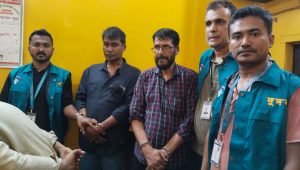
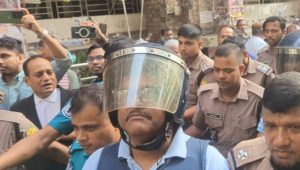
On 24 October 2019, a trial court in Feni sentenced 16 people, including madrasa principal Siraj-ud-Doula, to death for the murder of student Nusrat Jahan Rafi — a case that triggered nationwide outrage. Days later, the case records were sent to the High Court as a death reference, a mandatory step before any death sentence can be carried out in Bangladesh.
Seven years on, the hearing has yet to begin, let alone reach a final verdict.
The Nusrat case is not an isolated example. Across Bangladesh’s higher judiciary, death reference cases often remain pending for years, sometimes decades. While trial courts may deliver swift verdicts, the final outcome remains uncertain — leaving victims’ families waiting for closure and death-row prisoners trapped in prolonged uncertainty.
The issue has gained renewed attention after a trial court recently sentenced a man to death in the rape and murder of an eight-year-old girl in Mirpur. The verdict came within 19 days, and the victim’s family demanded swift execution. However, the case also highlighted the large number of similar sentences still awaiting High Court confirmation.
Although Bangladesh retains the death penalty as its highest punishment, its implementation requires multiple safeguards, including mandatory High Court confirmation and the right to appeal. In practice, these steps often become prolonged legal processes.
The delay affects both victims’ families and convicts. Death-row prisoners often spend years in condemned cells under severe psychological strain while awaiting final outcomes.

Former National Human Rights Commission chairman Mizanur Rahman once said after visiting prisons that some death-row inmates had expressed a desire for their cases to be resolved quickly to escape prolonged uncertainty. He raised the issue with the chief justice and called for faster disposal of such cases, but more than a decade later the problem persists.
Supreme Court lawyer Muhammad Yasin told TIMES of Bangladesh, “When a trial court awards the death penalty, the accused is kept in a condemned cell for years under mental suffering while the High Court has not even confirmed the sentence. In such cases, a person should not remain in a condemned cell before confirmation.”
Why death references take so long
Under Bangladesh’s legal system, a death sentence cannot be executed without High Court confirmation. These cases are registered as death references. The convicted can also file appeals and jail appeals, which are usually heard together.



However, each stage faces delays.
According to Supreme Court administrative sources, around 1,230 death reference cases are currently pending before the High Court. Five benches are handling such cases, which are generally heard chronologically.
Before hearings begin, a paper book must be prepared containing FIRs, charge sheets, witness statements, trial records, judgments and other documents. These are prepared by the government press, where delays are common due to workload.
Only after completion is a case placed before a bench assigned by the chief justice. At present, hearings are being held for cases filed in 2018.
Criminal law expert SM Shahjahan said faster disposal is needed and suggested assigning paper book preparation to the defence side and increasing the number of benches.
Senior lawyer Sarwar Ahmed said death reference cases require specialised handling: “These hearings require patience and expertise. Dedicated benches with experienced judges should be formed and allowed sufficient time.”
A judicial official, requesting anonymity, suggested assigning multiple benches during court vacations to reduce backlog.
During chief justice Hasan Foez Siddique’s tenure, the High Court disposed of 167 death reference cases in one year — the highest in Bangladesh’s history.
However, the Supreme Court administration says such cases cannot be rushed due to their life-and-death nature.
High Court Special Officer Mohammad Mazharul Haque told TIMES, “Death reference cases require detailed hearings as they involve human life. Sufficient time is therefore necessary.”
Delays continue even after HC verdicts
Even after High Court confirmation, cases often remain stuck at the appellate stage.
In the Narayanganj seven-murder case, seven people were abducted in 2014 and later found dead. In 2017, a lower court sentenced 26 people to death. The High Court upheld death sentences for 15 and commuted others to life imprisonment within the same year.
However, appeals filed with the Appellate Division remain pending even after nine years.
For victims’ families, the prolonged process means that justice often remains incomplete long after verdicts are delivered. For the justice system, the backlog raises a fundamental question: does justice end with a sentence, or only when the legal process is fully exhausted?