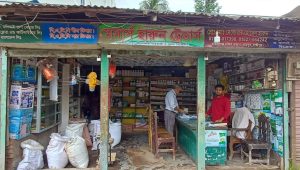




For millions across Bangladesh, late August has brought a punishing combination: above-normal temperatures, below-average rainfall and power cuts that have made daily life increasingly difficult.
The average maximum temperature for this time of year is currently 3 to 5 degrees Celsius higher than normal, while rainfall is around 40 percent lower than the 30-year average.
A Bangladesh Meteorological Department (BMD) official told TIMES that the situation is not directly linked to the widely discussed “super El Niño” phenomenon.
Super El Niño is an unusually strong climate event in which sea surface temperatures in the equatorial Pacific rise by 2 degrees Celsius or more above normal.
Truck driver Sekendar Ali is among those struggling through the heat.
“While carrying goods in the morning, I was stuck in traffic for almost an hour because of the extreme heat. Drinking water and sherbet is the only way to get some relief. There is no comfort even after returning home. Last night, we had electricity for only a few hours,” he said.

Office workers are also facing difficulties. Electricity was unavailable for more than two hours yesterday afternoon in Dhaka’s Karwan Bazar area.
Private-sector employee Mofiz Imam said power cuts were disrupting normal work.
“Electricity goes off at any time, making it difficult to work. Using computers and other devices has also become a problem,” he said.




The power shortage has added to the pressure. Electricity supply remains more than 20 percent below demand during peak daytime hours. The Power Division estimates demand at slightly above 16,000MW, while generation remains around 13,000MW.
As a result, authorities are cutting supply in one area to maintain it in another. In rural areas, outages lasting up to 12 hours have increased public suffering.
BMD data shows maximum temperatures yesterday ranged between 34 and 37 degrees Celsius. Dhaka, Mymensingh and Rajshahi recorded 35 degrees, Rangpur 36 degrees, Chattogram and Khulna 34 degrees, and Sylhet 37 degrees Celsius.
But recorded temperatures and what people actually feel are not always the same. At 5:45pm yesterday, Tejgaon in Dhaka recorded 30 degrees Celsius, while the perceived temperature was 37 degrees because of high humidity.
BMD data shows relative humidity in Dhaka was 93 percent over the past 24 hours, further intensifying discomfort.
According to BMD’s 25-year average data, the normal maximum temperature at the end of August is 31.4 degrees Celsius.
Meteorologist Md Omar Faruk told TIMES that temperatures were expected to gradually decline due to a low-pressure system.
“Today (Sunday), the temperature is lower than yesterday. It will decrease further tomorrow, and temperatures will continue to fall over the next few days,” he said.
He said the low-pressure system over the northwest Bay of Bengal and adjoining coastal areas of West Bengal and Odisha could bring rain in the coming days, providing some relief.
The BMD’s 120-hour forecast said the system may move west-northwestwards and intensify, but it is unlikely to bring very heavy rainfall.
According to BMD’s 30-year data, average rainfall in August is close to 500 millimetres. This year, rainfall has ranged between 296.7 and 315 millimetres in different parts of the country.
The forecast suggests scattered rain and thunderstorms in several regions until early September, with temperatures likely to fall slightly.
BMD observations show that between 6am Saturday and the following 24 hours, the highest rainfall was recorded in Srimangal at 35 millimetres, followed by Bandarban at 23 millimetres and Dhaka at 13 millimetres.