






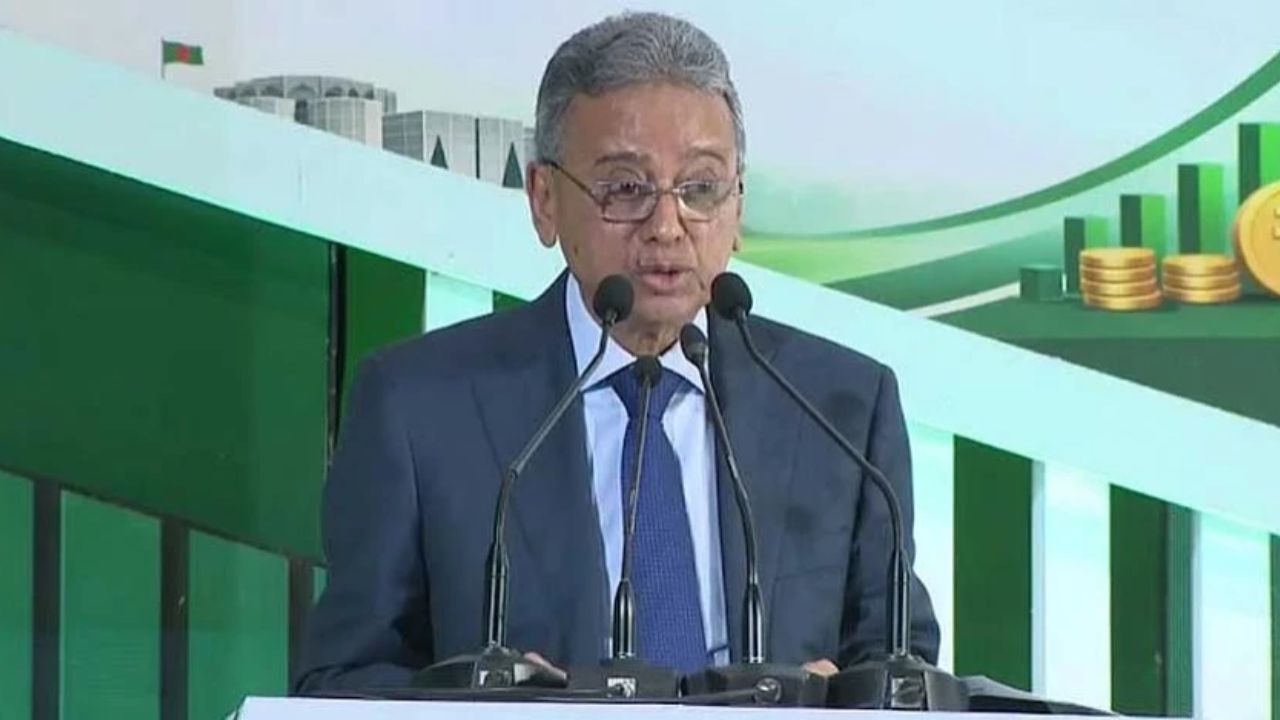
Bangladesh is advancing towards self-funded development by implementing bold revenue reforms to systematically reduce its reliance on foreign debt, Finance and Planning Minister Amir Khosru Mahmud Chowdhury has said.
Speaking on Tuesday at the inauguration of the Revenue Conference-2026 at the Bangladesh-China Friendship International Conference Centre in Dhaka, the minister emphasised that a modern, cashless, contact-free, and faceless revenue system will serve as a primary cornerstone of a prosperous Bangladesh.
The conference was jointly organised by the Internal Resources Division of the Ministry of Finance and the National Board of Revenue (NBR). NBR Acting Chairman Ahsan Habib presided over the event, while the Prime Minister’s Finance and Planning Adviser Rashed Al Mahmud Titumir, joined and addressed the session online. Prime Minister Tarique Rahman later inspected various NBR stalls at the venue.
Ambitious Tk6.04 Lakh Crore Target
The minister stressed that achieving the current fiscal year’s revenue collection target of Tk6.04 lakh crore is of paramount importance. Although he acknowledged that this target is highly ambitious—representing a 46 per cent increase over the previous year’s collection—he maintained that boosting domestic resource mobilisation remains the only viable way to finance the country’s infrastructure, social security, education, and healthcare sectors.
“If we want to transition from a debt-dependent economy to an investment-driven one, we must fund our own development through our own resources,” Khosru said, adding that this goal is attainable through modernisation, expanding the tax net, and fostering public-private partnerships.
Structural Overhaul: Restructuring the NBR
In a major administrative reform, the minister announced that the final decision has been made to split the existing NBR into two distinct and transparent organisations: the Revenue Policy Division and the Revenue System Division.
The Revenue Policy Division will function as the government’s “think tank”, formulating a balanced, competitive, and business-friendly tax structure.
To avoid relying solely on bureaucratic frameworks, the division will actively seek expert opinions from economists, business leaders, researchers, trade organisations, and specialists in law, accounting, auditing, and statistics. Regular consultations with public and private stakeholders will also be conducted before budgets and policies are formulated.
Meanwhile, the Revenue System Division will serve as the primary implementing agency focused entirely on revenue collection.
Total Automation and Cashless Drive
Highlighting administrative automation as a top priority, Chowdhury stated that the culture of taxpayers physically visiting tax officials must end, except in highly exceptional circumstances.
He pointed out that digital initiatives such as e-tax management, e-VAT, the National Single Window, customs bond management, and technology-driven scanning have already simplified operations, enabling taxpayers to complete registration, return filings, and tax payments from home or the office.
He added that the introduction of risk-based audits has successfully curtailed discretionary powers and administrative high-handedness.
The minister called for the establishment of a robust cashless transaction system and a credible financial reporting system to expand the tax net, identify new taxpayers, and prevent tax evasion.
A Partnership with Businesses
Addressing the business community, the minister described entrepreneurs as the driving force of the economy and urged them to pay their taxes and VAT in a timely manner. He assured them that the government remains committed to maintaining an investment-friendly environment and is actively resolving complaints regarding administrative delays and the conduct of tax officials.
However, he warned that strict legal actions will be enforced against intentional tax evaders, noting that while honest taxpayers must not face harassment, dishonest ones will not be allowed to secure unfair advantages.
Taxpayer Charter and Phasing Out Exemptions
Chowdhury stressed that while taxpayers have a legal obligation to pay taxes, revenue officials are equally duty-bound to deliver impartial, respectful, and compliant services. He claimed that the NBR’s efficiency must not be evaluated solely by collection volumes, but must also incorporate taxpayer satisfaction and service quality as key performance metrics.
To achieve this, he called for the implementation of a clear Taxpayers’ Service Charter defining service delivery timelines, official responsibilities, and complaint redressal mechanisms.
The minister also outlined plans to gradually phase out long-standing tax exemptions granted to industries. While exemptions were crucial during the initial stages of industrialisation, domestic industries have now matured and achieved international competitiveness.
Reducing these exemptions will not only boost national revenue but also establish a level playing field for all businesses.
Customs-VAT Reforms and Dispute Resolution
To minimise harassment, the minister noted that several reforms have been introduced to customs and VAT laws in the current budget. Recognising that revenue disputes dragging on in court for years benefit neither the government nor businesses, he emphasised the need to make the Alternative Dispute Resolution (ADR) mechanism more effective, rapid, transparent, and fair.
Concluding his address, the minister stated that the NBR must transition from being seen merely as a tax collector to being viewed as a constructive partner in the financial journey of businesses.
He reiterated that the ultimate success of these reforms rests on the integration of modern technology, skilled manpower, professionalism, accountability, and active cooperation between public and private stakeholders.


