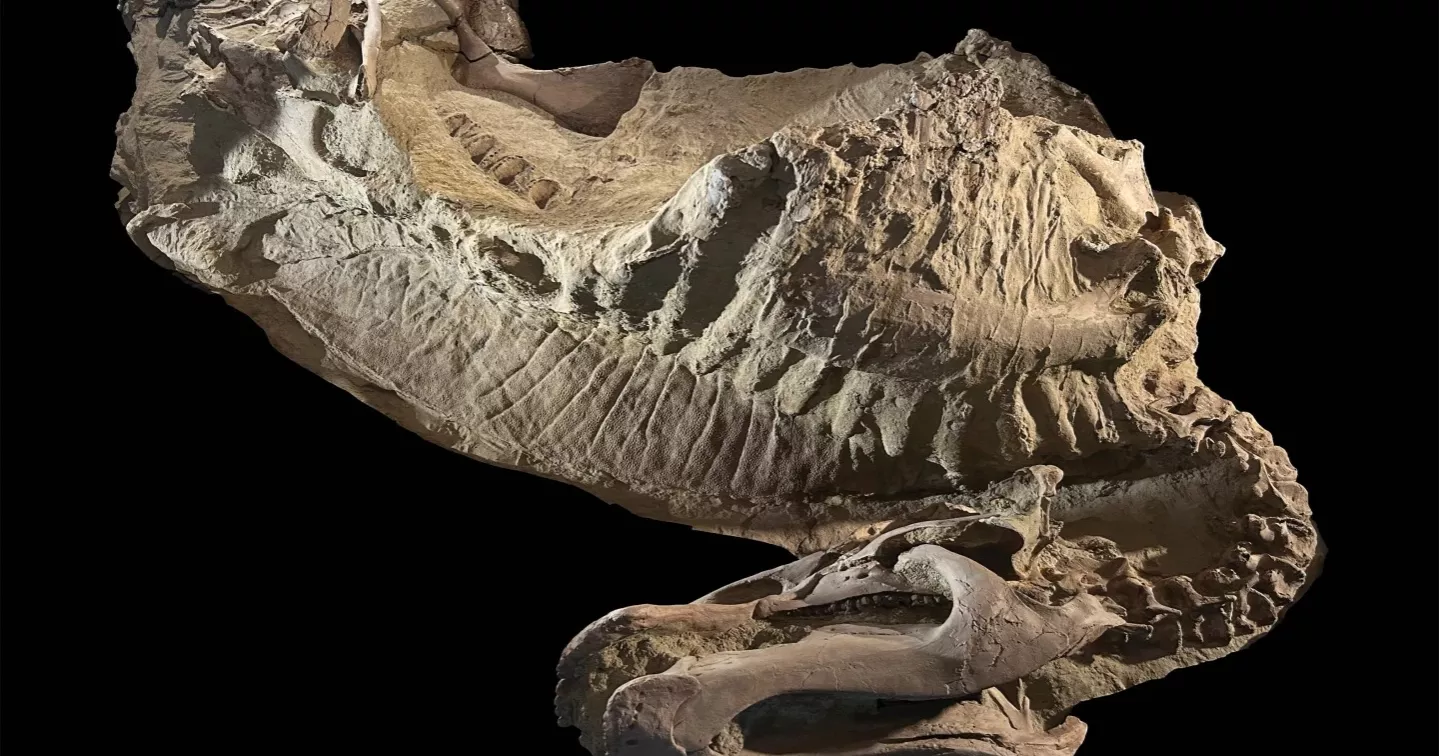
Scientists have uncovered an exceptionally rare pair of dinosaur mummies in eastern Wyoming, revealing a previously unknown pathway for fossil preservation and offering the clearest picture yet of the skin and anatomy of a young duck-billed species.
The fossils were unearthed in what researchers call the “mummy zone,” an area known for unusually well-preserved dinosaur remains. One specimen belonged to a juvenile estimated to be just a few years old — the first such young dinosaur found in a mummified state, according to University of Chicago paleontologist Paul Sereno, reports AP -UNB.
Unlike other dinosaur mummies, which retain fossilized skin and soft tissue, the newly described specimens preserved only skin impressions in a thin clay coating. Microbial activity helped harden the clay over millions of years, capturing scale patterns and body features in extraordinary detail. The findings indicate that this type of preservation — previously thought to occur only in water-rich environments — could also take place on land.
Using the natural clay molds, scientists reconstructed the dinosaurs’ outer appearance, including tail spikes and hoof-like feet. Their analysis was published Thursday in the journal Science.
Researchers say the discovery could reshape fossil-hunting strategies by highlighting the importance of subtle skin traces often overlooked in the field. “Every single time we find one, there’s such a treasure trove of information about these animals,” said Stephanie Drumheller, a vertebrate paleontologist at the University of Tennessee who was not involved in the study.
Paleontologists believe that each rare mummy find provides critical insights into dinosaur growth, behavior and the environments they inhabited more than 66 million years ago.