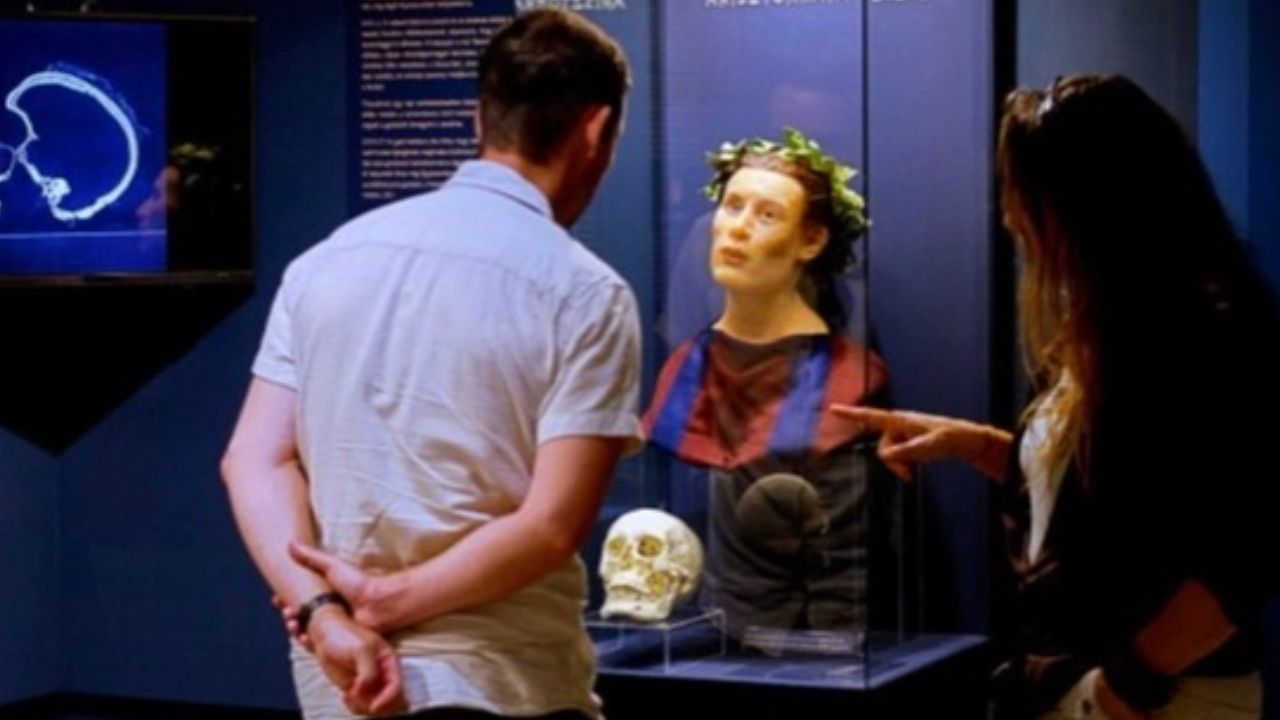

A new exhibition in Hungary is giving visitors a rare chance to meet the people of ancient Rome through lifelike facial reconstructions based on DNA analysis and forensic science.
The exhibition, titled “Once We Were Like You,” is being held at the Aquincum Museum in Budapest until 31 October. It features highly detailed reconstructions of more than a dozen people whose skulls were unearthed in Aquincum, a thriving Roman settlement on the Danube frontier nearly 2,000 years ago.
The reconstructed faces include a blacksmith, a stable boy, a soldier and a slave, offering a glimpse into the lives of ordinary people who once lived in the Roman city.
“Our main goal was to bring some of these individuals closer to people today,” said Loránt Vass, an archaeologist and co-curator of the exhibition.
According to the museum, the exhibition seeks to answer questions about everyday people in ancient times – what they looked like, who they were and how they lived.

Experts used DNA extracted from the bones to identify features such as skin, hair and eye colour, and even whether a person likely had freckles. The skulls also provided clues about facial structure, age, injuries and diseases.
Using these findings, curators created names, occupations and life stories for each reconstructed individual, based on historical evidence and scientific analysis.
“We don’t know their real names, unfortunately, but we tried to include everything anthropology and genetic studies could tell us about their lives,” said co-curator Péter Vámos.



One reconstructed figure, named Respectus, is portrayed as a construction worker who earned a living plastering walls and cutting stone. According to the exhibit, years of hard labour left visible marks on his bones. It also suggests he broke his nose and lost a tooth during a tavern fight after drinking wine.
Vass said Respectus reflects the lives of many people who lived in Aquincum. Analysis showed that most of the skeletons had signs of inflammation, indicating years of physically demanding work.
“They regularly performed hard labour, and many also experienced periods of hunger,” Vass said. “This suggests that most belonged to the lower middle class, a group that is rarely remembered in Roman history.
“Among the 16 reconstructions, six are life-size silicone models that have been carefully painted and fitted with realistic hair, clothing and jewellery.
Artist Emese Gábor, who created the silicone models, said artificial intelligence can generate digital images of ancient faces, but physical reconstructions provide a more meaningful museum experience.
“They can be viewed from every angle and are life-size,” she said. “I rely on scientific methods and combine traditional and modern techniques in this work.”
DNA analysis also revealed the ethnic diversity of Aquincum’s population. The findings showed that, alongside Roman citizens from what is now Italy, the city was home to people whose ancestors came from present-day Scotland and Syria, as well as members of the nomadic Sarmatian tribes. The region’s earlier Celtic inhabitants were also represented.
Vass said archaeological discoveries often end up as stored artifacts, with little attention paid to the people behind them.
“The bodies have no weight, no life, no soul,” he said. By recreating the faces of Aquincum’s former residents, the museum hopes visitors will see them as people much like themselves.
“The title of the exhibition reminds us that they were like we are today,” Vass said. “They had jobs, faced challenges and lived ordinary lives. Their circumstances may have been different, but people are still people. I don’t think that has changed much throughout history.”