The Rooppur Nuclear Power Plant (RNPP) has successfully completed loading fresh nuclear fuel into the reactor core of its first unit.
The fuel loading process, which commenced on 28 April, involved the gradual installation of 163 fuel assemblies into the reactor core. This achievement is considered one of the most vital steps before the unit begins power generation and moves toward commercial operation.
Rosatom, the Russian state nuclear corporation, announced the development in a press release on Tuesday.

Alexey Deriy, Rooppur Project director and vice president of Atomstroyexport, stated that the initial core loading programme was conducted in strict adherence to operational regulations and international nuclear safety standards.
Regarding the next phases, Deriy noted that the upper part of the reactor will be installed, followed by the connection of the necessary in-core instrumentation systems. Subsequently, hundreds of additional tests will be performed to ensure the reliable and safe operation of all technical systems.




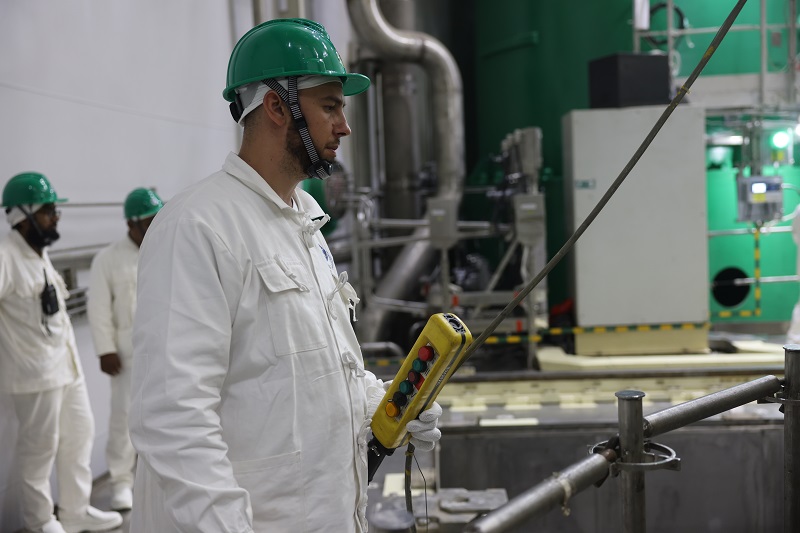
According to a press release, the reactor will soon be brought to its minimum controllable power level, after which its capacity will be increased in stages. This process will pave the way for power generation and experimental commercial operation of the first unit.
Project officials indicated that production will increase by 10 to 15 per cent each month. It may take approximately 8 to 10 months following the physical start-up to reach the full 1,200MW capacity.
Officials also plan to begin production activities for the project’s second unit by loading fuel toward the end of this year.
Located on the banks of the Padma River in Ishwardi, Pabna, the $12.65 billion project is being implemented with Russian financial and technical assistance. The plant features two VVER-1200 reactors.
Once both units are in full production, they will provide a total of 2,400MW of electricity, meeting more than 10 per cent of the country’s total demand. With this project, Bangladesh has joined the “nuclear club” as the world’s 33rd nuclear power-producing nation.