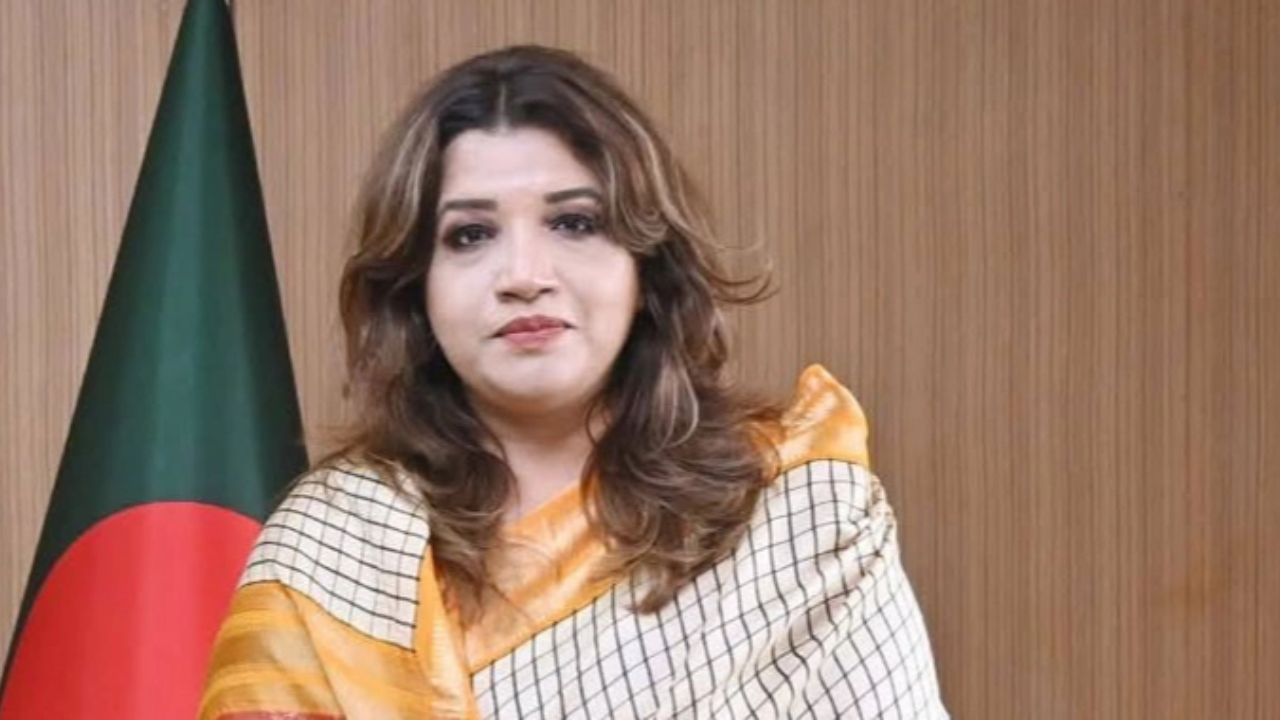
Foreign Minister Khalilur Rahman informed Parliament on Wednesday that the resolution of Rohingya repatriation crisis depends significantly on Myanmar, specifically the security situation in Rakhine State, international pressure, and the goodwill of Myanmar authorities.
Speaking during the ninth day of the first budget session of 13th Jatiya Sangsad, Khalilur was responding to a written query from Shahjahan Chowdhury, Member of Parliament for Chattogram-15, regarding the progress of repatriation efforts and the measures taken to address security crises in the camps.
Khalilur described the issue as a highly complex, sensitive, and multi-dimensional international problem, emphasising that because of the long-standing ethnic conflict and state of war in Rakhine, international law prohibits the forced return of individuals to an unsafe environment.
He added that while a specific timeframe cannot be provided, the government’s preparations are at a final stage to ensure permanent and safe repatriation as soon as conditions become favourable through effective dialogue between the Myanmar government and the Arakan Army.

Diplomatic shift, international engagement
Khalilur, who previously served as the High Representative on Rohingya Affairs for the Chief Adviser of the Interim Government, criticised the previous administration’s handling of the crisis.
He alleged that the former “fascist Awami government” failed to take effective initiatives, instead using the humanitarian disaster to seek financial aid and distract the international community from domestic issues.



Under the current interim administration, there has been a renewed focus on placing the Rohingya issue at the centre of the global agenda, including the 2025 visit of UN Secretary-General António Guterres to the Cox’s Bazar camps.
Key milestones highlighted by the minister included a Special Stakeholder Conference in August 2025 where Bangladesh raised seven specific demands, and a historic UN General Assembly resolution co-sponsored by 105 countries calling for voluntary and dignified return.
Besides, Bangladesh continues to support the case filed by The Gambia at the International Court of Justice to ensure justice and accountability for the atrocities committed against the Rohingya people.
Verification progress and camp security
According to recent UNHCR reports, there are currently 1,189,213 forcibly displaced Myanmar nationals residing in Bangladesh.
Khalilur provided a detailed breakdown of the verification process, noting that the Bangladesh government has sent information regarding 829,036 Rohingyas to Myanmar in six phases, of which 283,086 have been officially recognised as “former residents.”
Parallel to these efforts, the Ministry is facilitating third-country resettlement, with 5,712 individuals resettled through the International Organisation for Migration (IOM) and 697 through the International Rescue Committee (IRC) to date.
Addressing concerns over internal security, Khalilur reported a significant decline in criminal activities within the camps following the formation of a special task force and the implementation of new Standard Operating Procedures.
Data from the National Security Intelligence indicates that the number of murders in the camps has dropped from 66 in 2023 to 35 in 2025, with only six incidents recorded in the first three months of 2026.