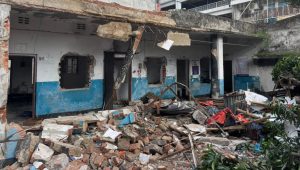
Nearly nine years after the mass exodus of Rohingya people from Myanmar, Bangladesh is shouldering an ever-growing share of one of the world’s largest refugee crises as international attention, funding, and diplomatic engagement continue to decline.
While the United Nations insists the Rohingya response is being “localised” to improve aid delivery, humanitarian experts and local stakeholders argue that the international community is gradually shifting responsibility for a crisis created in Myanmar onto Bangladesh.
The shift became more visible when the United Nations and the Rohingya Coordination Platform (RCP) launched the 2026 Joint Response Plan (JRP) in Dhaka on 20 May instead of Geneva, long regarded as the centre of global humanitarian diplomacy.

Officially, the move was presented as a practical effort to draw international attention closer to refugees and host communities in Cox’s Bazar. However, observers say it also reflects a deeper reality: the operational and symbolic centre of the Rohingya response is steadily moving towards Bangladesh, the country bearing the greatest burden.
Bangladesh currently hosts around 1.2 million Rohingya people in Cox’s Bazar and Bhasan Char. Prospects for their voluntary, safe, and dignified repatriation remain bleak, as conditions in Myanmar continue to deteriorate and diplomatic initiatives have produced little progress.
International role shrinking
The humanitarian coordination structure has also evolved over the years. Since 2017, the Inter-Sector Coordination Group (ISCG) managed the response before transitioning into the Rohingya Coordination Platform, a UNHCR-hosted mechanism coordinating nearly 100 humanitarian organisations.
The emergency response in 2018 was led largely by UN agencies and international NGOs. The 2022 Joint Response Plan involved 136 partner organisations, including 62 international agencies. By contrast, the 2026 plan includes 98 partners, with roughly half being international organisations, indicating a growing role for Bangladeshi institutions as international participation declines.

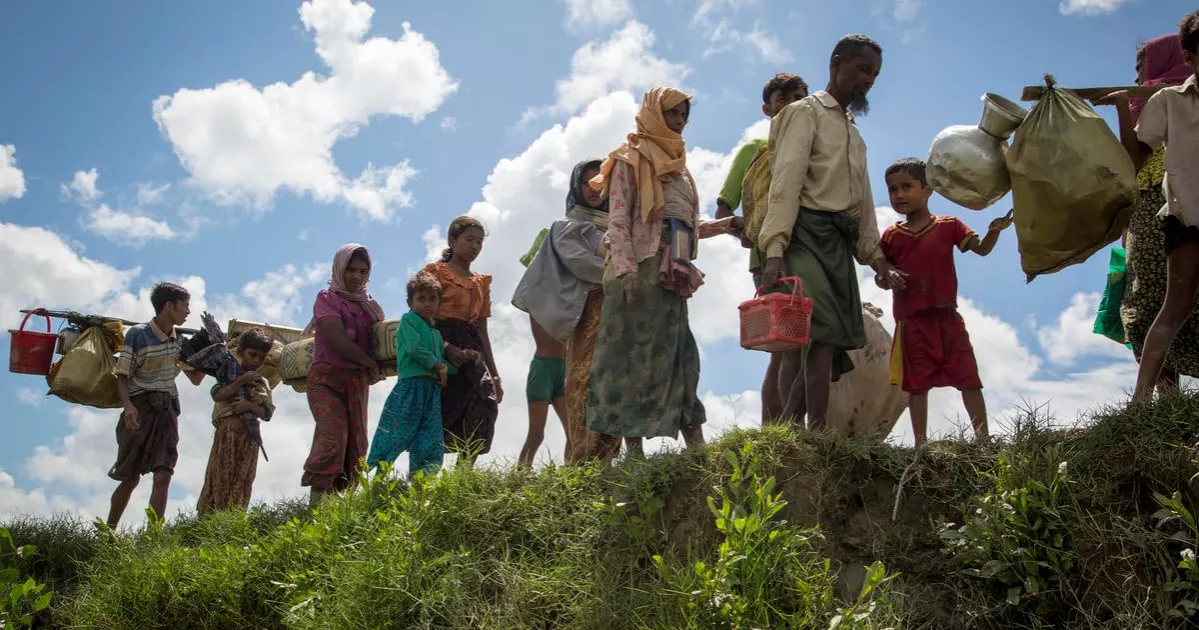
Md Yunus Arman, a Rohingya refugee activist in Cox’s Bazar, said the diminishing global engagement is deeply worrying.
“The world is forgetting us,” he said, adding that declining aid, reduced food assistance, and fading diplomatic pressure have left refugees trapped in prolonged uncertainty.
“We are still here, but the world speaks of us less and acts even less.”
UN rejects responsibility shift
The United Nations rejects suggestions that it is transferring responsibility to Bangladesh. It distinguishes between “localising the response” — increasing the role of Bangladeshi institutions and NGOs in humanitarian operations — and “localising the crisis”, which would imply shifting responsibility for Myanmar’s crisis to Bangladesh.




While the distinction remains clear in policy, many observers argue it is becoming increasingly blurred in practice.
Funding falls as needs grow
The decline in global attention comes as international humanitarian priorities have shifted to conflicts in Ukraine, Gaza, and Sudan, intensifying competition for limited donor resources.
Under the 2026 Joint Response Plan, the UN and its partners are seeking $710.5 million, about 26 per cent lower than last year’s appeal. The reduced target reflects funding constraints rather than a decline in humanitarian needs.
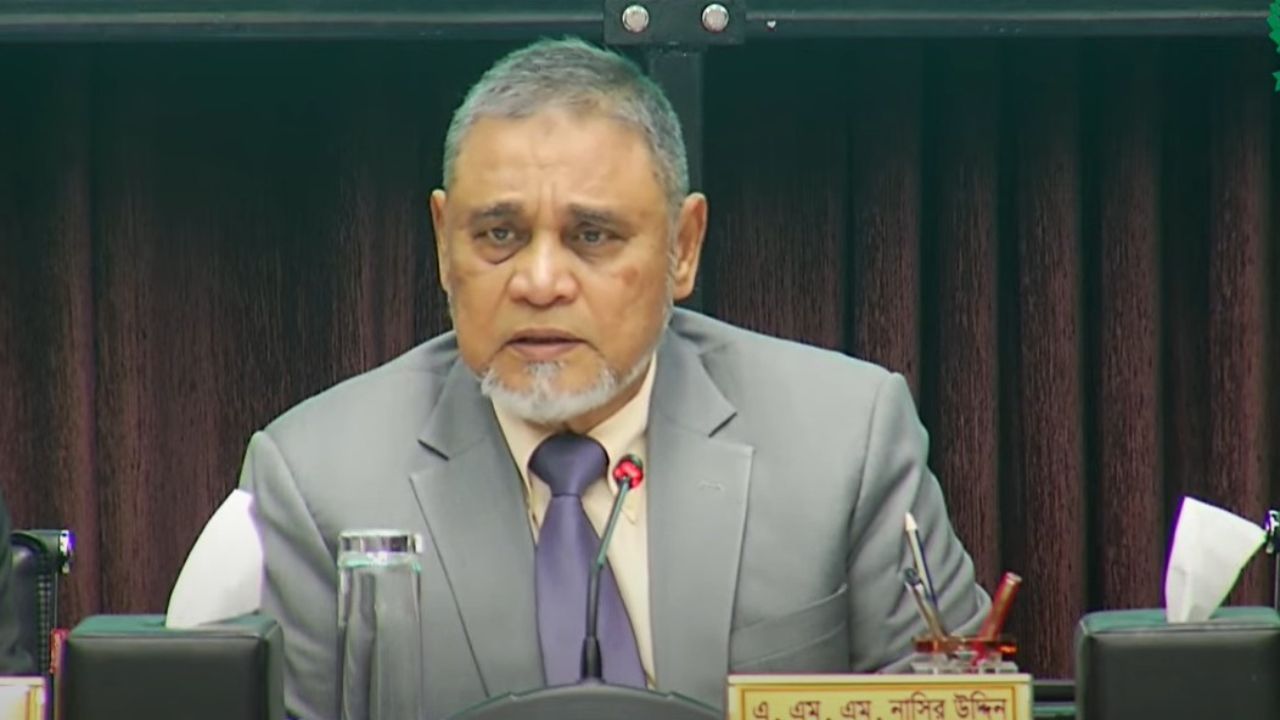
Refugee Relief and Repatriation Commissioner Mizanur Rahman said international support has steadily weakened.
“As the crisis becomes increasingly protracted, it is gradually being perceived as a long-term humanitarian challenge rather than an emergency requiring urgent global attention,” he said.
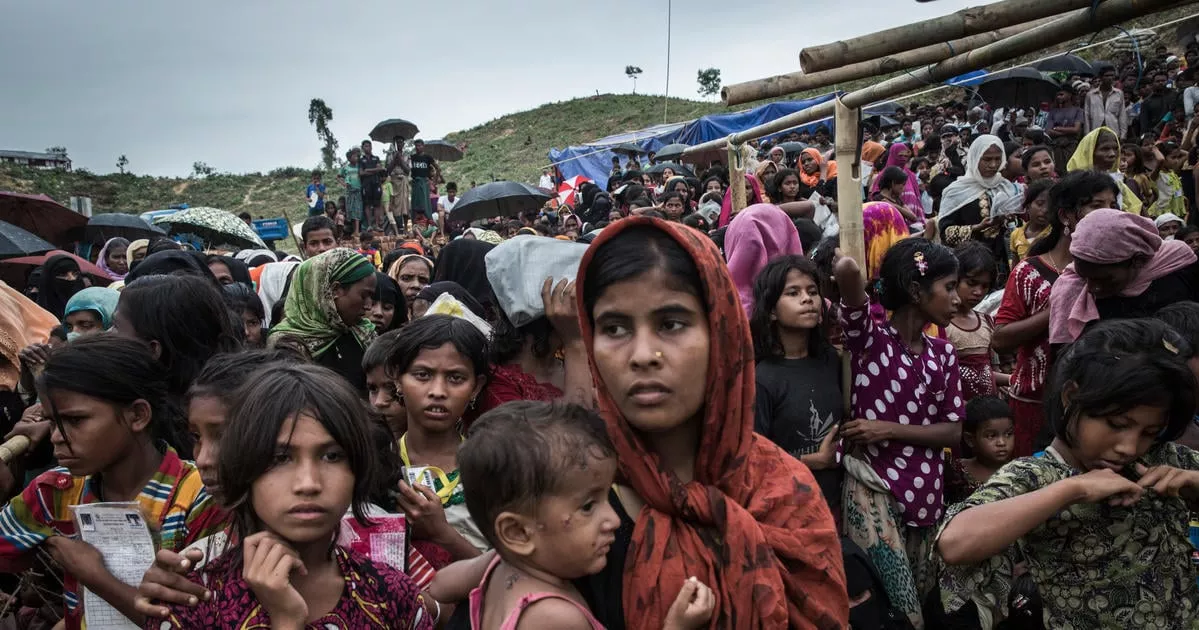
The consequences are already evident. Since late 2023, renewed fighting in Myanmar’s Rakhine State has forced an estimated 150,000 more Rohingya into Bangladesh, placing additional pressure on already overcrowded camps.
The 33 refugee camps in Cox’s Bazar occupy only 24 square kilometres, leaving little room for expansion. New arrivals are increasingly being accommodated in congested shelters and disaster-prone areas vulnerable to floods, landslides, and fires, even as humanitarian assistance continues to shrink.
Bangladesh carrying greater burden
UNHCR Bangladesh said the Dhaka launch followed a four-day high-level donor mission involving senior UN officials and international partners to expose decision-makers to conditions on the ground and maintain global attention on both refugees and host communities.
According to Mosharof Hossain, senior communications assistant at UNHCR Bangladesh, the initiative aimed to reinforce international commitment rather than reduce it.
The broader trend also reflects the global humanitarian emphasis on localisation, which encourages greater involvement of local organisations considered better placed to respond quickly and effectively.
However, critics argue that localisation should not become a substitute for international responsibility.

Rezaul Karim Chowdhury, executive director of COAST Foundation and head of the NGO Platform for the Rohingya Response, said international actors appear to be retreating from long-term engagement.
“They now seem to be shifting the responsibility to the Government of Bangladesh and local aid agencies,” he said.
As donor fatigue deepens, diplomatic momentum weakens, and Bangladeshi institutions assume greater operational responsibilities, the gap between global commitments and realities on the ground is becoming increasingly apparent.
Although the international community continues to acknowledge that the Rohingya crisis originated in Myanmar, Bangladesh is bearing an ever-larger share of its humanitarian, financial, and social consequences.
Nine years after the crisis began, the danger is no longer just declining aid. It is that the Rohingya issue may gradually disappear from the global agenda while becoming an increasingly permanent burden for Bangladesh.