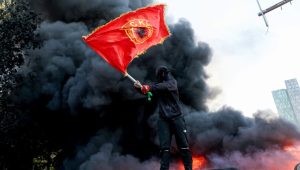
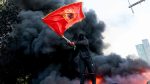
The right to protest is returning to Venezuela’s streets, where mothers are demanding freedom for jailed sons, oil workers are calling for better conditions and senior citizens are marching for higher pensions.
Fear and violent repression had previously silenced grassroots demonstrations after now-deposed president Nicolas Maduro’s contested re-election win in 2024.
The Maduro administration used mass arrests to crush public outrage over the results, with hundreds killed during earlier crackdowns, according to AFP reports.
Following the 63-year-old leftist leader’s capture by US forces in January, the climate appears to be shifting towards greater freedom of expression.
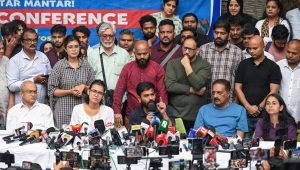
At a small protest of around 30 people in Caracas, activist Diego Casanova spoke through a megaphone, referring to a “before and after” moment in Venezuela’s political landscape.
“There is no freedom!” women holding photographs of imprisoned relatives chanted alongside him.

Some police officers watched without intervening, while others took photos on their phones, leaving riot shields aside.
Delcy Rodriguez, Maduro’s former vice president, is currently serving as interim leader under Washington’s supervision.
“They have not lost that insatiable appetite for persecution,” Casanova said. However, he added that authorities now face “a much higher political cost” and that the public also understands the situation.
Protests rose by 144 percent in the first three months of this year compared with the same period in 2025, according to the Venezuelan Observatory of Social Conflict (OVCS).


However, uncertainty remains over the country’s future, with US President Donald Trump viewing Venezuela as effectively under US influence.
Following the operation against Maduro, Trump warned that the United States could use force again if Rodriguez failed to comply with US demands and allow access to Venezuela’s oil and natural resources.
Danny Socorro, psychology director at the Andres Bello Catholic University, told AFP that the US operation in January “generated a series of possibilities, but it also raised many questions.”
Seventy-six-year-old retiree Nely Molina said fear had kept her from protesting for months, though she believes “things have changed a little” since Maduro’s imprisonment in New York on drug-trafficking charges.
At another rally of around 100 elderly protesters in Caracas, Molina condemned her “starvation-level” pension of 130 bolivares a month, equal to 22 US cents.
“We have more freedom to protest, to shout, to say what we want,” she said.
Near the heavily guarded Miraflores presidential palace, a small police presence monitored the demonstration.
At a separate protest organised by relatives of political prisoners, Dilsia Caro recalled harsher conditions in the past.
“If you went out into the street to protest, you know they would haul you off to jail,” said the 50-year-old.
Caro is demanding the release of her husband Noel Flores, 48, who was arrested for an alleged assassination attempt against Maduro.
She said she is not afraid, despite an ongoing state of emergency that could lead to imprisonment for dissent.
Protests have already produced results. A nearly six-day hunger strike in February ended with the approval of a historic amnesty law.
The law raised hopes for mass releases, but rights group Foro Penal says around 400 opposition members remain in jail.
The Venezuelan Observatory of Social Conflict says repression has shifted to “more sophisticated, selective and less visible forms”, with activists reporting brief arbitrary detentions during protests.
Casanova later placed handwritten notes outside the prosecutor’s office. One read: “Right now they are torturing a political prisoner.”
“The repressive apparatus remains in place,” he said, adding that Venezuelans remained “on our guard.”