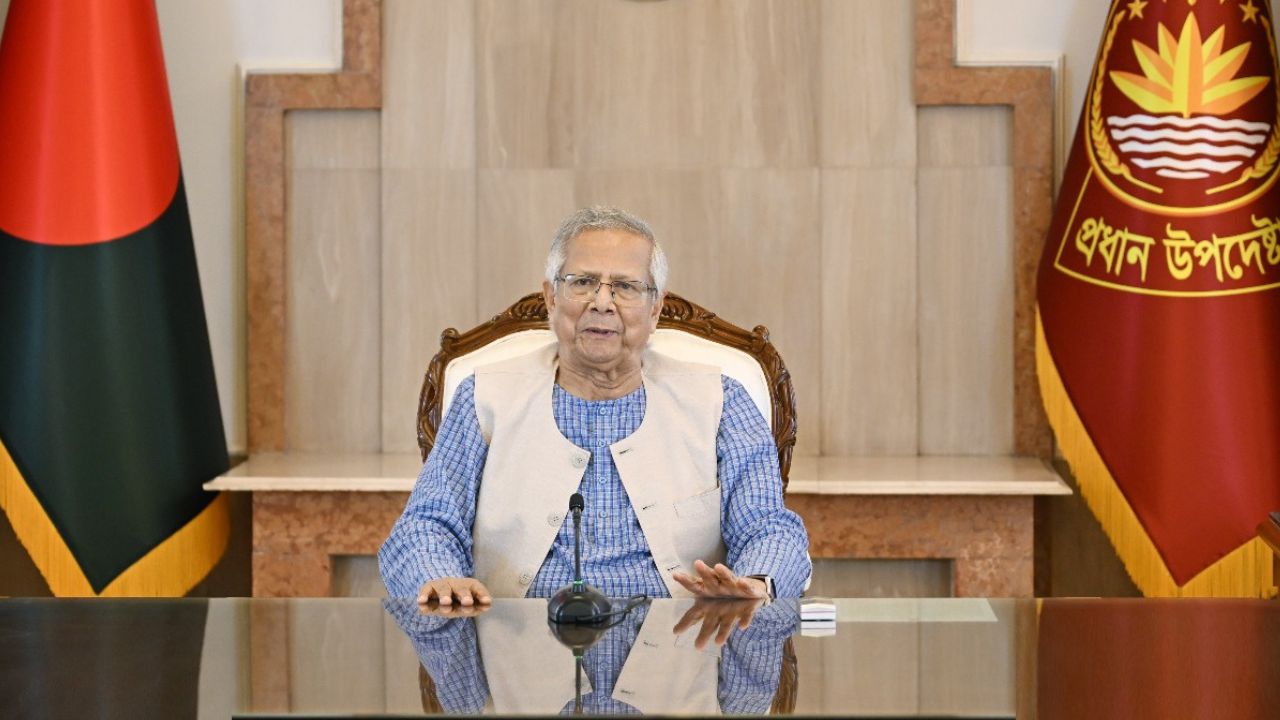

Chief Adviser Muhammad Yunus on Thursday announced that the referendum on the July National Charter 2025 will be held on the same day as the next national parliamentary election, scheduled for the first half of February.
“After due consideration, we have decided to hold the referendum on the day of the next national election,” Yunus said in his national address. “This will not in any way hinder the goals of reform. Rather, it will make the election more festive and cost-effective. Necessary legislation for the referendum will be enacted at an appropriate time.”
He said the Adviser Council has approved the July National Charter (Constitutional Reform) Implementation Order, 2025, and following the necessary signatures, the order will soon be published in the official gazette.
The chief adviser said that the referendum question has been finalised in accordance with the July National Charter.
He said that the question to be placed on the ballot will be “Do you consent to the implementation of the July National Charter (Constitutional Reform) Order, 2025, and the following proposals for constitutional reform recorded in the July National Charter?”

What’s in the proposals?
The first proposal is about formation of institutions, the caretaker government, Election Commission, and other constitutional bodies will be constituted in accordance with the procedures outlined in the July Charter.
The second proposal is on bicameral parliament – the next parliament will be bicameral, featuring an Upper House of 100 members allocated proportionally based on the votes received by each party in the national election. Any constitutional amendment will require the approval of a majority in the Upper House.




The third is reform obligations – political parties winning the next election will be required to implement 30 agreed reform proposals, including increasing women’s representation, electing the Deputy Speaker and parliamentary committee chairs from the opposition, limiting the Prime Minister’s tenure, expanding the President’s powers, strengthening judicial independence, and empowering local government.
The last proposal is on additional reforms outlined in the July Charter will be implemented in line with the commitments made by political parties.
Voters will cast a single ‘Yes’ or ‘No’ vote on these four proposals during the referendum.
If the majority votes ‘Yes’, a Constitutional Reform Council will be formed, consisting of elected members of the next parliament.
The council will have 180 working days from its first session to finalise constitutional amendments. Within 30 working days of completing the reform, the Upper House will be constituted proportionally based on election results and will remain in place until the end of the Lower House’s term.
Yunus added that measures will be taken to incorporate the July National Charter into the Constitution, as stipulated in the executive order approved earlier in the day.
Reflecting on the government’s performance since assuming office following the mass uprising, the Chief Adviser said rescuing the economy from a “deep abyss” had been a major challenge.
“In the past 15 months, we have managed to overcome that challenge,” he said. “All major economic indicators, including exports, foreign investment, and reserves , have returned to a positive trajectory. The looted banking sector has recovered, and public confidence has been restored. Several initiatives are underway to further strengthen the banking system.”
He noted that despite a global decline in investment, Bangladesh recorded a 19.13 per cent increase in Foreign Direct Investment (FDI) in the first year after the uprising — “a remarkable achievement against global trends.”
The chief adviser’s address was broadcast live on Bangladesh Television (BTV), BTV News, and BTV World.